


Previously, we reported that the DuckDuckGo browser wasn’t as private as you might have thought, as it allowed Microsoft trackers. However, a new blog post from DuckDuckGo announced that the browser would have more web-tracking protections and would now block Microsoft trackers.
Also read: DuckDuckGo Browser Not Totally Private: It Allows Microsoft Trackers
DuckDuckGo’s Transparency
It was clear after my first news report on this subject that the people behind DuckDuckGo are very concerned about how the browser and search engine are being conveyed. They issued a statement that we added in full to the end of my original news piece.

DuckDuckGo CEO Gabriel Weinberg said in the statement that they “have always been extremely careful to never promise anonymity when browsing,” as it just isn’t possible. He also mentioned they were making updates to the app store descriptions to make that more clear.
Weinberg was also totally honest by stating that one of the “constraints” in providing protection is “contractual.” DuckDuckGo gets most of its search results from Bing. This is what created the initial deeper look at this practice. If you click a Microsoft ad while on the DuckDuckGo browser, your IP address would be sent to Microsoft.
New DuckDuckGo Browser Policy
Weinberg published a blog post on August 5, stating that the company’s vision is “to raise the standard of trust online,” and that includes being transparent about its own privacy protections. The hope is for it to “make the Internet less creepy.”
At this point, I think we’re all on the same page. As patrons of the Internet, we want privacy, we want apps and websites to be transparent, and certainly, we would all like it to be less creepy. The Internet is a powerful beast, and with power comes responsibility. As an Internet user, I just want websites to be honest. If a website or app is going to use my information, they should at least admit to it.
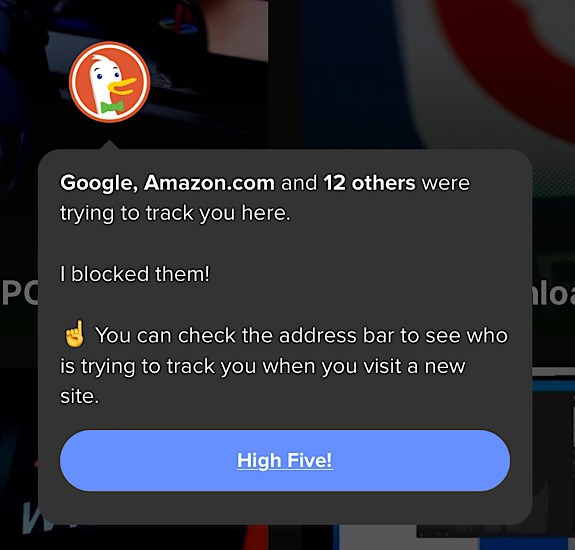
Weinberg reported that he heard from multiple users that DuckDuckGo wasn’t meeting “their expectations around one of our browser’s web tracking protections.”
Throughout this week, DuckDuckGo is expanding the list of scripts its Third-Party Tracker Loading Protections blocks on websites. It will now include Microsoft scripts on iOS and Android apps and Chrome, Firefox, Safari, Edge, and Opera extensions. More beta apps are upcoming. The scripts that are already on the list include Facebook and Google.
While many browsers have a default tracking protection, it mostly deals with cookie and fingerprinting protections that “restrict third-party tracking scripts after they load in your browser.” Yet, this leaves your IP address and other identifying information vulnerable. The Third-Party Tracker Loading Protection fills that void and prevents the trackers from loading.
Weinberg reported that they did not have a contractual commitment with any company other than Microsoft, and now, they are no longer limited with Microsoft. Additionally, he stated that Microsoft tracking was already limited because of other web-tracking protections, but now, the update allows for more tracking of blockers than with most other browsers.
Continued Privacy
Now when you click on a Microsoft-provided ad that appears on DuckDuckGo, Microsoft Advertising does not associate your ad-click behavior with a user profile. To see whether an ad on DuckDuckGo is effective within Microsoft Advertising, Microsoft scripts bearing the bat.bing.com domain are used.
DuckDuckGo is now “working on an architecture for private ad conversions that can be externally validated as non-profiling” to no longer rely on bat.bing.com, and Safari and Firefox are working on this issue as well.
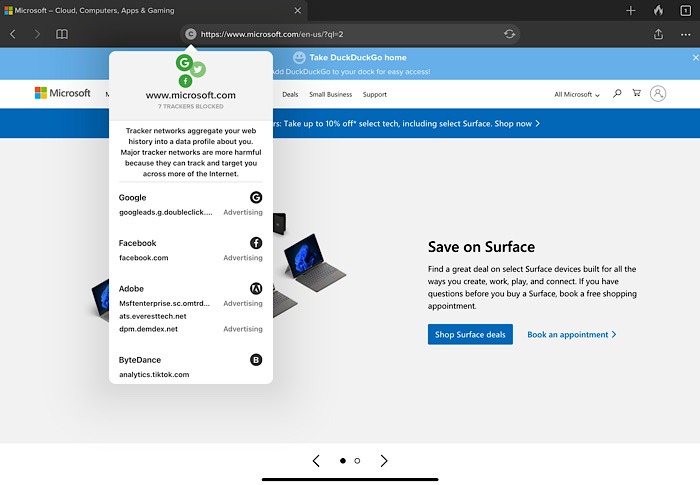
While browser extensions, non-beta apps, and Tracker Rader were already open source, DuckDuckGo has made its tracker protection list available to the public and updated the Privacy Dashboard to show more third-party request information. There has also been a new help page added.
Weinberg ended his blog post by stating that he’s “been building DuckDuckGo as an independent company for almost 15 years” and that he believes “more than ever that the majority of people online would choose to be more private if they could press a privacy’ easy button.’ That’s why our product vision is to pack as much privacy as we can into one package. We’re committed for the long haul to make simple privacy protection available to all and will continue striving to strengthen the quality, understanding, and confidence in our product.”
Looking for more about DuckDuckGo? Read about its email protection service.
Image credit: Unsplash All screenshots by Laura Tucker