
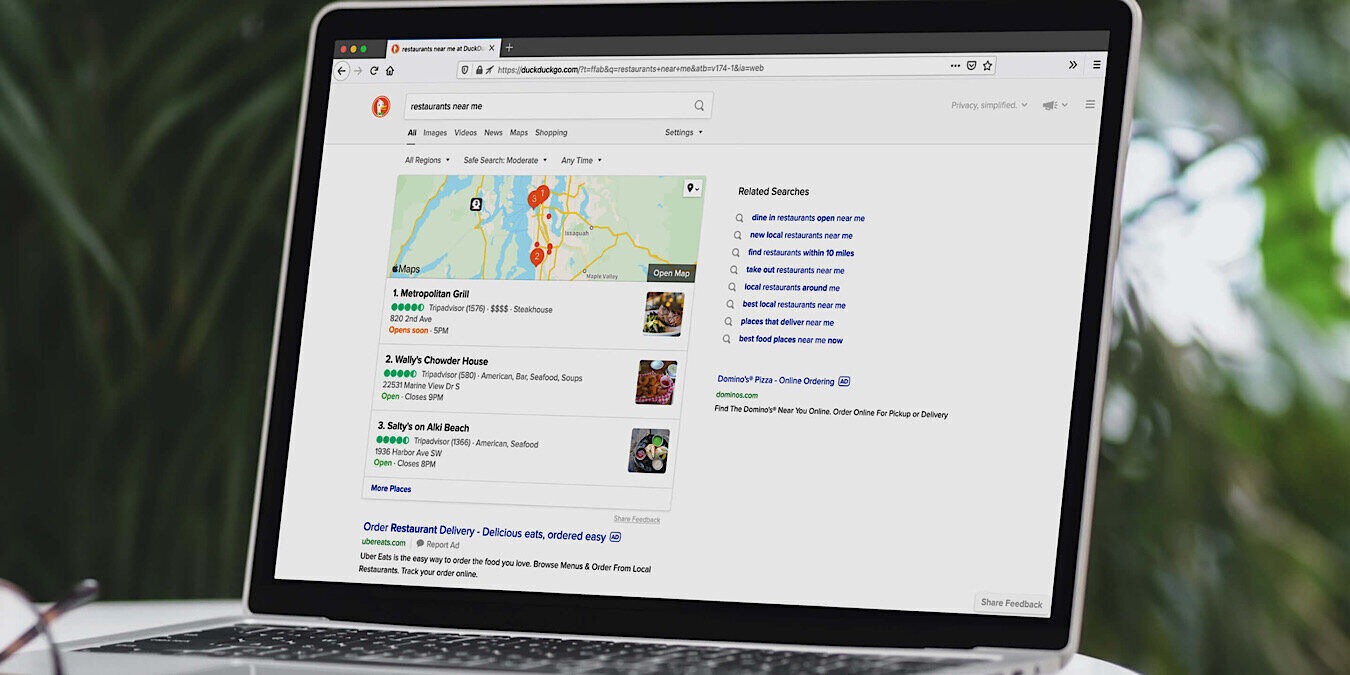

If you’re concerned about Internet privacy and started using the DuckDuckGo browser with no concerns that your data wasn’t private, you’ll want to read on. While many people eschewed Google and Microsoft, opting for the privacy provided by DuckDuckGo, they’re not really in the clear. DuckDuckGo gets its search results from Microsoft’s Bing search engine, and it’s now come to light that the DuckDuckGo browser doesn’t block Microsoft’s trackers.
Also read: 12 Things that Bing Does Better than Google
DuckDuckGo’s Agreement with Microsoft
In truth, DuckDuckGo gets most of its results from Bing, though all results are from other search engines. It has gained fans with its claim that it strips trackers from the results before it displays them.
However, if you click a Microsoft ad on the browser, your IP address is sent to Microsoft. DuckDuckGo admits to this practice, but some people are questioning this practice.
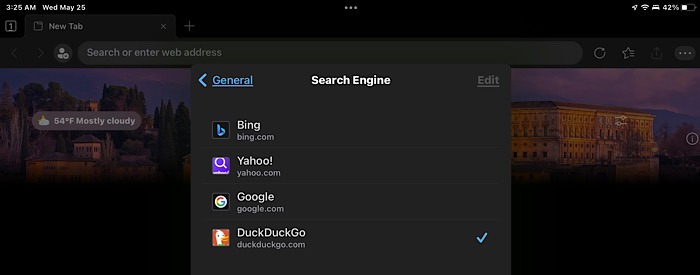
Zach Edwards, a security researcher, discovered DuckDuckGo is sharing more than users realize. “Sometimes you find something so disturbing during an audit, you’ve gotta check/recheck because you assume that ‘something’ must be broken in the test. But I’m confident now. The new @DuckDuckGo browsers for iOS/Android don’t block Microsoft data flows, for LinkedIn or Bing,” he tweeted.
What’s more, while DuckDuckGo claims that it blocks Facebook’s trackers, it doesn’t block the Microsoft trackers found on Workplace.com, a domain that Facebook owns.
With this news spreading on Twitter and elsewhere, DuckDuckGo CEO Gabriel Weinberg is throwing Microsoft under the bus. He tweeted, “We’ve been working tirelessly behind the scenes to change these requirements, though our syndication agreement also has a confidentially [sic] provision that prevents disclosing details. Again, we expect to have an update soon that will include more third-party Microsoft protection.”
A Switch to Brave May Be in Order
If you’re wondering where you should turn for a truly private browser, Brave’s privacy engineer, Shivan Kaul Sahib, thinks he has the answer.
“This is shocking,” he tweeted. “DuckDuckGo has a search deal with Microsoft, which prevents them from blocking MS trackers. And they can’t talk about it! This is why privacy products that are beholden to giant corporations can never deliver true privacy; the business model just doesn’t work.”
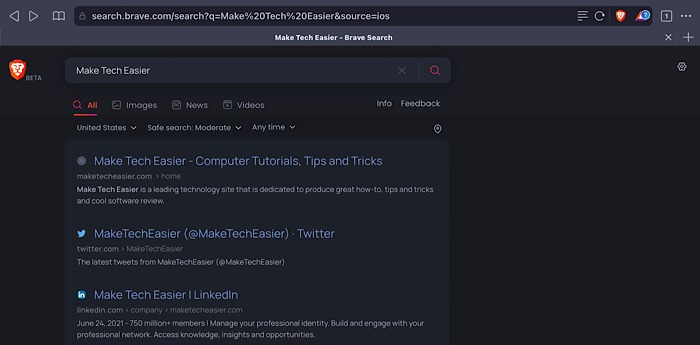
Brave is what some people assume the DuckDuckGo browser is. It’s independent of both Microsoft and Google and built its own search engine to not make it reliant on other companies, with assumably no deals that force it to allow trackers to keep tabs on your data.
But of course, while you can use the DuckDuckGo search engine independently in your browser of choice, with Brave, you are limited to using the Brave browser. If you want to learn more about Brave, read on to learn 10 useful Brave features you didn’t know existed.
After we initially published this article, we received the following statement from Weinberg, the DuckDuckGo founder and CEO:
“We have always been extremely careful to never promise anonymity when browsing, because that frankly isn’t possible given how quickly trackers change how they work to evade protections and the tools we currently offer. When most other browsers on the market talk about tracking protection they are usually referring to 3rd-party cookie protection and fingerprinting protection, and our browsers for iOS, Android, and our new Mac beta, impose these restrictions on third-party tracking scripts, including those from Microsoft.
“What we’re talking about here is an above-and-beyond protection that most browsers don’t even attempt to do — that is, blocking third-party tracking scripts before they load on 3rd party websites. Because we’re doing this where we can, users are still getting significantly more privacy protection with DuckDuckGo than they would using Safari, Firefox and other browsers. Our goal has always been to provide the most privacy we can in one download, by default without any complicated settings.
“I understand this is all rather confusing because it is a search syndication contract that is preventing us from doing a non-search thing. That’s because our product is a bundle of multiple privacy protections, and this is a distribution requirement imposed on us as part of the search syndication agreement that helps us privately use some Bing results to provide you with better private search results overall. While a lot of what you see on our results page privately incorporates content from other sources, including our own indexes (e.g., Wikipedia, Local listings, Sports, etc.), we source most of our traditional links and images privately from Bing (though because of other search technology our link and image results still may look different). Really only two companies (Google and Microsoft) have a high-quality global web link index (because I believe it costs upwards of a billion dollars a year to do), and so literally every other global search engine needs to bootstrap with one or both of them to provide a mainstream search product. The same is true for maps btw — only the biggest companies can similarly afford to put satellites up and send ground cars to take streetview pictures of every neighborhood.
“Anyway, I hope this provides some helpful context. Taking a step back, I know our product is not perfect and will never be. Nothing can provide 100% protection. And we face many constraints: platform constraints (we can’t offer all protections on every platform do to limited APIs or other restrictions), limited contractual constraints (like in this case), breakage constraints (blocking some things totally breaks web experiences), and of course the evolving tracking arms race that we constantly work to keep ahead of. That’s why we have always been extremely careful to never promise anonymity when browsing outside our search engine, because that frankly isn’t possible. We’re also working on updates to our app store descriptions to make this more clear. Holistically though I believe what we offer is the best thing out there for mainstream users who want simple privacy protection without breaking things, and that is our product vision.”
Image credit: DuckDuckGo Screenshots taken by Laura Tucker