

Microsoft and Google aren’t exactly the best of friends, doing everything they can to prevent users from embracing the competition. Microsoft Bing’s latest blow to Google is a bit underhanded, though creative.
Bing Looks Surprisingly Like Google
When you buy a Windows PC, Microsoft wants you to use Edge and Bing. After all, those are their products. The only problem is that many users prefer Chrome and Google, since it’s what they’re used to. One of the first things many do when getting a new PC is change the default browser and search engine.
Microsoft Bing got a bit sneaky lately, though. When you bring up Edge and type in Google in the search box, you get a page that looks suspiciously like Google’s search page. It even features a Google-esque doodle of a group of happy-looking people. I guess they’re happy because they’re using Bing instead of Google, maybe?
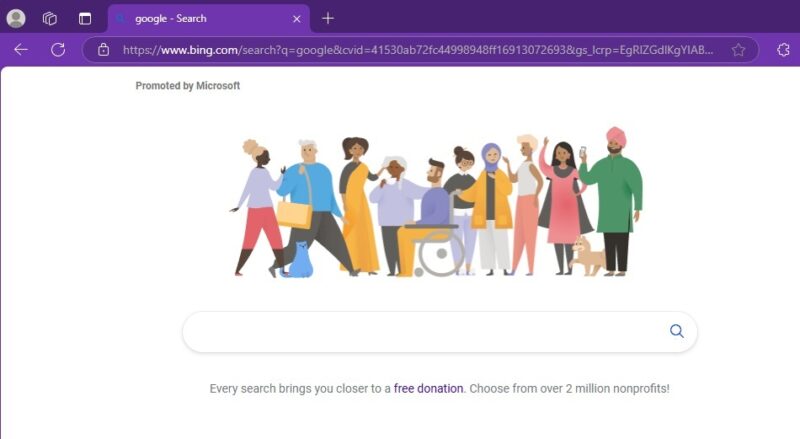
Even worse is that you don’t see the Bing search box at first unless you scroll up for it. If you don’t pay attention, it really does look like you’re using Google at this point. But there are some obvious clues, such as:
- Promoted by Microsoft just above the doodle
- List of search results below the search box
- Doodle doesn’t spell Google anywhere
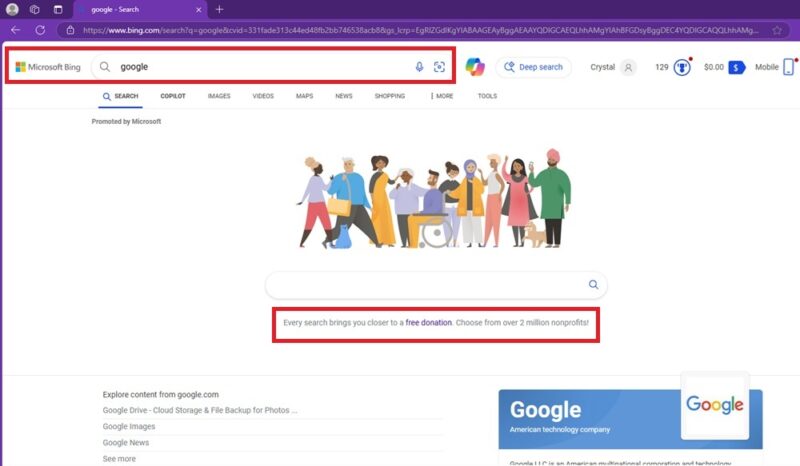
Outside of looking like a typical Google doodle, the Bing version doesn’t do anything. It’s just a creative spoof to show Bing can work like Google. While I may like Bing’s search, Google’s interactive doodles are always fun to check out.
As an added push to keep users on Bing, there’s a link just below the spoofed Google search box that tells you every search helps you donate to over two million non-profits. Anyone who wants an easy way to donate to charity may just stick with Bing at this point.
Effective or Pointless?
I know it may seem pretty pointless to those who live and breathe everything tech. However, for casual users who just want an effective search engine, they may not care whether it’s Bing or Google.
This is actually an effective marketing technique on Microsoft’s part, even if Google may not be thrilled with it. The entire point is to get users to give Bing a chance, versus just using Bing to get to Google or using Edge to download Chrome.
In fact, many users may not even realize they’re using Bing at first. The fake Google search box looks convincing at first glance, especially if you’re just looking for the typical Google search box to enter your query.
The difference comes when you start browsing the results. From here, you get to experience how Bing organizes results, including the AI-enhanced summary, which is something Google also has. Even DuckDuckGo uses AI in search results.
Basically, Bing is taking a chance that users won’t realize that they’re using Bing until they’ve already fallen in love with it. Sneaky? Yes. Genius? Also, yes.
Image credit: Pexels. All screenshots by Crystal Crowder.