

Have you ever had a browser care about your mental health and wellbeing? Opera Air is changing that with a browser that encourages you to relax and take a break from trying to be a productivity powerhouse.
Opera Air Puts Mindfulness First
I’m used to seeing every new browser and browser update focus on productivity, and now AI. But Opera is taking a different approach. The new Opera Air is called a mindful browser and is yet another standalone browser for the company. There are already two successful Opera browsers: Opera One (productivity) and Opera GX (gaming). Some users prefer Opera over Chrome.
If you’re used to using either of Opera’s other browsers, Air could feel a bit minimal, but that’s the point. As the name implies, it’s all about taking a moment to just breathe in the air and relax, versus stressing about work, school, or whatever rabbit hole your search results are taking you down.
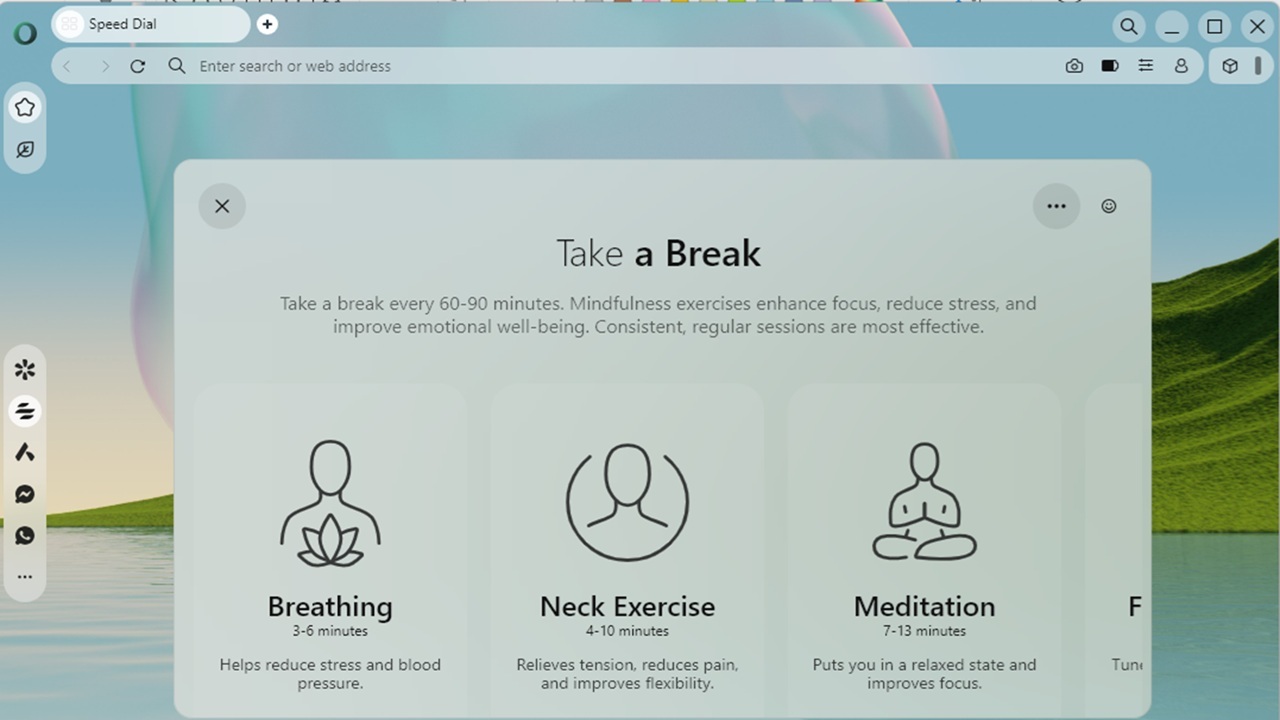
Currently, it’s the first mindfulness browser. Think of it as part standard browser and part meditation/mindfulness app. It includes a variety of calming features, such as:
- Smart exercises that utilize your camera to guide you in real time
- Guided meditations (only in English for now), which include multiple soothing voices
- Mindfulness break reminders (customizable) to not lose track of time and forget to take a break
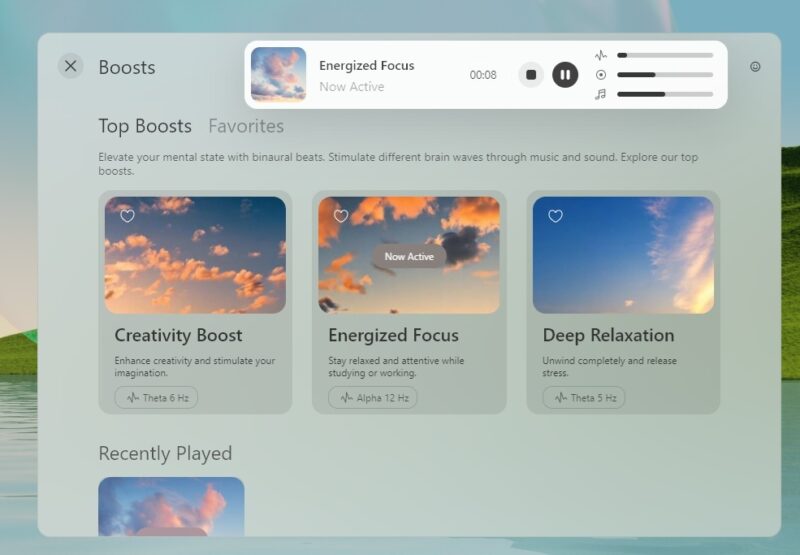
- Boosts, which include a variety of binaural beats to aid in various scenarios, like creativity, relaxation, and even dream recall
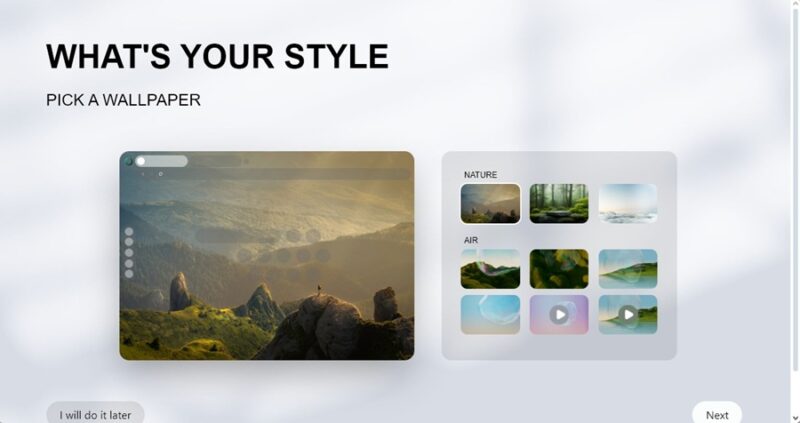
- Air UI, that auto-adapts to the wallpaper and theme you’re using
While this may sound more like a relaxation or meditation app than a browser, I understand your doubts. However, Opera didn’t replace the features we’ve all grown to love for mindfulness. Instead, the company created a perfect balance between relaxing and being productive.
Stays Minimalist and Productive
The entire design of Opera Air is purposely minimal so that your mind isn’t overwhelmed. But this is still a browser, and it boasts several useful productivity features, too, such as:
- Ad-blocker
- Free VPN (from personal experience, it is slow, but functional)
- Aria AI (Opera’s AI), with no subscription necessary
- Customizable sidebar
- Keyboard shortcuts to access all your favorite features
Opera has listened to all the negative feedback from those who aren’t interested in AI and included a setting to turn Aria AI off – or even ChatGPT or ChatSonic.
However, the moment you start to feel stressed and overwhelmed by what you‘re reading, watching, or creating in your browser, take a step back and utilize the mindfulness tools right in the sidebar.
For instance, after a marathon research session, my brain may feel sluggish. The Energized Focus Boost helps re-energize me and keep me on track.
Right now, the biggest downside of Opera Air is that it’s only available for desktop, though a mobile app could be possible if the desktop launch is successful. In a world of increasingly cluttered browsers and apps, Opera’s being innovative and reminding everyone to create a better balance in their lives.
Please note that Opera Air isn’t a substitute for a mental health professional. It’s only a tool to aid in improving your mental health and reducing stress. Try these mental health apps to further take care of yourself. And, if you’re having trouble drifting off after staying up late scrolling on your phone, try these sleep apps.
Image credit: All screenshots by Crystal Crowder