
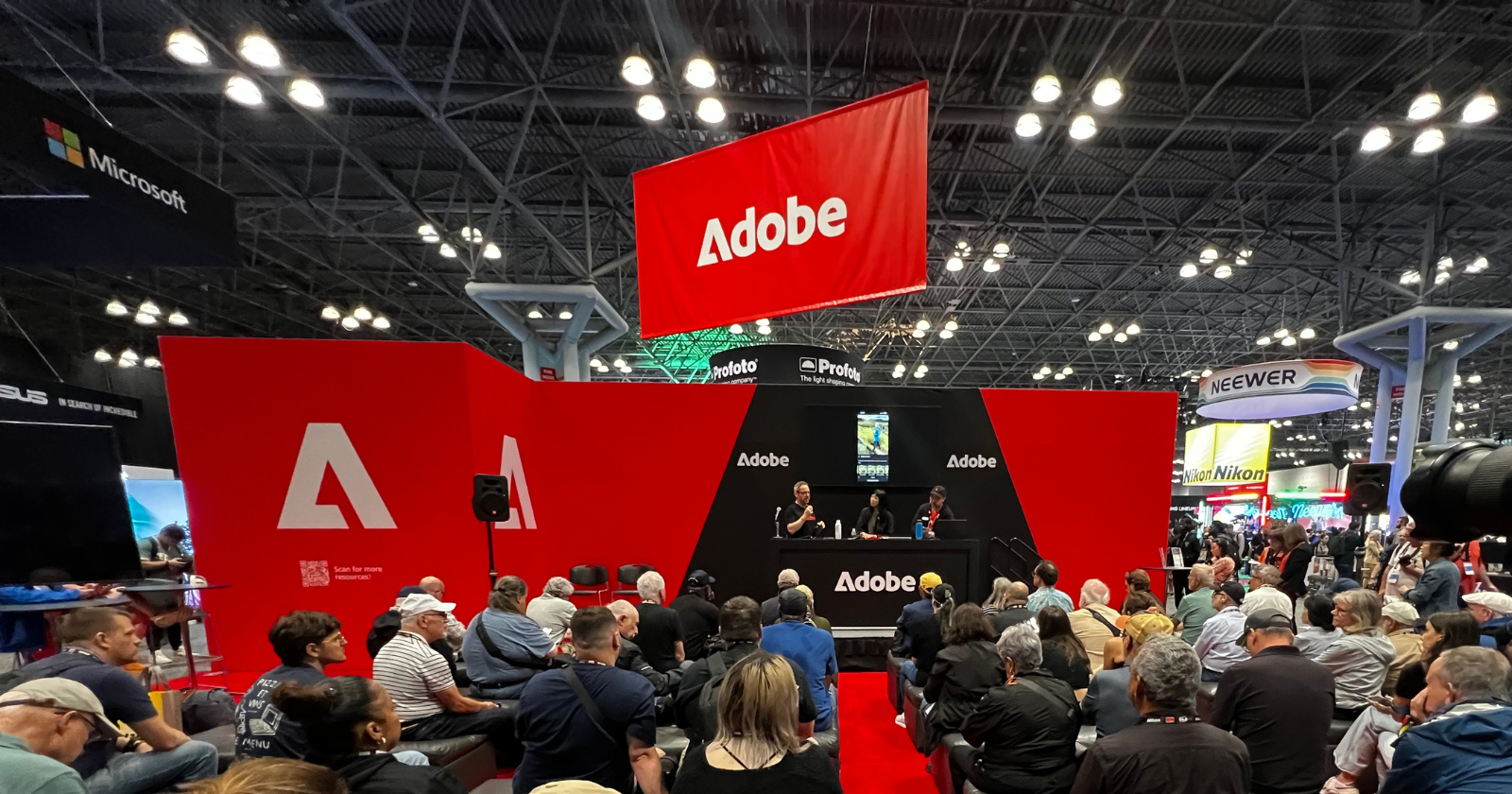
On 25 July 2017, Adobe published a short corporate note announcing that it would stop distributing and updating Flash Player at the end of 2020. The language was polite, almost administrative. But the plug-in being retired had, at its peak in the late 2000s, been installed on around 99 per cent of internet-connected desktops, according to Adobe’s own figures verified by Millward Brown. For a generation of people who grew up online between roughly 1998 and 2012, Flash was not a feature of the web. It was the web’s imagination.
What went with it, when browsers finally stopped executing SWF files, was harder to count. The independent preservation project Flashpoint, started by a preservationist known online as BlueMaxima and now maintained by hundreds of volunteers, currently holds more than 190,000 playable Flash games and animations plus tens of thousands of related assets — and estimates that this is only a fraction of what once existed. Community counts of the original corpus regularly run into the millions of individual works. Most of them were made by teenagers, hobbyists and small studios, uploaded to sites like Newgrounds, Albino Blacksheep, Kongregate and Miniclip, and never backed up anywhere else.
How a browser plug-in swallowed the web
Flash’s dominance was not inevitable. It began as FutureSplash Animator, a small vector-animation tool acquired by Macromedia in December 1996 and rebranded as Flash 1.0. Its trick was to send animation as compact mathematical descriptions of shapes and motion rather than as pixel-by-pixel video, which meant it could stream over the dial-up modems most people were still using. By the time Flash 5 shipped in August 2000 with a proper scripting language called ActionScript, designers could build entire interactive interfaces, and did.
For roughly a decade, Flash was how the web moved. YouTube launched in 2005 using the Flash Player to display video, because no browser then shipped a reliable built-in video codec. Restaurant websites opened with Flash intros. BBC iPlayer, Hulu and countless news sites embedded Flash video players. Web games — from Line Rider to Alien Hominid to Meat Boy, which later became Super Meat Boy — reached tens of millions of players without ever being downloaded. Political cartoons, music videos and early viral animations like Homestar Runner and Salad Fingers lived inside SWF files that any browser could open with a click.
The letter that ended it
The turn came on 29 April 2010, when Steve Jobs published an open letter titled “Thoughts on Flash”. Jobs argued that Flash was proprietary, unreliable, insecure, a battery drain and unsuited to touch input, and confirmed that Apple’s iPhone and iPad would never run it. Adobe pushed back publicly, but the iPad had shipped weeks earlier and was already outselling every previous tablet combined. Web developers, watching the fastest-growing class of device on earth refuse to load their work, began migrating to the open standards Jobs had endorsed: HTML5, CSS3 and JavaScript.
Security accelerated the retreat. Flash Player accumulated a long list of critical vulnerabilities — more than a thousand CVEs over its lifetime — and by the mid-2010s browser makers were disabling it by default. Google announced in 2016 that Chrome would block Flash except on a short whitelist of sites. Mozilla and Microsoft followed. Adobe’s July 2017 announcement, coordinated with Apple, Facebook, Google, Microsoft and Mozilla, was less a decision than an acknowledgement of a decision already made by everyone else.
What was actually lost
The end-of-life date, 31 December 2020, was a hard stop. Adobe not only ceased updates but shipped a time bomb: Flash Player installations were programmed to refuse to run any Flash content after 12 January 2021. On that Tuesday, hundreds of thousands of websites simply went blank where the interactive panel used to be.
Some works were saved by their creators. Newgrounds, founded in 1995 and one of Flash’s largest hubs, sponsored and adopted the open-source Ruffle emulator, created by former Newgrounds developer Mike Welsh, and kept most of its catalogue playable. Homestar Runner‘s creators re-exported key cartoons to video. Disney bought and archived some individual pieces. But an enormous middle layer — student animations, one-off games, fan comics, dating sims, geography quizzes made for a single classroom, restaurant menus, museum kiosks, wedding invitations, entire art-school portfolios — had been uploaded to hosts that quietly shut down years earlier, or to personal domains whose owners had moved on.
The commonly cited figure of “four million” Flash works derives from community estimates rather than a formal census; the true number is unknowable, because there was never a central registry of SWF files. What is verifiable is that when the Internet Archive began its own Flash emulation project in 2020, curators found that a large proportion of the URLs listed in old blog posts and forum threads returned 404 errors before any preservation could begin.
Flashpoint
Flashpoint began in January 2018, six months after Adobe’s announcement, as a personal project by a preservationist known online as BlueMaxima. The idea was straightforward: download every playable Flash work still reachable on the open web, bundle it with a working Flash runtime, and distribute the whole thing before browsers made playback impossible.
The project grew into a distributed effort involving hundreds of volunteers who scraped defunct portals, extracted SWF files from archived pages on the Wayback Machine, and coaxed old CD-ROMs and forgotten hosting accounts back to life. Flashpoint uses a mixture of the open-source Ruffle emulator, which reimplements Flash in Rust and runs natively in modern browsers, and a sandboxed copy of the original Adobe runtime for content Ruffle cannot yet handle. Ruffle’s own developers estimate their emulator now plays a growing majority of ActionScript 1 and 2 content, with the more complex ActionScript 3 still a work in progress.
The full Flashpoint archive is distributed as a download of roughly 1.5 terabytes, or as a smaller “Infinity” edition that streams individual works on demand. It has been mirrored by the Internet Archive and referenced by university digital-humanities departments studying early web culture. Its curators are careful to note what they cannot save: works that were removed before 2018, works locked behind expired login systems, works that depended on server-side components whose source code is gone.
Why it matters
The disappearance of Flash is not the first time a computing platform has taken a body of work with it. Countless BBC Micro programs, HyperCard stacks and early CD-ROM titles survive only in fragments, and much of the interactive art made for kiosks and museums in the 1990s is effectively gone. What makes Flash different is scale and cultural weight. This was the medium in which a generation learned to animate, to code, to publish. Much of what is now called “internet humour” — the timing, the deadpan absurdity, the loops — was worked out inside SWF files by teenagers who had never met.
Preserving that material is not straightforward, because it was never designed to be preserved. Flash was ephemeral by construction: a plug-in that ran inside a browser that ran on an operating system, all of which were expected to be replaced. That such a substantial slice of it survives at all is due to volunteers copying files onto hard drives, one at a time, before the shutters came down.
Adobe’s 2017 note called it end-of-life. In practice it was a deadline, and the archive that met it was assembled by strangers on the internet who decided the work was worth keeping.