


Unless you’ve stayed away from social media and the news the past few days, you’ve undoubtedly heard that Elon Musk officially took over Twitter. Frankly, if you haven’t heard, you probably don’t care. Many that do care seem to be taking part in a mass exodus. After the Twitter deal was finalized, the servers at competitor Mastodon hit a traffic surge that required an update in hardware.
Twitter Users Jump Ship for Mastodon
Elon Musk, who now refers to himself as “Twitter Complaint Hotline Operator” on his profile, just made an epic business move – and it has nothing to do with Tesla or SpaceX. With all legal wrangling behind him, he officially took ownership of Twitter on Thursday, October 27, 2022. The Twitter board had previously announced on Monday, April 25, that a deal was reached for Musk to buy the social network for close to $44 billion.
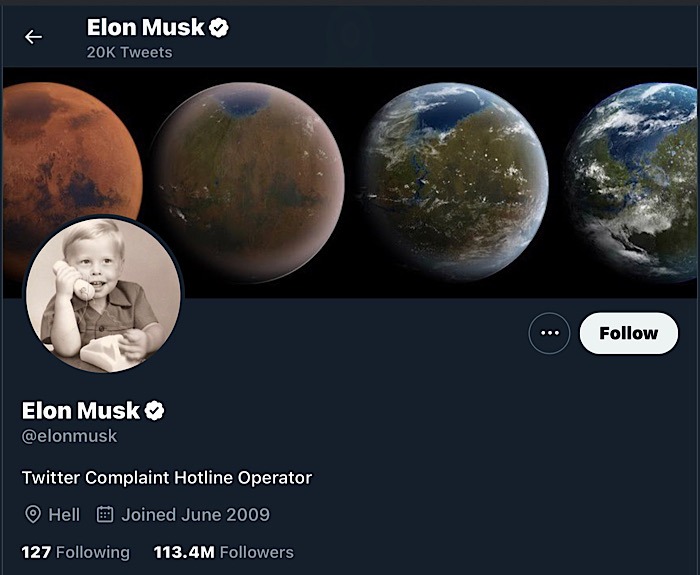
This was immediately upsetting to many Twitter users. Musk’s views on Twitter are well-known. He doesn’t believe there should be as many restrictions on free speech, and users fear that former users who were expelled for breaking the rules will be invited back.
Truthfully, this increase in Mastodon’s traffic started even before the Twitter deal was announced in April. It was spurred a few weeks earlier when Musk initially bought a controlling amount of Twitter stock. He was offered a seat on the Twitter board but refused, only to make the offer to buy the site.
The initial news caused one of Mastodon’s main servers, mastodon.social, to slow down, while the more recent news that the Musk Twitter deal was final brought about outages for the server.
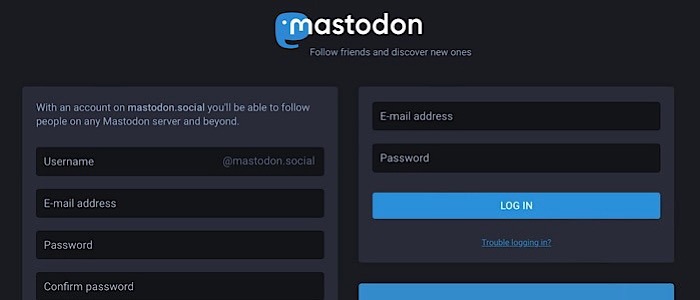
The site is very similar to Twitter in the way messages appear; however, Mastodon is constructed of multiple servers that work independently but can still interact with each other. The system has been compared to the way multiple email servers interact.
Making the Move to Mastodon
Mastodon reported that it had gained 123,562 new users as of October 27 and 528,607 active users as of October 31. Helping users move on was a trending Twitter hashtag on Friday, #TwitterMigration. Mastodon tweeted that more than 70,000 people signed up for a new account just on that day.
Elon Musk’s Twitter loss appears to be Mastodon’s gain. Analytics company Sensor Tower showed that the Mastodon app was at No. 38 in Social Networking on the U.S. App Store on Friday afternoon. It rose from No. 37 to No. 31 after Musk made his bid to buy Twitter. It’s since moved up to No. 21.
Mastodon had the most installs ever in one day on Saturday, with 34,000 to iOS and Android platforms and 91,000 new installs since Musk officially took over. That’s pretty remarkable, considering there are only 489,000 lifetime installs.
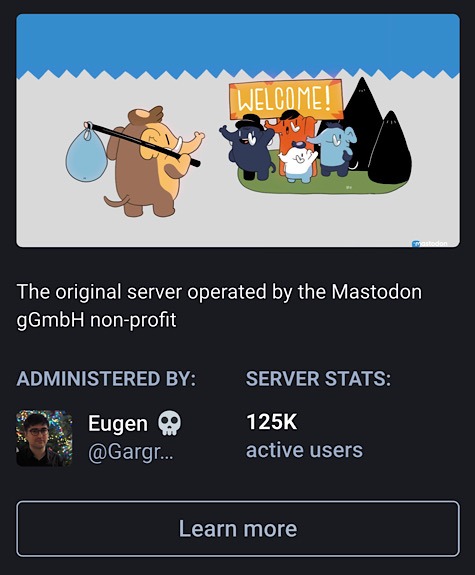
Mastodon founder Eugen Rochko posted to Mastodon.social that he had to purchase more hardware to boost the database server because of the influx of new users bringing processing delays. It seems to be just growing pains for Mastodon.
It’s too early to tell what will become of Twitter, or Mastodon for that matter. This is a huge undertaking for anyone, probably even Musk. There is no way everyone will be happy with the changes he makes. But it appears users are letting him know in no uncertain terms that they won’t stick around if he honors his promises.
Do you want to leave Twitter and join the exodus? Read on to learn how to delete anything on Twitter, including your account.
Image credit: Unsplash. All screenshots by Laura Tucker.