


While many social media enthusiasts were lamenting changes on Twitter, now saddled with the name “X,” 2024 was Bluesky’s year. What’s essentially original Twitter with some changes, Bluesky rang in 2025 celebrating millions of new users throughout the previous year.
From Private to Public With 7x Growth
Bluesky went from invite-only to public for everyone back in February. At the time, it only had a small user base of three million users. While that may not sound like a tiny number, X, in comparison, currently has over 335 million monthly active users.
I, personally, was user number 5,024,818 just after Bluesky launched.

But, in just 11 months, Bluesky’s growth skyrocketed by more than seven times to over 25 million. Considering how competitive social media is, this isn’t a small feat. In fact, it’s shocking that the platform is still around. If it weren’t for Elon Musk’s controversial changes to X, Bluesky might not be growing at the rate it is – or at all.
Speaking of controversy, the November election also boosted Bluesky’s growth, with more than 700,000 users flocking from X to escape a possible Trump/Musk tweet fest.
New Features Spurring Growth
Unlike X, Bluesky has seemed to listen to its users, which is part of the reason the platform grew by over 13 million in just the last six weeks of the year. It started off fairly basic, missing many of the features Twitter users had grown to love before it became X, such as direct messages, hashtags, and trending topics.
The folks behind Bluesky listened and delivered over the course of 2024. I enjoyed having Starter Packs and an ad-free experience.
Bluesky added:
- Hashtags (definitely glad to have those)
- Account deactivation
- Direct messages
- Self-moderation (including making their collaborative moderation tool Ozone open source for others to independently moderate content)
- Pinned posts
- Starter packs (ideal for finding new people to follow)
- Video sharing (just arrived in September)
- Thread composer (sounds really similar to X, right?)
- Trending topics (a great holiday gift from Bluesky)
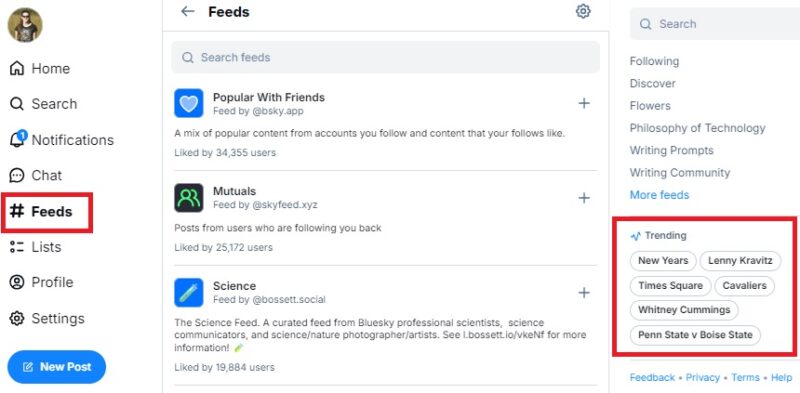
All of this has helped spur engagement and growth. After all, that’s what people fear most when switching to a new platform: engagement. When you’ve worked to build a large following, it’s not easy to just leave, and many don’t want to manage yet another network.
However, just as any social network, there are a few tips and tricks to gain new followers. Be patient, though, as you’re not going to get millions of followers overnight, especially since Bluesky is still much smaller than X and Facebook.
Will Growth Continue or Fizzle Slowly?
That’s the big question for Bluesky as we step into 2025. There’s no doubt that many users are getting fed up with Musk’s constant changes and the politically charged climate over at X, no matter what your views are.
According to Bluesky, organizations are starting to see positive engagement growth, up to two to ten times what it was originally on the platform. For those making the switch early, it could pay off.
What I’m seeing is brands posting on both X and Bluesky, which will likely be the trend for a while. But if Bluesky’s engagement keeps increasing, as it did in 2024, brands, influencers, and other users may decide to switch completely.
Image credit: Unsplash. All screenshots by Crystal Crowder.