
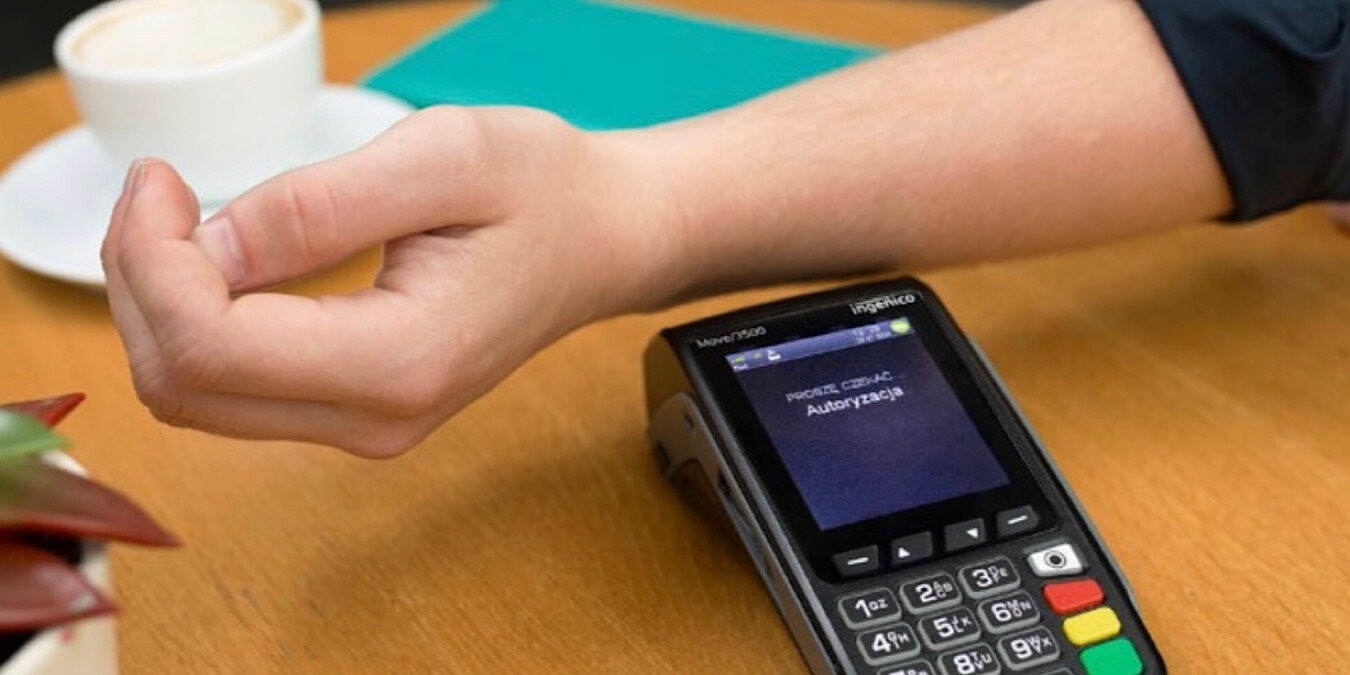

There’s no doubt contactless payments make life much easier. Paying for purchases through your smartphone or smartwatch alleviates the need to carry cash, a credit card, etc. There is also a very small section of the public who do contactless payments via a microchip implant embedded in their skin. Is this something you would consider?
Also read: Ring Doorbell Patents Show Future Uses of Biometric Data
How the Microchip Implant Works
Not that microchip implants are a new idea – the first human implant was in 1998. Now that they are commercially available, Walletmor says it is the first to offer implantable payment microchip implants for sale to the public, with 500 sold so far.
“The implant can be used to pay for a drink on the beach in Rio, a coffee in New York, a haircut in Paris – or at your local grocery store,”said Wajtek Paprota, founder and chief executive at Walletmor. “It can be used wherever contactless payments are accepted.
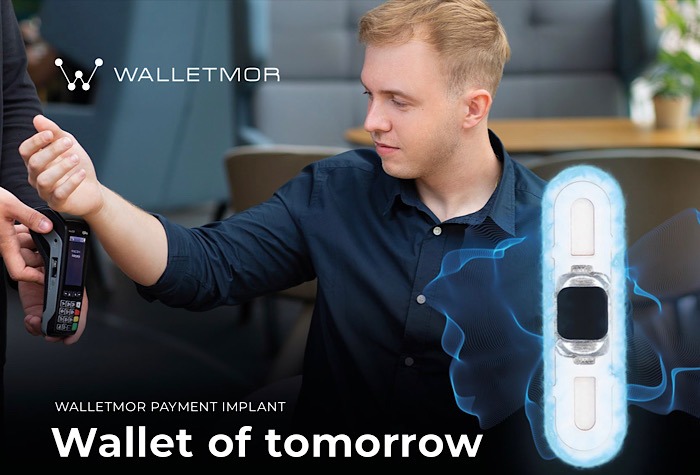
The Wallmetmor chip weighs less than a gram and is a litter larger than a grain of rice. It includes a microchip and an antenna inside a material similar to plastic. While it’s implanted in your skin, it’s important to know it has regulatory approval. It can be used as soon as it’s implanted and will stay put. It does not carry an expiration, nor does it have a battery to replace.
It uses near-field communication (NFC), the same contactless payment system you are already using in your smartphone. Radio-frequency identification (RFID) is used in contactless debit and credit cards.
If It’s Good Enough for Your Dog …
If you balk at this idea, it’s important to note that we use microchip implants in our pets – but we use the technology to find them and not to get a Caffe Americano at Starbucks.
We do this to our furry family members, yet a 2021 survey included that more than 4,000 people in the U.K. and E.U. revealed that just over half of them would consider a microchip implant.
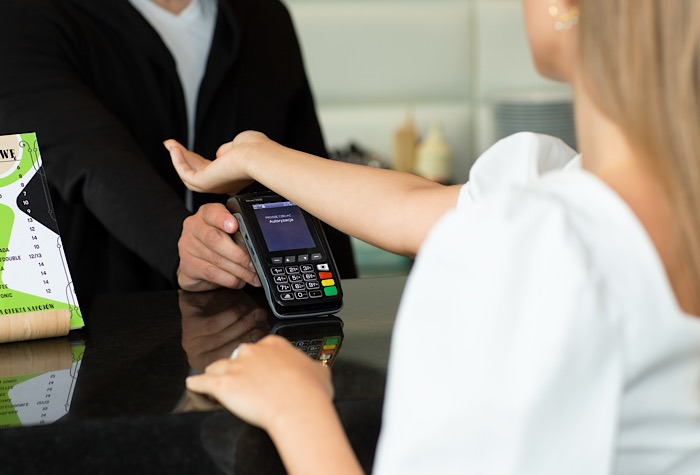
Patrick Pausmen has one of these implants. When he pays for something, he puts his hand near a contactless payment reader, and a light under his skin can be seen that leads to the payment going through.
Paumen had the chip implanted in his hand in 2019. “The procedure hurts as much as when someone pinches your skin,” he said.
While some of the responses in the survey said they had security issues and invasiveness concerns about microchip implants, Paumen has none of these concerns when using his for contactless payments.
“Chip implants contain the same kind of technology that people use on a daily basis,” said Paumen. “From key fobs to unlock doors, public trans cards like the London Oyster card, or bank cards with contactless payment function.
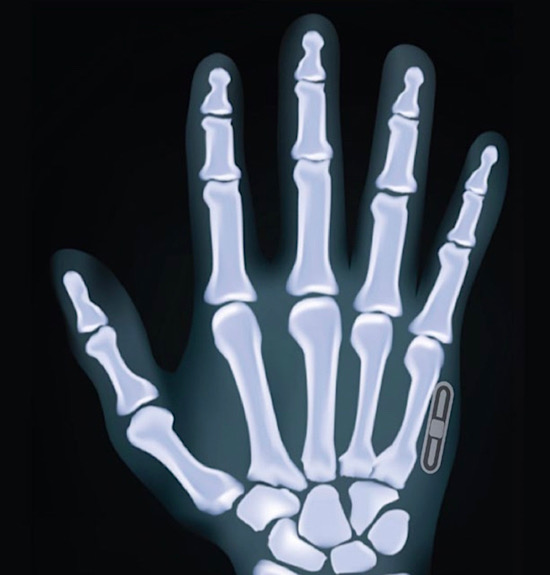
“The reading distance is limited by the small antenna coil inside the implant. The implant needs to be within the electromagnetic coupling between the reader and the transponder” for the implant to be read.
While any device that connects to the Internet leaves people concerned they will be tracked, Pauman went back to the pet comparison and noted, “it’s not possible to locate them using an RFID chip implant – the missing pet needs to be found physically. Then the entire body gets scanned until the RFID chip implant is found and read.”
Then again, he considers himself a “biohacker,” as this isn’t his only implant. He has a total of 32, with chips that will open doors and embedded magnets.
“There will always be people who don’t want to modify their body. We should respect that – and they should respect us as biohackers.”
Having a microchip implant and using it for contactless payments is an interesting idea for sure and puts this Amazon idea to shame: Amazon One Palm Reader
Featured Image: Walletmor