


Amazon has taken a lot of flak for providing police departments with Ring Doorbell user data. It also announced with much fanfare its new Sidewalk feature, but it doesn’t seem as if it has been very popular. Regardless, Amazon appears determined to continue along a similar path. In the past few years, Amazon has filed 17 patents that indicate the Ring Doorbell could start using biometric data, specifically facial recognition.
Seventeen Ring Doorbell Patents in Past Few Years
Amazon partnered with 1,963 police departments and provides them footage from users’ Doorbells. It’s not an idea that is very popular with users. Amazon also launched its Sidewalk feature for its range of Alexa devices. Thankfully, it allowed users to opt out of the service that allows people to share their Wi-Fi connection with others who are walking by in the neighborhood. People concerned about privacy were disabling it.
And now, despite these other features not being something people are flocking to, Amazon seems to be continuing along the same path with the 17 patents that were discovered. The patents show all the Ring Doorbell cameras in a neighborhood working together to identify “suspicious” people through biometric data. If those people are seen on someone’s doorstep, all the doors will lock. Homeowners will get an alert if someone who doesn’t live in their home picks up a package from their doorstep.
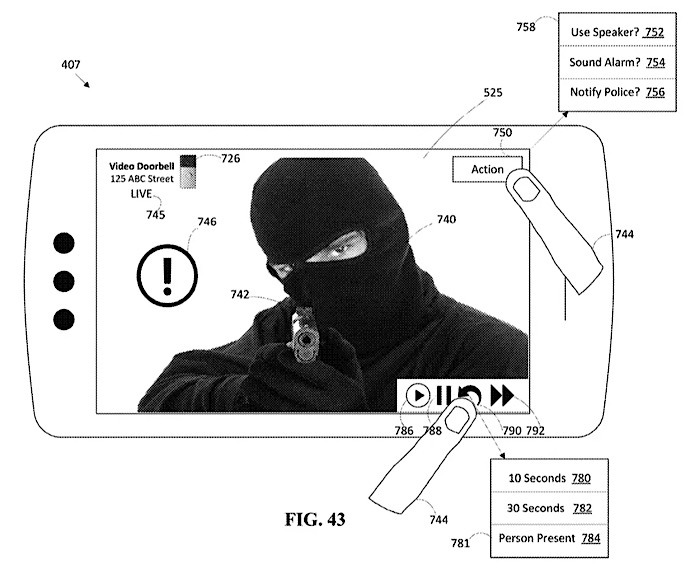
Patents are just that: patents. They are ideas of possible avenues for a product and/or company. So these aren’t necessarily definite new features for the Ring Doorbell – but these patents as a whole do show a pathway Amazon is interested in exploring.
More facts can be found in other recent activity of the Ring Doorbell product. In 2016, a Ring research and development team in Ukraine was exploring facial recognition. By 2020, Amazon announced it would discontinue the practice of selling facial recognition software to police. But that doesn’t have an effect on the practice of Amazon providing the police with Ring Doorbell footage. At least one of the patents mentions the new technology being used for “criminal prosecution.”
Amazon fought back on these ideas in a statement. “Ring does not have facial recognition technology nor biometrics in any of its devices or services,” said a company spokesperson. “Patents filed or granted do not necessarily reflect products and services that are in development.”
Virtual Neighborhood Watch
It’s as if Amazon is imagining a virtual neighborhood watch with its network of Ring Doorbells and the potential for biometric data. A patent from two months ago discusses a “Neighborhood Alert Mode.” When someone sees a suspicious person in the neighborhood on their Ring Doorbell footage, they can share that with others. If that person shows up on another person’s doorstep, their Doorbells will automatically start recording.
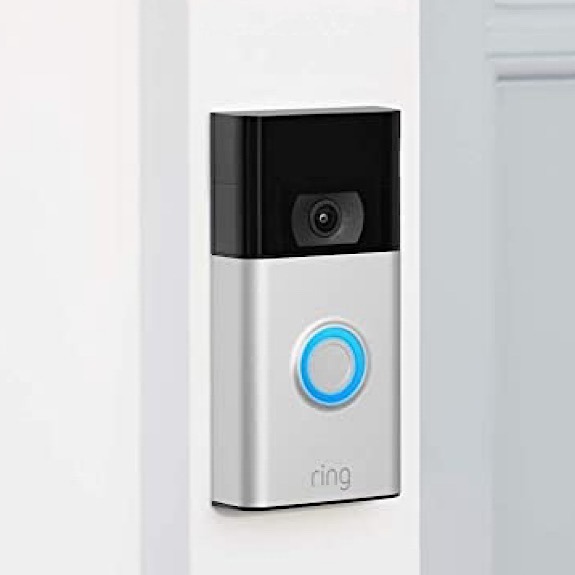
It would be biometric data identifying that person on their doorstep. That data includes facial recognition, as well as palm, finger, retina, iris, skin texture, typing, and gait. It even includes odor recognition.
This just has trouble written all over it. Facial recognition alone has been plagued with problems – especially identifying females and people of color. And to throw the rest of that into the mix just seems problematic, to say the least.
Someone who lives behind me may not be familiar with my adult son, as he moved out on his own five years ago. Say he visits and decides to go for a walk. He’s a big guy and has long hair – someone may think he looks suspicious. They submit footage of him, and now my Ring locks my doors and won’t let him back in. Or maybe the biometric data fails and locks him out after a picture of another big guy with long hair was marked as suspicious.
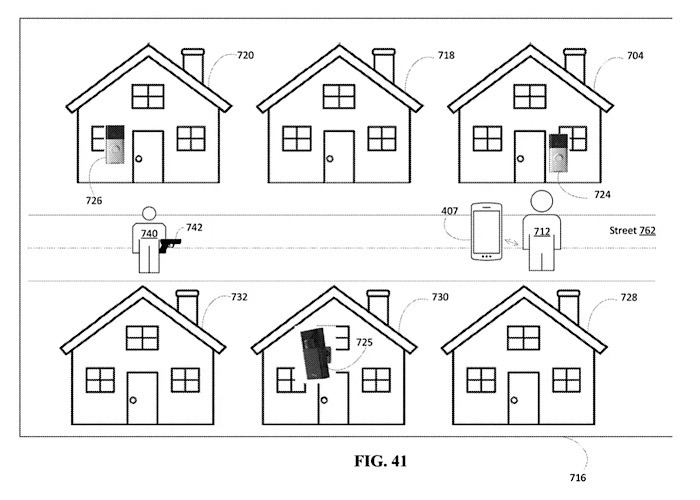
Another patent uses facial recognition to identify a pattern of “suspicious activity.” It includes a diagram of a neighborhood of homes with a person pointing a gun. Surely that would be a time you would want the increased protection. But could an innocent tool be identified by the cameras as a weapon?
Going Too Far?
Facial recognition is also mentioned in a July 2021 patent. It would be used to give you more information about who’s at your door. A patent from last March would use “fingerprint recognition, eye recognition, voice recognition, and facial recognition” to start audio and video recordings when the Doorbell is pushed. Likewise, door locks and security systems could be disarmed if it’s someone who is known to you.
Do we need this? Or is it enough to just break visitors down into people you know and people you don’t know? The public seems to have already let it be known that they don’t want their information being used by police departments. They want privacy. But if my neighbor’s Ring Doorbell is picking up images of visitors to my home – my family, my friends – and labeling them as suspicious through problematic biometric data and passing the photos and video around, that’s infringing on privacy.
Image Credit: Business Insider