
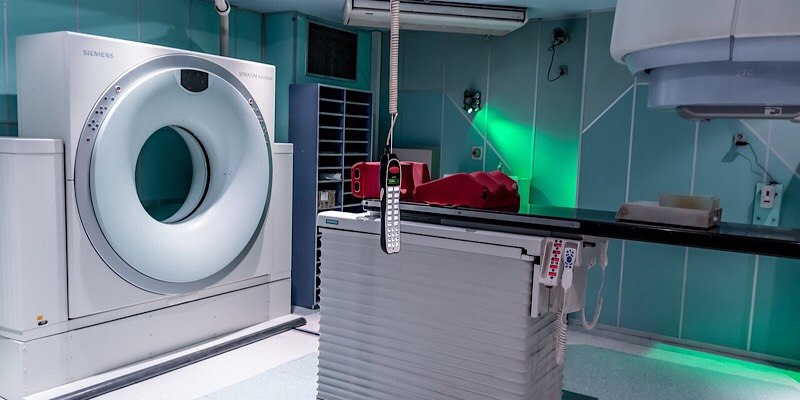

Anyone who has had to withstand an MRI exam knows how beneficial it could be if they were made a bit speedier. It can be difficult to lie still in that tube for so long. There’s good news for all those people: a current research project is using artificial intelligence to create a faster MRI exam called “fastMRI.” The really surprising part is who’s working on the research: Facebook and New York University.
Research Behind fastMRI
Magnetic Resonance Imaging is used by doctors to get detailed images of a person’s organs, blood vessels, bones, soft tissues, etc. Getting these more detailed images can help to diagnose medical difficulties.
Yet, as helpful as they are, MRIs can also be very, very long. They can take anywhere from fifteen minutes to over an hour to complete. It’s so difficult for a person to lay there still for that long, especially if they’re not feeling well. Additionally, it’s limiting on a hospital, as they can only do so many MRIs in a day since they take so long.
Facebook and NYU School of Medicine’s Department of Radiology are working together to launch “fastMRI.” They are hoping that a complete MRI will be able to take place in just five minutes.
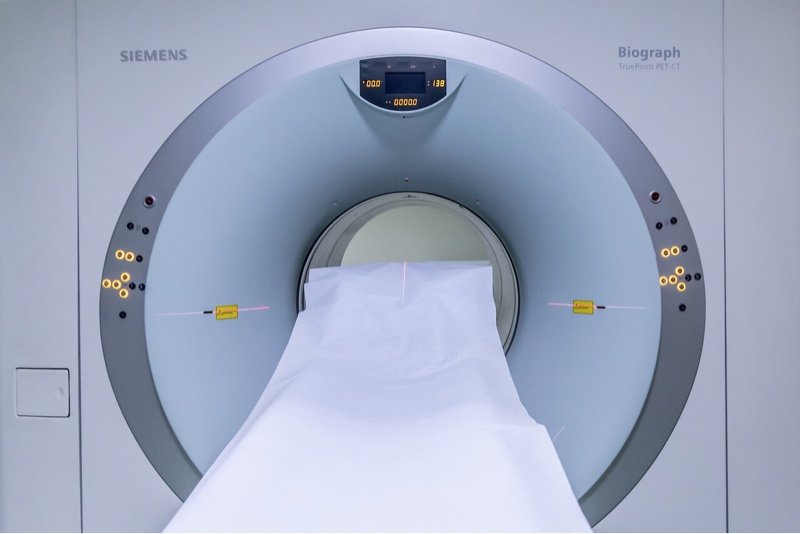
The goal is for these scans to capture less data, speeding them up, and then to have AI “fill in views omitted from the accelerated scan,” according to a Facebook. What you’re thinking right now is the obvious challenge: how to accomplish this without missing important details when less data is captured.
This is what the social network can help with. Facebook Artificial Intelligence Research (FAIR) will work alongside the medical researchers at NYU to train artificial neural networks to recognize the various structures in the human body.
To form that basis of the study, the researchers plan to use 10,000 clinical cases with close to three million MRIs of the knee, brain, and liver. No personal data, such as names and medical information, will be included.
“We hope one day that because of this project, MRI will be able to replace x-rays for many applications, also leading to decreased radiation exposure to patients,” said the chair of the department of radiology at NY’s School of Medicine, Michael Recht, MD, in a statement.
“Our collaboration is one between academia and industry in which we can leverage our complementary strengths to achieve a real-world result.”
No Downsides
Looking at fastMRI, there is no downside, providing they can figure out how to train the neural networks to recognize the different structures of the human body so that skipping certain images won’t matter in the completed scan..
It’s a win-win-win situation. Doctors will be happy to get the information they need to make a diagnosis, the hospitals will be happy to complete more in a day, and the patients will be happy that they don’t have to sit in that tube for so long. Five minutes is so much more doable.
What do you think of this project? Are you surprised to see Facebook as one of the partners? Let us know your thoughts in the comments section.