


Since being teased back in February, creators have waited eagerly for OpenAI’s AI video tool, Sora, to be released to the general public. The good news: Sora was released on December 10. The bad news: too much traffic means no one gets to create a new account.
Available in Most Countries
ChatGPT Plus subscribers around the world finally have the chance to create five-second AI video clips with up to 720p resolution with Sora. Or, if you have one of the brand spanking new ChatGPT Pro subscriptions, enjoy 20-second clips with an impressive resolution of up to 20 seconds.
But pay close attention to the “most” part. Personally, I wouldn’t say a product that’s not available in the U.K. and most of Europe is available to most of the world. So, currently, if you’re in the U.S. or “most” other countries beyond Europe, you can play around with AI video clips.
Incredibly High Demand
While I can’t imagine trying to prompt ChatGPT to create a comprehensive video in five-second increments, I’m apparently in the minority. The same day Sora released, account creation stopped.
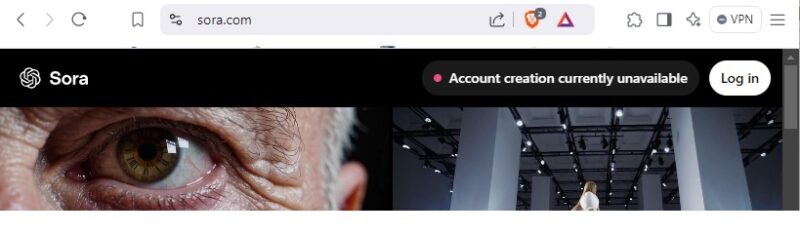
At the time of writing, no details are being released on when users may be able to create a new account to test Sora. But based on the homepage feed of newly created clips, users who did get in are enjoying themselves.
Premium Subscribers Only – With a Watermark
I’m not really surprised that ChatGPT is limiting Sora to paying subscribers only. For us free users, we don’t even get a quick trial or sample. We just get to window shop to see what’s possible.
The paid plan gets you just 50 priority videos a month. Remember, these are five-second clips, so it’s going to cost you a lot for roughly a four-minute video. What sucks is that your videos get a watermark. Want to remove it? You’ll have to pay even more.
Personally, I’ll just stick to filming videos on my phone for now, but I am curious just how well Sora could translate my ideas into videos.
Facing Controversy Already
As with most AI tools, not everyone is on board. It’s hard not to think about the obvious legal issues. In fact, a group of artists leaked access to Sora a week ago in a protest against “art washing” and not paying for their contributions during the research and development phase.
To avoid the legal issues around the misuse of content for AI creation, Sora is limiting what you can upload as a prompt, such as no images of anyone under 18, no copyrighted material, and no adult/explicit content. Try it and you could get banned.
I’m not jumping on board Sora just yet. I’ll stick with basic ChatGPT for simple things like finding good gift ideas. I also love using Spotify’s AI playlist feature to find great music. You can also try using Stable Diffusion to generate unique images for your prompts.
Image credit: Unsplash. Screenshots by Crystal Crowder.