
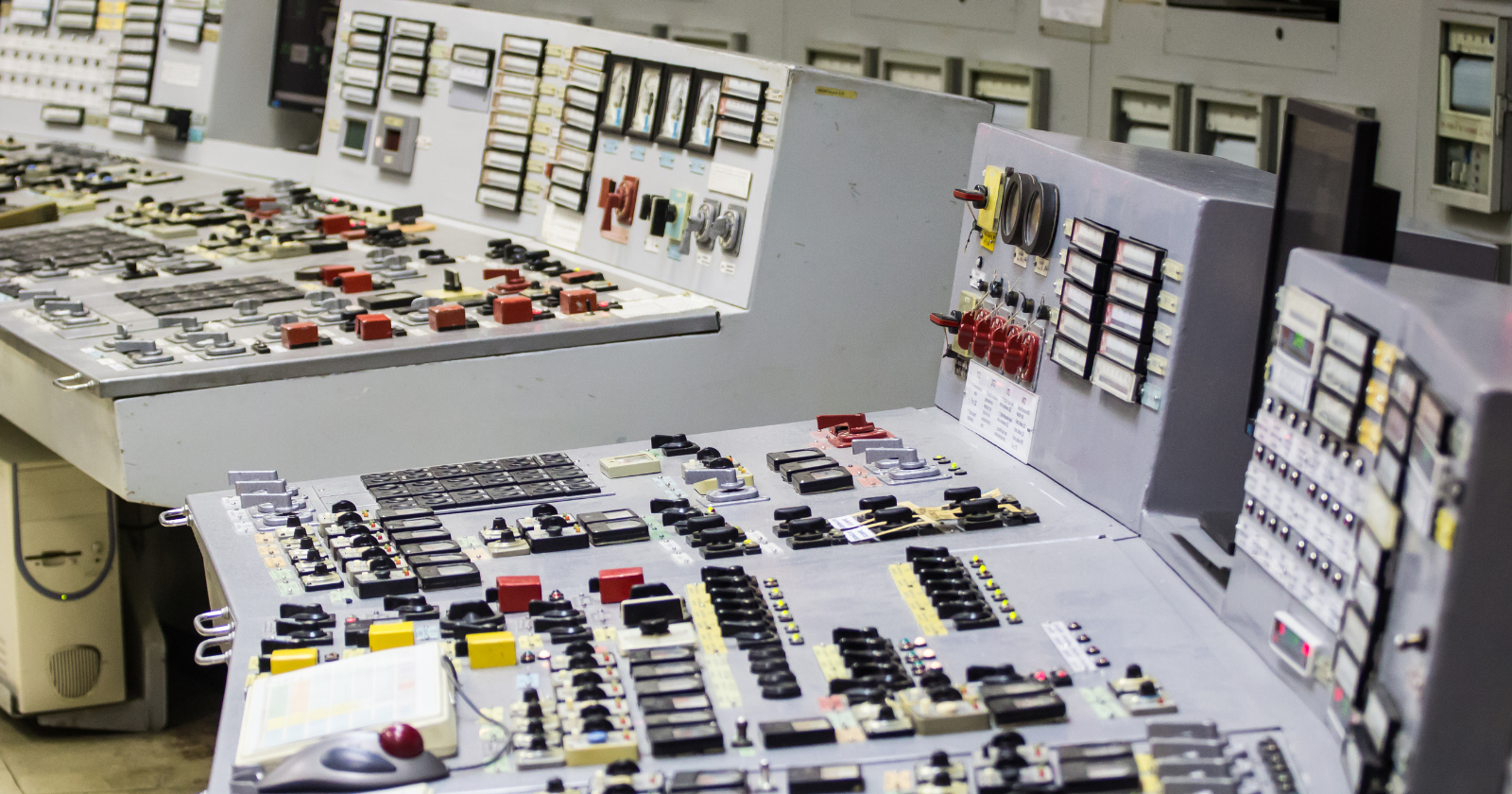

Harvard’s Mark II began solving test problems in July 1947 with approximately 13,000 electromechanical relays clicking inside it. The machine could perform eight additions, four multiplications, and twelve transfers every second, while its 100 relay registers stored roughly 1,200 decimal digits.
Those figures came from a contemporary description of the machine published shortly after it was built. They describe a computer whose arithmetic depended not on microchips or electronic memory, but on thousands of physical switches opening and closing in carefully arranged sequences.
The famous moth found inside Relay 70 was therefore more than a comic accident. It exposed the physical nature of early computing: every number, instruction, and intermediate result ultimately depended on clean pieces of metal making contact at exactly the right moment.
A calculator built from 13,000 switches
An electromechanical relay is a switch controlled by an electromagnet. When current passes through a coil, the magnetic field pulls a small metal armature into a new position, opening one electrical path or closing another.
One relay can make only a simple decision. Connect thousands of them through carefully designed circuits, however, and those individual switches can store numbers, transfer values, choose instructions, and perform arithmetic.
The Mark II contained approximately 13,000 relays of a new high-speed design. Contemporary accounts said an individual relay could operate reliably within one-hundredth of a second, although a complete calculation required many relays to work together in sequence.
The machine had 100 relay registers that collectively held about 1,200 decimal digits. Numbers were normally represented with ten significant decimal digits and a movable decimal position, allowing the Mark II to work with values ranging from extremely small fractions to numbers in the quadrillions.
This was an important break from the Harvard Mark I. As the IEEE Computer Society’s account of Howard Aiken’s machines explains, the earlier calculator relied heavily on electromechanical counters and rotating mechanisms, while the Mark II used relays for its numerical storage as well as its control circuits.
Relay computers were not unique to Harvard. Six years earlier, Konrad Zuse had demonstrated the Z3 in Berlin using roughly 2,000 telephone relays, showing that a programmable calculator could be assembled from switches originally developed for communications equipment.
Two complete calculators inside one machine
The Mark II was not simply one enormous calculating unit. It contained two substantially identical calculators that could operate separately on different jobs or be connected when a larger problem required the resources of both halves.
That arrangement gave its operators a form of flexibility that was unusual for the period. One side could continue processing a problem while work was prepared or checked on the other, reducing the amount of time for which the entire installation had to sit idle.
Programs did not sit inside electronic memory. Instructions entered through punched paper tape, with patterns of holes telling the machine which operation to perform and which registers to use.
The Mark II could consult eight tape feeds for numerical data and four tape feeds for instructions. According to the contemporary technical description, it could read one number and one instruction from paper tape in approximately one-thirtieth of a second.
The result was a machine that was programmable but not easily editable. Changing a sequence could mean preparing a new length of tape, checking the holes, feeding it through the reader, and watching closely to see whether the physical machine followed the intended path.
Software was still something an operator could hold. Decades before Apollo programs were woven into rope memory by hand, the Mark II’s instructions travelled through the room as long strips of perforated paper.
The Navy needed mathematical tables
The Mark II was built for the US Navy rather than as a general university experiment. In November 1944, the Bureau of Ordnance asked Harvard’s Computation Laboratory to design an automatic digital calculator for the Naval Proving Ground at Dahlgren, Virginia.
The request grew from the volume of calculation required to produce firing and range tables. Artillery trajectories depended on variables including elevation, velocity, distance, atmospheric conditions, projectile design, and the changing behaviour of a shell during flight.
Before automatic calculators, teams of human computers worked through such equations repeatedly. Even when each individual calculation was manageable, producing a useful table across many possible ranges and conditions could consume an enormous amount of labour.
Clinton Bramble of the United States Naval Academy helped push the project forward because he believed the Navy had to move beyond hand calculation when producing range tables. The Naval Postgraduate School’s history of its mathematics department preserves his account of why the Mark II was commissioned.
The machine was built and tested at Harvard before being delivered to Dahlgren in 1948. There it joined a naval installation that was becoming one of the country’s most important centres for automated scientific and weapons calculations.
Programmer Ralph Niemann later remembered the Mark II as a room-filling machine with moving paper tape and constant clattering from its relays. His recollections, preserved by the IEEE Computer Society, describe a computer whose operation could be watched and heard as it worked.
Eight additions every second
The Mark II’s speed sounds microscopic beside modern hardware. Eight additions per second would now be too slow for even the simplest consumer device, but in 1947 it represented a substantial increase over calculations performed manually or through slower mechanical equipment.
The machine could also complete four multiplications and twelve transfers each second. Division was handled through repeated approximation using the operations the calculator already performed, rather than through a single dedicated division mechanism.
Its speed came from making thousands of relays act as one coordinated system. An individual switch might change position in one-hundredth of a second, but arithmetic required values to move through a succession of registers and control circuits before a result emerged.
The Mark II was described at the time as at least twelve times as powerful as the Mark I. It also demonstrated how quickly computer architecture was changing, even while engineers were still building machines from mechanical contacts and paper tape.
Within a few years, vacuum tubes and electronic storage would begin displacing relay-based designs. Later machines such as the IBM 305 RAMAC would place millions of characters on spinning magnetic disks, making the Mark II’s 100 relay registers seem like a narrow ledge of memory.
The moth found the machine’s weak point
On 9 September 1947, while the Mark II was still undergoing tests at Harvard, operators recorded trouble in Relay 70 on Panel F. Inside the relay contacts, they found a moth.
The insect was removed and taped into the operations logbook beside the handwritten observation, “First actual case of bug being found.” The page is now held by the Smithsonian’s National Museum of American History.
The incident did not create the engineering term “bug,” which was already in use. For the Mark II itself, the more revealing fact is where the moth was found: between physical contacts whose ability to close cleanly determined whether part of the machine worked at all.
A speck of dirt, a worn contact, a loose connection, or a trapped insect could interrupt a signal. Troubleshooting therefore required operators to understand both the mathematical sequence on the tape and the physical route electricity followed through thousands of components.
The logbook entry records that the machine was in tests, not that the moth ruined a historic calculation. Its preservation matters because it captures the ordinary maintenance reality behind one of the most advanced calculators of its time.
The Mark II’s full technical description eventually filled a 336-page manual produced by Harvard’s Computation Laboratory. A copy is preserved in the Smithsonian’s Grace Murray Hopper Collection, documenting a system complicated enough to require an entire book to explain its relays, registers, tapes, and operating procedures.
The paper tapes no longer race through their readers, and the thousands of relays no longer fill a room with clattering arithmetic. What remains is the image of calculation made physical: ten-digit numbers held in banks of switches, instructions punched into moving paper, and one small moth resting in the exact place where metal was supposed to meet metal.