
iPhone Wi-Fi Bug Renders iPhone Unable to Connect

Iphone Wi Fi Bug Featured

Living in this technology age, many of us have a fear of not being able to connect – not being able to reach people, keep up with social media, stream media, finish a deadline on time, etc. A new iPhone Wi-Fi bug has been discovered that makes any iPhone it comes near unable to connect to Wi-Fi. This new bug seems worse than a similar bug that was just discovered a few weeks ago.

New iPhone Wi-Fi Bug Discovered

Security researcher Carl Schou discovered the new iPhone Wi-Fi bug and reported it on Twitter.

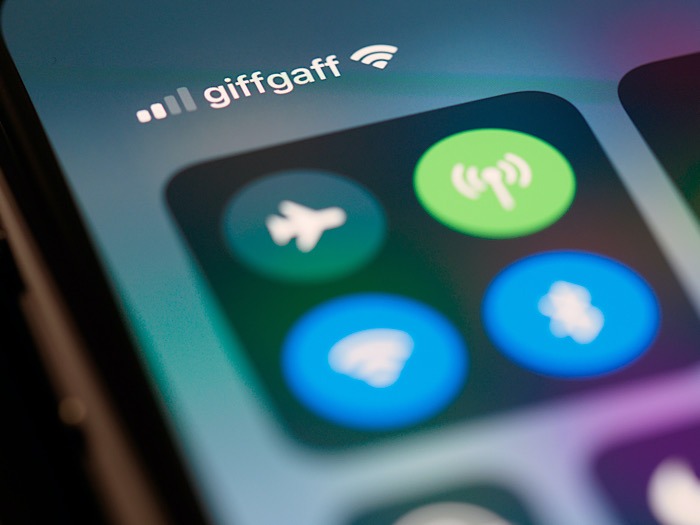
He wrote on July 4, “You can permanently disable any iOS device’s Wi-Fi by hosting a public Wi-Fi named ‘secretclub%power.’ Resetting network settings is not guaranteed to restore functionality #infosec #0day.”
Iphone Wi Fi Bug Control Center

Schou came back later in the day and responded to his own tweet to say, “Seriously, I still don’t have Wi-Fi.”

While it seems a hard factory reset may fix the iPhone Wi-Fi bug, no one has come forward yet to say they tried it and that it worked. It seems to be such a dangerous issue that no one wants to attempt getting the bug to try the reset as a possible solution.

Connection to Earlier iPhone Wi-Fi Bug

On June 18, Schou reported a similar bug. He tweeted, “After joining any personal Wi-Fi with the SSID ‘%p%s%s%s%s%n,’ my iPhone permanently disabled it’s [sic] Wi-Fi functionality. Neither rebooting nor changing SSID fixes it. :~)”

A major difference between the two iPhone Wi-Fi bugs is that the earlier one is fixable by resetting the network settings. Another major difference is that the earlier bug relied on a user attempting to connect to the faulty network. The new bug, however, can be triggered by an iPhone simply coming within a certain range of a public Wi-Fi hotspot using that name.
Iphone Wi Fi Bug Phonee

It’s assumed that the two iPhone Wi-Fi bugs are connected because they both make use of a coding error within iOS. To avoid these two bugs and perhaps others of their ilk, you can avoid using networks that start with “%s,” “%p,” and “%n.”

You can be safer by avoiding networks that use percent signs in the title. To be even safer, avoid all unknown networks until a security update is released that will fix it.

If you’re having issues with other bugs or other ills, learn how to find and remove viruses. Also learn how to fatory reset your iPhone in case it’s ever needed.

Subscribe to our newsletter!

Our latest tutorials delivered straight to your inbox

Laura Tucker Avatar

Read next

When the SS Great Eastern laid the first working transatlantic telegraph cable in 1866, a message that had taken ten days by steamship suddenly crossed the ocean in minutes, and the financial markets of London and New York were forced, within a single trading week, to invent the modern concept of synchronised global price.
The Big Ear telescope was scanning at 1420.4056 megahertz on the night of 15 August 1977, the exact frequency at which hydrogen atoms vibrate across the universe, because Giuseppe Cocconi and Philip Morrison had argued years earlier that any species trying to be found would broadcast on that channel — and then, for 72 seconds, something did.
In 2016, archaeologists dated two rings of snapped stalagmites in France’s Bruniquel Cave to 176,500 years ago, evidence that Neanderthals had walked 336 metres into darkness with fire and built architecture deep underground long before modern humans reached Europe
Otto von Bismarck was 74 when Germany adopted the world’s first national old-age social insurance program in 1889, setting the pension age at 70 after years of fighting socialists with bans, laws, and a promise few workers would live long enough to use
When cosmonaut Valeri Polyakov stepped out of his Soyuz capsule in March 1995 after 437 consecutive days aboard Mir, doctors recorded him at several centimetres above his pre-flight height, and his spine had become so unaccustomed to gravity that the recovery team carried him to a chair rather than risk the compression of letting him walk.
When Bell Labs engineer Karl Jansky pointed a rotating antenna at the sky in 1932 looking for sources of transatlantic radio static, he kept picking up a faint hiss that peaked every 23 hours and 56 minutes, and he eventually realized he had become the first human to hear the center of the Milky Way.
When Harvard astronomer Cecilia Payne submitted her 1925 doctoral thesis arguing that the Sun was made almost entirely of hydrogen, the field’s senior figure Henry Norris Russell talked her into adding a line calling the result ‘almost certainly not real,’ and then published the same conclusion himself four years later to widespread acclaim.
When seismic waves from the Chicxulub impact reached what is now North Dakota roughly ten minutes after the asteroid struck, they appear to have triggered a ten-metre standing wave in an inland river that flung fish onto the bank and buried them under glass beads still falling from the sky.