
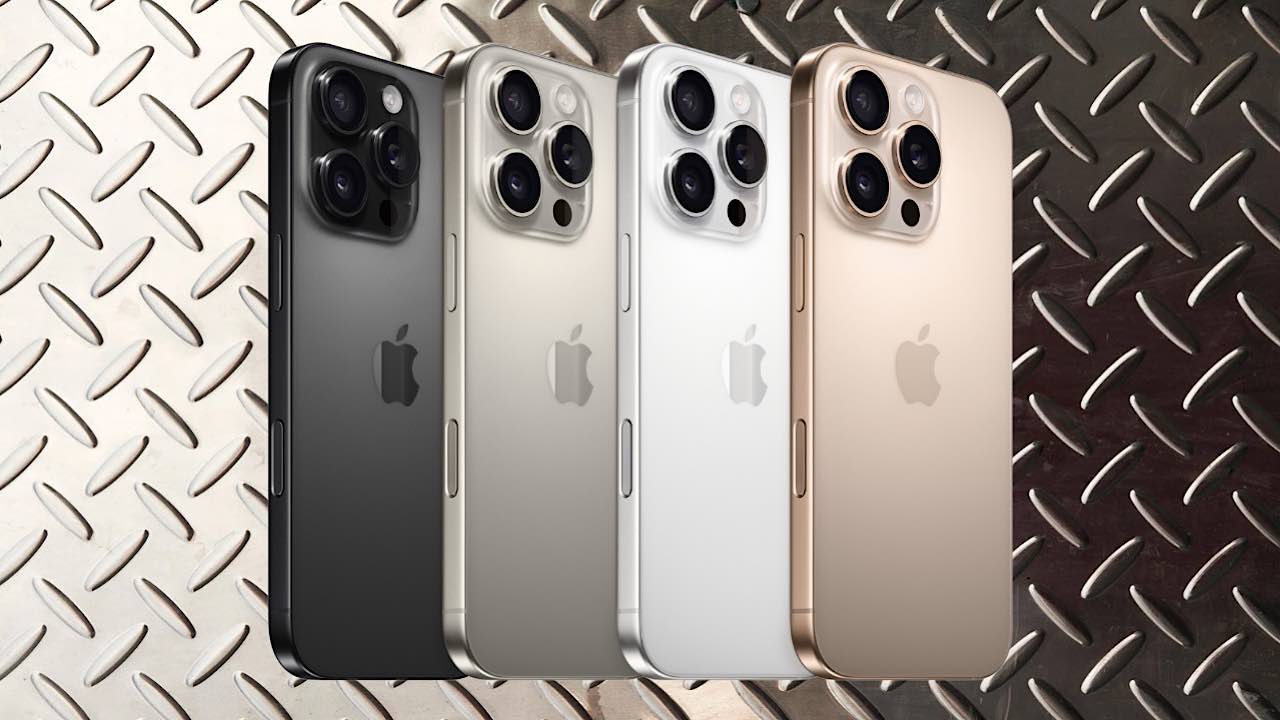

To no one’s surprise, when Apple introduced the iPhone 16 series on September 9, it announced that the series includes Apple Intelligence, a feature that was introduced in at the WWDC in June. The iPhone announcement also included a new Apple Watch and updates to the AirPods lineup.
iPhone 16 Series
The new Apple handset series includes the basic iPhone 16, the iPhone 16 Plus, the iPhone 16 Pro, and the iPhone 16 Pro Max. Each one is built to make use of Apple Intelligence once it’s released with iOS 18.1 this fall.
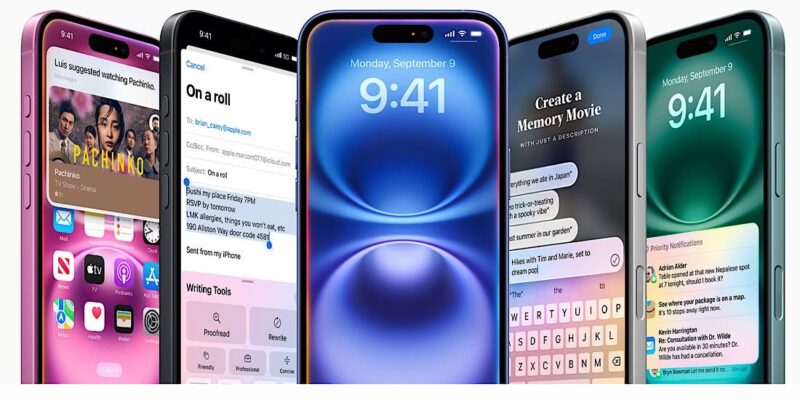
Instead of fitting artificial intelligence into the iPhone, Apple has redesigned its flagship phone series from the group up to use Apple Intelligence, the company’s own brand of AI. In truth, it will have limited features when it’s released next month. The full features aren’t expected until next year. Artificial Intelligence will help you write emails, provide detailed summaries of emails, proofread, create images, provide a better chat experience with Siri, and more.
iPhone 16 and iPhone 16 Plus
The iPhone 16 (6.1” display) and iPhone 16 Plus (6.7” display) have Camera Control. This allows you to snap a photo of something near you to learn more about it, such as a bird or a restaurant. The system includes a 48MP Fusion camera with a 2x Telephoto option, along with an Ultra Wide camera for macro photography.
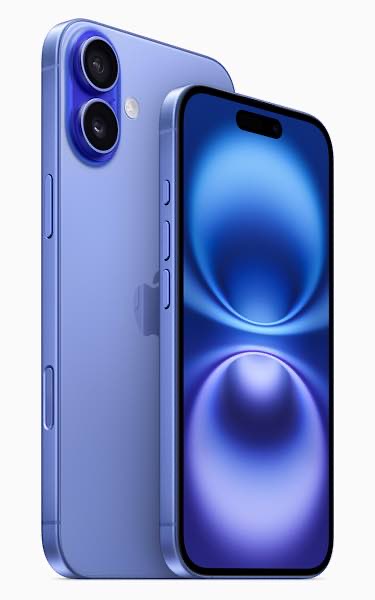
Powering the phones is a new A18 chip that will allow you to do more demanding tasks and play heavier games. It includes an upgraded 16-core Neural Engine with ML models that are up to two times faster. The 6-core CPU is 30 percent faster than all competitors. A new, larger battery is included as well to complete the hardware.
The iPhone 16 design is water- and dust-resistant and includes a strong back glass. An improved Ceramic Shield is 50 percent tougher than previously and twice as tough as glass on other smartphones. The Super Retina XDR displays are OLED and have Dynamic Island as well. There is also a new Action button that allows you to program it to your choice of actions, such as Shazam or unlocking your car.
Apple iPhone 16 Pro and iPhone 16 Pro Max
The iPhone 16 Pro (6.3” display) and iPhone 16 Pro Max (6.7” display) include all of the features in the iPhone 16 and iPhone 16 Plus and more, with some existing features becoming more advanced. The new handsets are built around the A18 Pro chip with 2nd-gen 3-nanometer technology and smaller, faster transistors. The 6-core CPU has two performance cores and four efficiency cores, making it 15 percent faster, while using 20 percent less power.
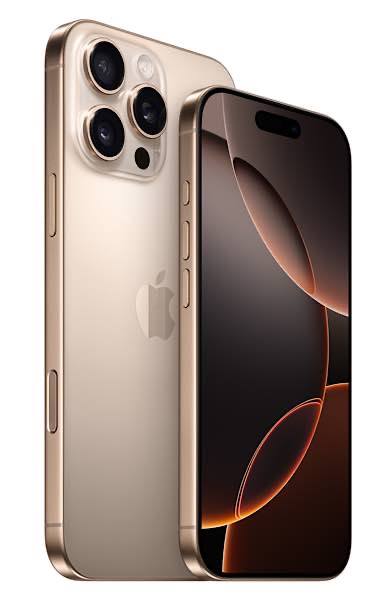
These two models include Super Retina XDR displays with Always-On and ProMotion technology. They’re constructed of a strong, lightweight titanium and have the same Ceramic Shield as the two lower priced iPhone 16s.
The camera system in the two Pro iPhones also include a quad-pixel sensor and Apple Camera interface. This unlocks 4K120 fps video recording in Dolby Vision. The sensor can read data two times faster, which will enable zero shutter lab for ProRAW and HEIF photos. The Telephoto lens increases from 2X to 5X. Never worry again about being too far away from your subject. You can also adjust the sound with Audio Mix after filming video to make it sound like it was recorded in a studio.
Apple Watch Series 10
Perhaps the biggest change to the Apple Watch Series 10 is that it’s the thinnest Apple Watch to date, yet it also has the biggest display to date as well. It’s 10 percent thinner than the Series 7, Series 8, and Series 9, while weighing 20 percent less than the stainless steel version of the Series 9.
It’s available in both aluminum and titanium finishes, with more rounded corners and a wider aspect ratio. With 30 percent more active screen area, it’s easier to type a message, and you can see an additional line of text. It includes a wide-angle OLED display, allowing it to be 40 percent brighter than the previous version when viewed from an angle. This has increased the refresh rate from once a minute to once a second.

The watch is built around the new 10 SiP and built-in 4-core Neural Engine, and still has an all-day 18-hour battery life. A larger, more efficient charging coil is built in, making it the fastest charging Apple Watch. You can get eight more hours with just 15 minutes of charging and can charge to 80 percent in just a half hour.
The Apple Watch Series 10 also has a feature that helps identify sleep apnea, using the accelerometer to monitor small movements around your wrist, movements that are connected to interrupted respiratory patterns. There’s also a new depth gauge with stroke detection and lap counting for pool swims. Additionally, for the first time, you can now hear music on your Apple Watch.
AirPods 4, AirPods Pro 2, and AirPods Max
Also being released are new AirPods 4, new colors for the AirPods Max, and a new hearing health experience for the AirPods Pro 2. Hearing Protection is provided via the ear tips, and a Hearing Test feature allows you to check your hearing. After taking the self-guided test, you’ll receive a summary of the results in the Health app. Added to this, the AirPods Pro 2 can be used as a clinical-grade Hearing Aid.
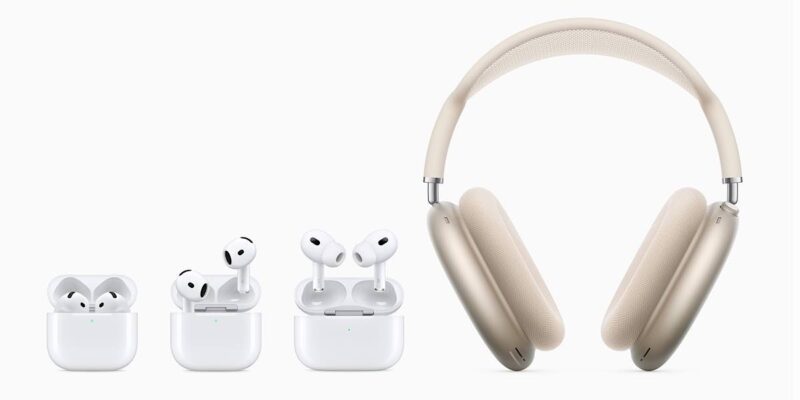
AirPods 4 have a battery life up to 24 hours with the charging case and all-new design. They feature a new acoustic architecture and add Personalized Spatial Audio. These earbuds allow you to respond to Siri announcements by nodding your head or shaking it no. AirPods Max can now be charged via USB-C, and are offered in five new colors.
There are many new features throughout the AirPods line, iPhone 16 line, and Apple Watch 10 line, but what Apple is promoting the most is Apple Intelligence. With the tech world increasingly bending toward AI, it makes it a great time to update your iPhone. The Apple Watch and AirPods line just seem like extra at this time. For more AI, check out these iOS AI apps that will generate content.