


If you’ve never been involved in a building fire, either during or after it’s been extinguished, you might struggle to see the depth of the situation. But the heat can be imaginable, and sometimes there is so much smoke that fills the room that it’s hard to see. The SmokeBot robot could help in that situation by entering buildings when it’s not safe for a human to do so.
Previous Robots
There’s no doubt there’s a need for such a robot. No matter how careful we are, there is always going to be accidents that lead to fires, whether they’re in businesses or in homes. Firefighters will always be everyone’s heroes, but with a helpful robot, their jobs could be just a little less treacherous.
There have already been two humanoid robots that were created to help in these instances: a robot built by the U.S. Navy and another that was created by researchers in Italy.
The Navy’s prototype firefighting robot is called SAFFiR, which is short for “Shipboard Autonomous Firefighting Robot.” It was created to help fight shipboard fires. SAFFiR has sensors that enable it to see through thick smoke and has hands that can manipulate things such as doors and hoses. And because it was built by the Navy for use with shipboard fires, it can stay upright while the ship lists back and forth.
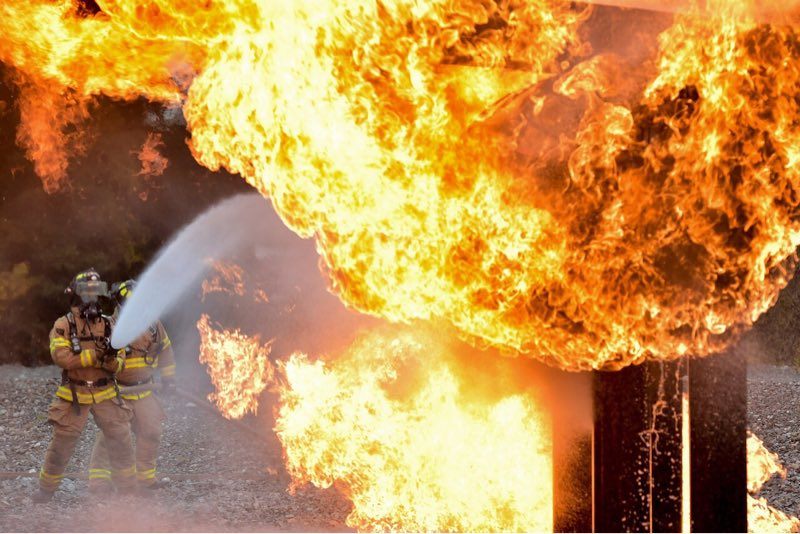
Italian researchers developed the “Walk-Man,” which shouldn’t be confused with the classic personal cassette player. It was designed to locate fires, walk toward the fire, and then activate an extinguisher while collecting images of the fire to send back to a human team to remotely analyze the situation and guide the robot.
SmokeBot Robot
SmokeBot is smaller than the other two fire extinguishing robots, but it could still be just as useful in a fire or even an indoor gas leak. Like the others, it can also see and navigate its way through a smoke-filled room.
Something it may do a little differently than the others is that it plots maps of its location to assist the firefighters or even search-and-rescue teams. It does this by using a combination of gas sensors, radar, a laser scanner, and a thermal camera. A similar version is being used in Vienna, but it only has a robotic arm and a regular camera.
“We target robots operating in low-visibility environments, a scenario where robots could be very helpful, but in which it was not possible to use them prior to SmokeBot,” said the project coordinator and professor of Computer Science at Sweden’s Örebro University, Achim Lillienthal.
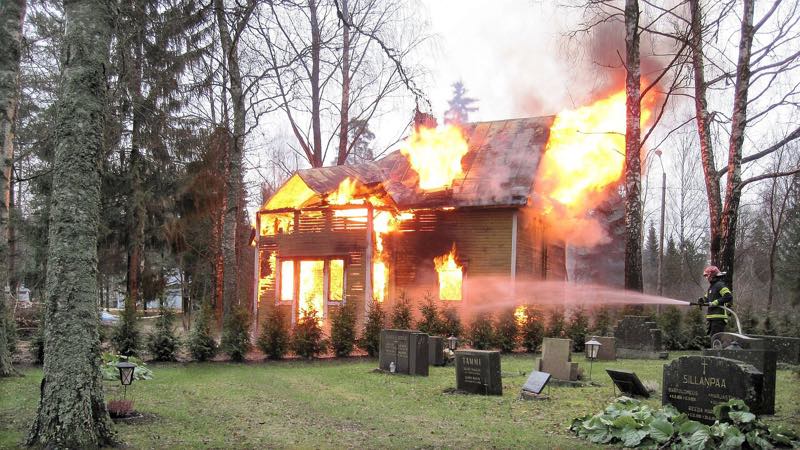
“To enable using robots in low-visibility scenarios – with a lot of smoke or dust, for example – we developed novel sensors and perception and cognitive approaches tailored to those sensors.”
Along with an active heat shield, the SmokeBot can also autonomously find areas with a Wi-Fi connection. If it becomes unconnected from the human firefighters who are controlling it via a remote, it can find its way back to the last spot it had an Internet connection.
Future Uses
While the SmokeBot robot was designed to be used to fight fires, there are other missions it could help with, although it would move too slowly to help in critical rescue missions.
The team that built the SmokeBot is considering using the same technology in drones, Lilienthal explained that currently the sensors are too heavy for drones, but if they get lightweight sensors, then perhaps they could apply the technology to a flying robot to aid in low-visibility conditions.
What other uses do you see for this robotic technology, and how successful do you think it will be in fighting fires? Add your thoughts and concerns in the comments section below.