


Apple changed the game last year when it put its own chip in its new Macs. Last month it changed the game even more by adding the M1 to its new iPad Pros. Now, the game is changing again. Thanks to Linux Kernel 5.13, Linux has picked up native support for use on M1 Macs.
Linux on M1 Macs with Corellium
The M1 is completely new for both Macs and iPad Pros. The Mac had been using Intel chips, and iPad Pros were limited by the same chip used in iPhones. But now, both Macs and iPad Pros pick up great M1 power.
Last week, Corellium brought that success to Linux when it successfully ported Ubuntu to M1 Macs. The Corellium team explained it was accomplished with a modified version of Linux and USB support.
Apple wasn’t necessarily helpful with this effort. Apple’s senior vice president of software engineering Craig Federighi previously said there would be no native booting of Windows or Linux. There would be no dual-boot or Boot Camp. Virtualization was the only method Apple looked to.
Corellium CEO Chris Wade tweeted about the successful process, “Linux is now completely usable on the Mac Mini M1. Booting from USB a full Ubuntu desktop (rpi). Network works via a USB c dongle. Update includes support for USB, 12C, DART.”
Also porting Linux to M1 Macs was Hector Martin, a developer who makes a habit of running the OS on unconventional hardware. Linux creator Linus Torvalds was eager to get Linux onto M1 Macs as well. “I’ve been waiting for an ARM laptop that can run Linux for a long time,” he said last fall when the new M1 Macs were announced. “The new [MacBook] Air would be almost perfect, except for the OS.”
But Apple has its reason to . not add native support for this, especially with the Corellium camp. Corellium makes a virtual iPhone available to security researchers for vulnerability research. Apple wasn’t happy about it and went so far as to file lawsuits. So far, the legal action has not been successful.
Linux 5.13 on M1 Macs
Linux has now added official support for M1 Macs with Linux Kernel 5.13. Actually, several ARM-based chips received support.
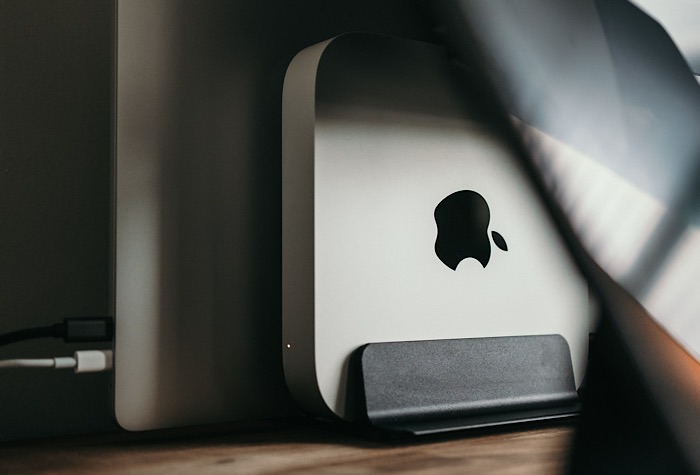
The new MacBook Air, MacBook Pro, Mac Mini, and 24-inch iMac can run Linux natively. The Corellium method does not run Linux on M1 Macs natively, so it can’t take advantage of the M1 performance.
Other changes with 5.13 include security features and Free Synch HDMI support.
Torvalds announced the release of Linux Kernel 5.13 on his blog: “So we had quite the calm week since rc7, and I see no reason to delay 5.13. … Of course, if the last week was small and calm, 5.13 overall is actually fairly large. In fact, it’s one of the bigger 5.x releases, with over 16k commits (over 17k if you count merges), from over 2k developers. … And with 5.13 out the door, that obviously means that the merge window for 5.14 will be starting tomorrow. I already have a few pull requests for it pending, but as usual, I’d ask people to give the Knal 5.13 at least a quick test before moving on to the exciting new pending stuff.”
Read on to learn why the new iPad Pros aren’t able to fully utilize the M1 yet and how to run an M1 Mac app as an Intel app.