
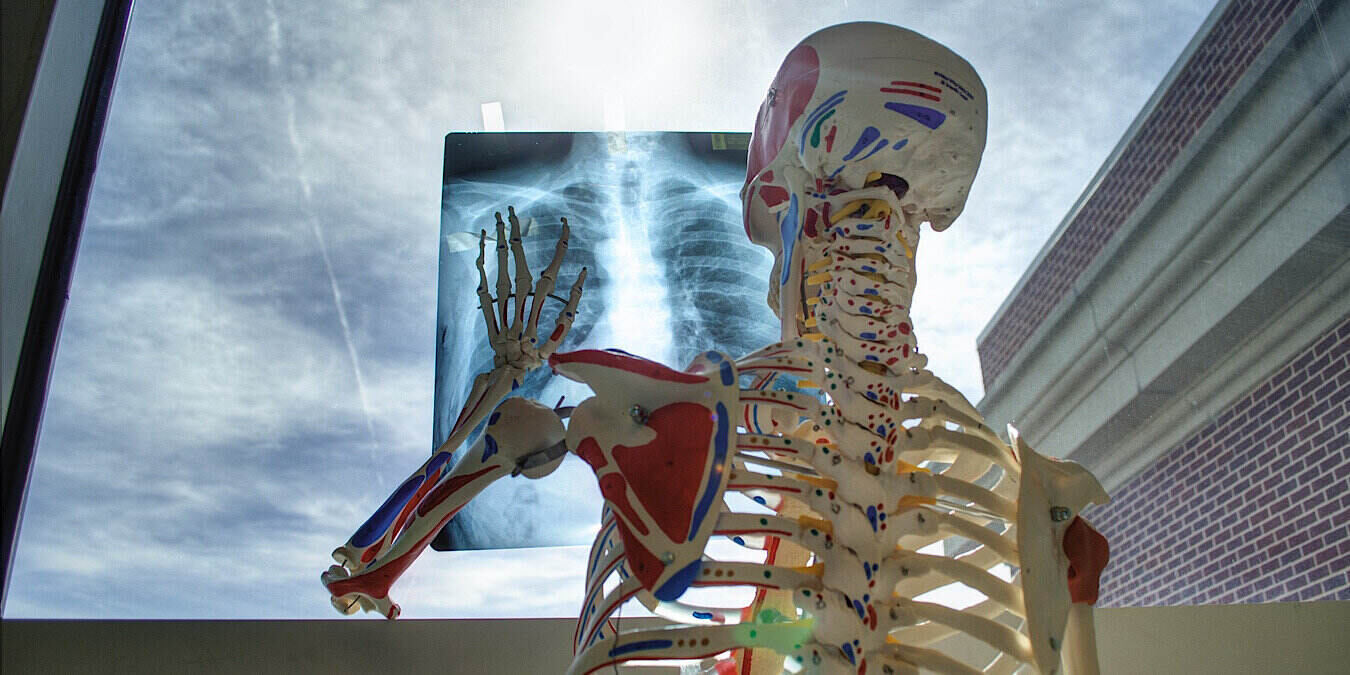

We’ve been in a trend for a few years of bringing a medical aspect to our fitness devices and smartwatches. They can check our heart rates and even our blood oxygen level. The CALNEO XAir goes even further with a portable X-ray device that allows you to snap your own X-rays at home, at work, on vacation, wherever you happen to be.
CALNEO XAir Portable X-Ray Device
This is home health care at its best, and once you go this far, it makes you question what you couldn’t do at home. Obviously, you’re not going to do surgery at home, but when we’re in the middle of a global health crisis that is anchoring many of us in our homes, it’s good to explore these other options that can keep us safe in our own homes.
The CALNEO Xair is a portable X-ray unit that is handheld. Last year the unit received the Bronze Award in International Design Excellence from IDEA and the Gold Product Award from IF Design.
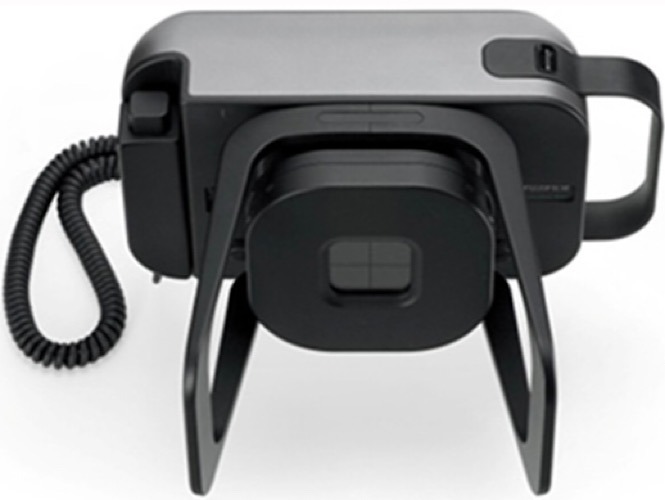
The FUJIFILM team created the device to give a convenient choice in home health care that also meets recent medical guidelines and scientific standards. The exterior of the device has a cohesive, easy configuration. The advanced technology has been updated. This includes the Xair’s battery power and the Xair’s sensitive cassette for diagnostic imaging.
The cassette uses FUJIFILM’s proprietary ISS method that translates X-ray energy into optical signals without using any electricity. Additionally, the device now has noticeably less noise.
Super-sensitive imaging plates in the CALNEO Xair will take high-quality X-ray images. What’s great about using this device in your home is that it only uses the radiation dose necessary to create the image, considerably less than the X-ray machines used in hospitals.
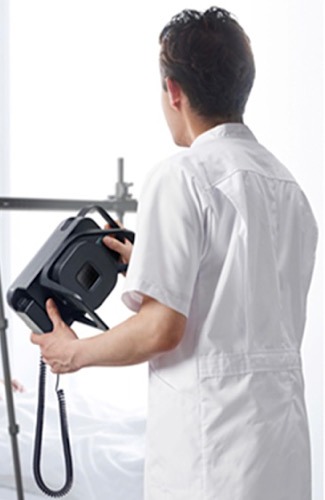
You can hold it comfortably in our hand, leading to it being convenient to use. It’s lightweight, too, at around seven pounds because of a smaller battery and a lighter X-ray tube.
Real-World Use
Let’s look at the ways this unit could be used. Say you trip and fall on the stairs in your home and can’t put weight on your ankle. You could use the CALNEO Xair Portable X-Ray Device to take a quick image of your ankle and see whether it’s worth a trip to the hospital. If there are no broken bones, you know you can just take some Tylenol, ice it, and wrap it yourself.
However, what if you hurt your hand? It could be difficult to take this X-ray yourself. You’d need help to carry this off, as you would if your injury is in a non-convenient location, such as your back.
No price or sales information is offered for the CALNEO Xair Portable X-Ray Device, so it’s difficult to determine whether it would be worthwhile and how reasonable the price is. Regardless, it’s definitely something to consider, especially if you live in a locale where it’s suggested that you stay in your home unless you absolutely have to go out during the pandemic.
If you’re into the whole DIY thing, read on to learn how to use paper and pencil to measure your vitals like a wearable.