


With the global health crisis we are all living through, our personal health is more important than ever. While it’s not a widely-publicized feature of iOS, the Health app on an iPhone can synch your medical records with your healthcare system. This feature has now opened up in the United Kingdom with two National Health Service trusts agreeing to work with Apple and make health records available.
NHS Health Record Data on iPhone
Milton Keynes University Hospital NHS Foundation Trust and Oxford University Hospitals NHS Foundation Trust (OUH) have opened up access of health records to patients with iPhones. This will allow patients to view lab results, vitals, medications, etc.
“It is, in our view, not right that patients can’t routinely access their medical records in the same way that, if they choose, they can access their banking records or so much other information that they own online,” said Milton Keynes chief executive Joe Harrison.
Milton Keynes made the records available just a few weeks ago, yet more than 300 users have already signed on, showing a desire within people to be in charge of their own health.
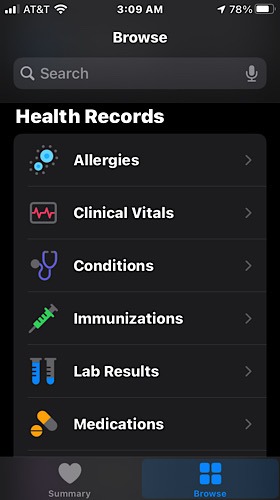
While it’s not necessarily new access, as this is the same information that has been available in the trusts’ patient portals, now it’s just that much easier to access and is within the same app that holds heart rate data from an Apple Watch and the number of steps taken that day. It could be such a benefit to marry that information.
“We’re the custodians of information — it’s not our information,” said OUH chief digital and partnership officer David Walliker. “If patients want to access the data, and we can do that securely, we should be doing it.”
Users do not have to worry in most cases that they will discover something catastrophic. The patient portals don’t connect to imaging and histopathology, so scans and biopsies won’t be included in the records. But some diagnoses could be made through blood tests, so there is a chance if a patient knows what they are looking for that they could discover something.
“It’s beholden on me to prepare them for what those results might show,” said Debbie Philips, consultant surgeon and chief clinical information officer at Milton Keynes. “So it might slightly push us towards framing discussions with patients along the lines of ‘I’m doing these tests, this is what we’re looking for, this is what it might show.”
The iPhone Health Records feature was supposed to roll out in the UK earlier this year, but the coronavirus pandemic delayed it, as the feature was being updated for the virus. There were also about 12 weeks of work done so that the data could be made available in iOS.
iPhone Health Records Elsewhere
The iPhone Health Records feature has actually been available since iOS 11 in 2018. Over 500 healthcare providers in 11,000 locations in the United States have integrated it, though again, it’s not a feature that is advertised, so many don’t know about it.
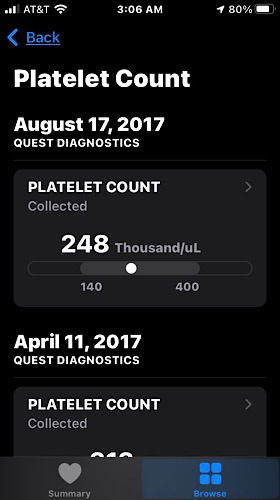
I will say that I discovered the iPhone Health Records feature some time ago and set about to get my records on my phone. While a few of my former health providers are included, my current one is not. So I can’t get access to my current information.
This is something I would make great use of. I get my blood tested every three months because of my history with leukemia. Because of COVID-19, I do some TeleMed doctor’s appointments on FaceTime, and we discuss my recent blood tests. It would be so helpful if the health system I am in now would make those records available.
Looking at the pandemic and the spread, it seems there is much that could be done with health records. Surely, there is a way it could be used alongside contact tracing. I would be shocked if that isn’t already in the works.
If you’re interested in getting this type of information and would also like to examine your activity, read on to learn how to generate reports of your Apple Watch activity.