

Even Google admits that their attempt at a social network has been a flop. Tying Google+ accounts to YouTube, bundling them with Gmail, using it as their photo storage service — none of it earned the network any love from users, with 90% of sessions lasting less than five seconds. Now, however, it’s all coming to an end thanks to a security breach that left hundreds of thousands of users’ data vulnerable to possible theft. Whether anything was actually taken is uncertain, but since the glitch was identified seven months before any news of it came out, Google is taking some heat for its lack of transparency.
What happened?
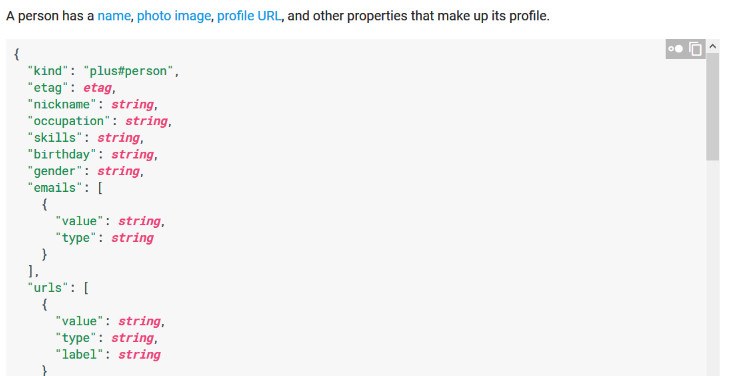
In March 2018 Google identified a security glitch in Google+. It was a developer API that accidentally gave certain third-party developers access to private user information (name, gender, email, etc.), but only if those developers had specifically asked for access. Only 438 developers ever did, and no evidence exists that any of them exploited the flaw or even knew about it. Google+’s unenthusiastic user base actually did it a favor here – there’s not a lot to steal, so no one is trying that hard to steal it.
Because there was never any record of unauthorized access to or use of customer information, Google technically did not experience a data breach, which means that they didn’t legally have to disclose it. However, the Washington Post found some memos referencing the glitch and broke the story on October 8th. These communications revealed a discussion in which Google specifically decided not to go public in order to avoid run-ins with regulators and public backlash.
Given the slew of new regulations and massive social data breaches, it’s clearly better for Google not to have its name attached to something like this. Nonetheless, one of the world’s biggest dealers in consumer data can reasonably be held to high transparency standards, and the perceived cover-up hasn’t been a good look for the company.
The shutdown: what to expect
Just about as soon as the story broke, Google countered with the news that they were going to shut down Google+, ceasing operations completely by August 2019. It was a pretty fast decision, probably because it was a) already something they’d been considering and b) a pretty good way to shift negative attention away.
If you’re still using Google+ for anything, this may come as bad news, but it’s not likely that you are. Even back in 2015 90.1% of accounts on the service were effectively empty – probably created as a way to access another Google service. In 2018 there may be a few Ingress (the precursor to Pokemon Go) players still hanging around, but other than that, it’s mostly marketers.
Until the service is sunsetted in August 2019, individual users will be able to access it as normal, but after that, their Google Apps accounts will no longer be connected to Google+. However, enterprise clients will still be able to use it as an internal social network for companies, which has actually become one of the service’s most popular applications. In fact, Google is planning on expanding that part of its business and will be releasing new products specifically targeted at making Google+ a better enterprise platform.
Where do we go now?
For most people, Google+ never really panned out as a Facebook alternative. The product itself was fine, but the crucial ingredient, scale, is hard to replace, which is why social media has often been pretty close to a zero-sum game. If you were on Google+ as a personal user, migrating to Facebook, Instagram, or another network shouldn’t be hard. Chances are most of your social circle is already there. If you’re not happy with their data practices, were you happy with Google’s? The global economy is increasingly being driven by your personal information, and since that doesn’t seem likely to change anytime soon, the best-case scenario is that companies will respond to issues like this one constructively and will work on improving their data security practices.