


Travel is big business, especially now. Throughout 18 to 24 months, no one was traveling because of the pandemic. But with everything opening up again, people are surging to travel again. Google Flights is pushing its services, promising to find you “the best deal on your next flight.” Is it better than other options?
Also read: How to Save Phone Battery While You Travel
Travel Booking Help
Although Google began Google Flights more than a decade ago, I’m just learning that it’s an option. Honestly, I didn’t even know it existed. And I enjoy my travel a great deal – and on that note, deals on my travel as well. But I’d never heard of Google Flights, and perhaps that’s behind this PR push with the blog post boasting about how to save on travel.
Just a few decades ago, we didn’t have the option to find our own travel deals. We had to go to a travel agent to book our flights. While I still do that when booking a cruise, it’s far too easy to use Expedia, Travelocity, etc., on my phone or computer to book a flight. But I actually have a preferred airline, so I just book directly.
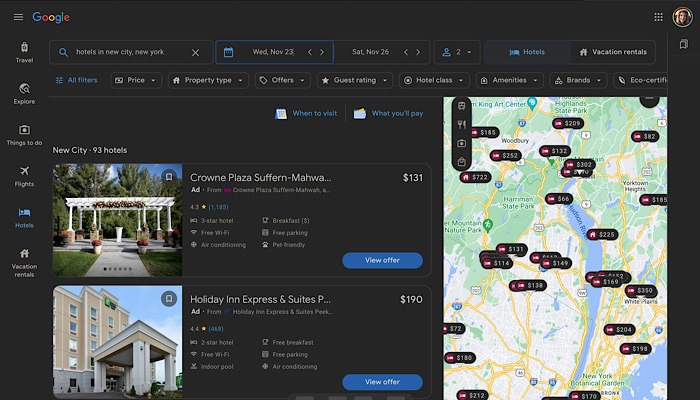
But I have used Expedia and similar services in the past for flights as well as hotels. It’s helpful to have all of your options laid out for you. Some apps will even send you a notification when a flight you’re watching drops in price or when the price is expected to increase. You can find the same types of services for hotels.
It turns out Google Flights has been doing this all along. And when I tried it, I found it couldn’t have been easier. Of course, that comes along with the knowledge of what Google is doing with the data I add, and that could be a major disadvantage for many.
Google Flights Help
Google is perhaps trying to let me and others know that with travel opening up again after the pandemic shutdown, it’s still here grinding out the numbers to help us book our travel. It published the blog post after it analyzed five years of airfare data to find pricing patterns.
A frequent question is when the cheapest days are to fly. Many people book midweek just for that reason. After its research, Google wrote that historically, Monday, Tuesday, and Wednesday departures are 12% cheaper than on the weekend. U.S. domestic travel is 20% cheaper.
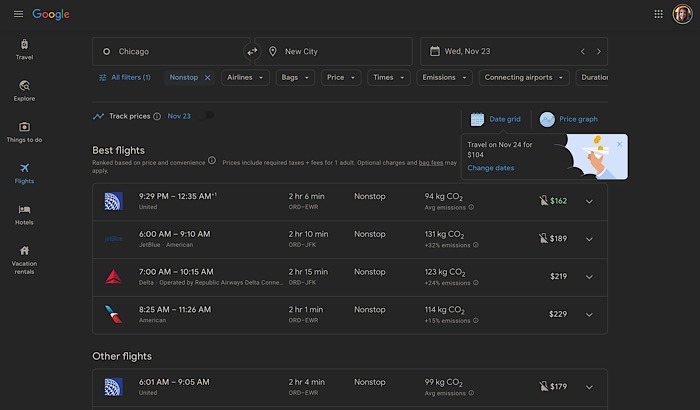
I’m rarely willing to book a flight with a stopover, and one of the reasons is that it’s often not even saving me money. Why would I do such a thing? However, Google Flights insists that historically, nonstop flights have been 20% more expensive than stopovers.
Another burning question is which day of the week is best to book your flight. I’ve heard before that Tuesday is the day, especially late at night. But Google says you don’t need to wait for Tuesday and just book on Tuesday, Wednesday, or Thursday, as prices have historically been 1.9% cheaper.
Another question people ask is how many days before a flight should they book their tickets. Google notes that U.S. domestic flights are usually at their lowest 21 to 60 days ahead of time, and those prices reach their cheapest around the 44-day mark.
However, if you’re booking for the holidays, domestic Thanksgiving travel can be booked 36 to 74 days ahead, and Christmas travel is best 22 days before your departure. But you may also face booked flights at that point. Google also provides preferred days to book to specific locations, summer vacation, and spring break.
Today is 82 days before Thanksgiving, so it’s probably too early to book for that if you’re looking for the best deal, but again, you could also be looking at booked flights, or at least your preferred seating being booked already if you wait longer.
Before you leave, check out this tutorial if you’re looking to use your own headphones on your flight.
Image credit: Unsplash All screenshots by Laura Tucker