
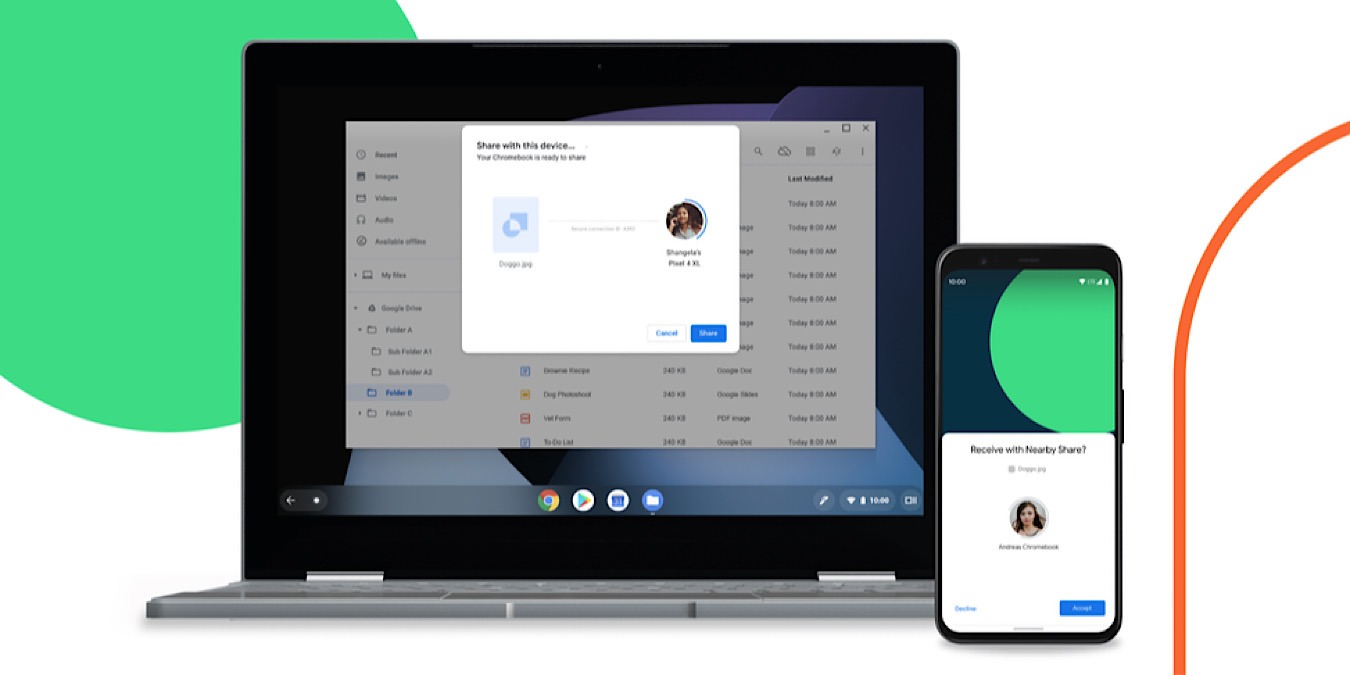

From time to time there are photos, files, links, etc. that you come across that you want to share with your family, friends, coworkers, etc. The Android Nearby Share feature allows you to transfer nearly whatever you wish effortlessly to anyone with an Android who is nearby.
Introducing Android Nearby Share
Sure, you can use your email to share the photos files, etc. But it takes a few extra steps and requires you to know the email of the person you’re sharing it with. Similarly, you can share through a text, but it requires you to know the phone number of the desired recipient and takes an extra step or two.
Apple has had the AirDrop feature for a number of years. This allows users to access their share menu and send to anyone who is within a certain distance. They just tap the recipient, and the photo, file, etc., is immediately sent to them.
Android has now adopted a very similar feature: Nearby Share. Users have been requesting it for some time. It is initially being released to Android 6.0 and up phones. Users are picking up the ability to instantly share photos, files, links, and more. Don’t worry, though, as Google said in its blog post introducing the feature that it will continue to protect your privacy.
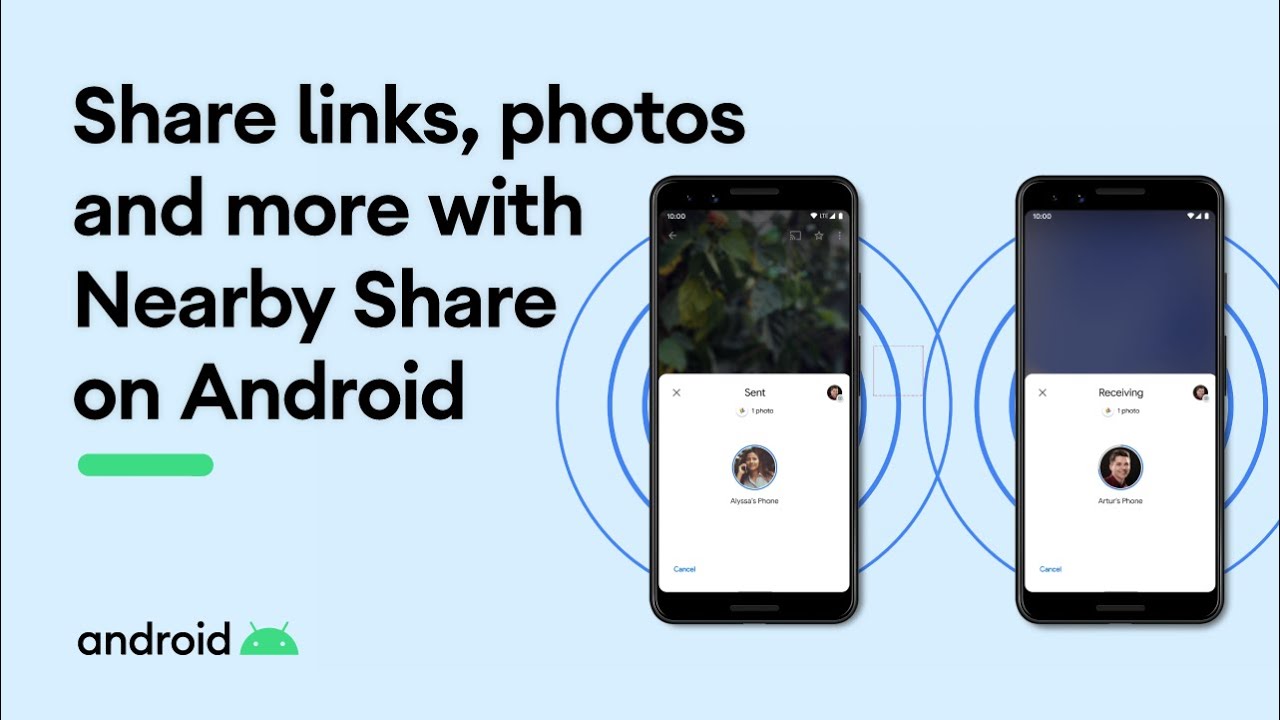
The Android Nearby Share feature works by allowing you to see all the Android devices that are near your location. Once you select the person you want to share with, they’ll be notified and can either accept or decline your send.
Google explains that after the recipient accepts the file, “Nearby Share then automatically chooses the best protocol for fast and easy sharing using Bluetooth, Bluetooth Low Energy, WebRTC, or peer-to-peer Wi-Fi.” This allows you to share whether or not you are online.
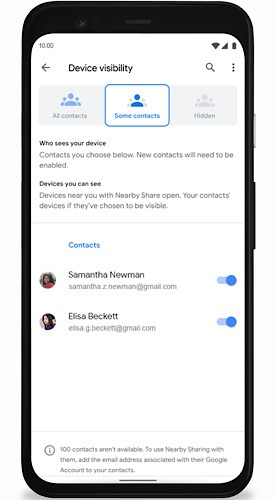
The new feature was built with privacy in mind. You won’t need to worry about exchanging contact information, as you can send and receive files and photos anonymously. Using your phone’s Quick Settings, you can adjust your privacy settings to be “hidden” or visible to “some contacts” or “all contacts.” This ensures that strangers will not be able to send you files. It also means you won’t have to put up with everyone you know sending you files when you’re in the same room as them.
While at this point in the feature’s introduction you can only share with Android, soon you will be able to share with Chromebooks as well. Google points out that with Instant Tethering, Chromebooks already have features that make them work well with Android, and Nearby Share will only improve on that.
Nearby Share Availability
Google said in its blog announcement that select Google Pixel and Samsung devices will be the first to use the feature. Users were able to tap into it starting on Tuesday. The company promises to start rolling it out to other Android smartphones over the next few weeks.
Learn more about how to use the feature on the Android support page. Looking to share files to Windows 10? Read our guide on sharing files between Android and Windows 10 on your network.
Image Credit: Google Blog