
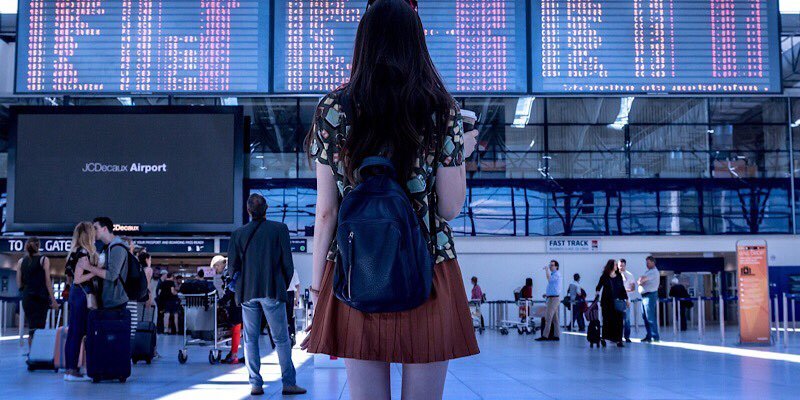

The more and more advanced criminals get with their weapons and devices, the more advanced we need to become as we look for a way of controlling that. This has led researchers to consider using ordinary Wi-Fi to detect weapons, devices, and chemicals when they’re hidden away in baggage.
A System in Need of Improvement
There isn’t anyone who doesn’t get frustrated with the TSA screening in airports which seems to continually get more and more invasive. Since the 2001 terrorist attack in the United States that focused on air travel, there have been immense changes.
We have to remove everything out of our pockets, take off our jackets, remove our shoes, take laptops and larger mobile devices out of our bags. These are screened separately from us, as we walk through a scanner that checks our person to be sure we’re not hiding anything.
Once we are through the scanners, and our bags are as well, then we have to spend even more time putting everything back together. We have to repack our bags, put our coats and shoes back on, put jewelry and watches back on, put our things back in our pockets, etc. It’s such a hassle.
Yet, it’s a hassle that keeps us safe. It’s the only way TSA has of checking to be sure criminals and terrorists aren’t sneaking weapons, explosives, and chemicals in.
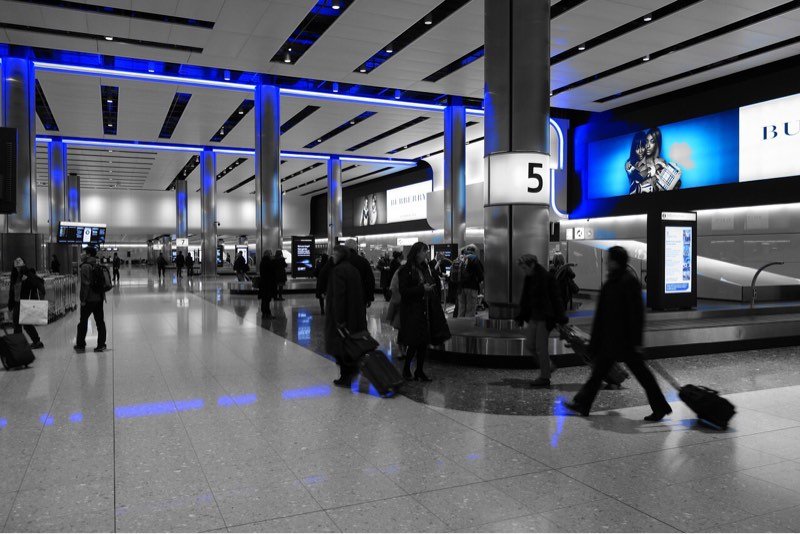
But a Rutgers University-New Brunswick-led study is working on a better way to screen for these items, and they think they’ve found it. They have discovered that wireless signals can penetrate baggage to determine the dimensions of dangerous metal objects, leading them to be able to identify weapons, aluminum cans, laptops and batteries for bombs, etc.
A Less Invasive Security Screening Process
The researchers from the Wireless Information Network Laboratory in the School of Engineering found that Wi-Fi could be used to estimate the volume of liquids, including water, acid, alcohol, and chemicals that are used in explosives. The study shows that a wireless device with two or three antennas could be incorporated into existing Wi-Fi networks.
They looked at what happens when wireless signals penetrate and bounce off different objects and materials. They ran a test on a backpack, and the accuracy was more than 95 percent.
The process included separating the wireless interference that was caused by “two influencing factors of objects.” In this case the two factors were material and shape. “Most dangerous objects, such as weapons … are usually metal or liquid, which have significant interference.” It utilizes channel state information (CSI) that is “readily available in low-cost Wi-Fi devices.”
A professor and co-author of the study, Yingying Chen, stated, “This could have a great impact on protecting the public from dangerous objects. There’s a growing need for that now. In large public areas it’s hard to set up expensive screening infrastructure like what’s in airports. Manpower is always needed to check bags, and we wanted to develop a method to try to reduce manpower.”
This means they can take it even further than airports or big sports stadiums. Consider a large festival or outdoor concert. It could be a much easier system for those types of venues.
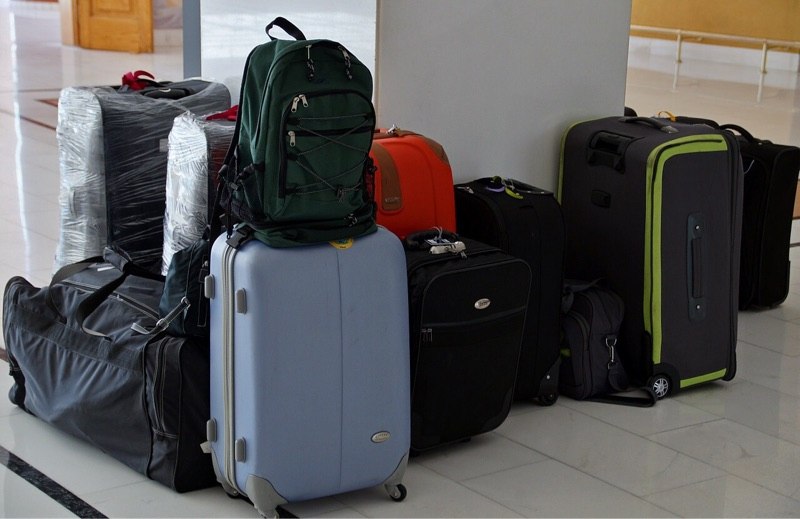
An experiment with fifteen types of objects and six types of bags had a 99 percent accuracy rate for dangerous objects, 98 percent for metal, and 95 percent for liquid. But when objects inside the bags were wrapped, accuracy dropped to about 90 percent, according to Chen.
“Traditional baggage check involves either high manpower for manual examinations or expensive and specialized instruments, such as X-ray and CT,” read the paper announcing the research. “As such, many public places that lack of strict security check are exposed to high risk.
“We propose [using] off-the-shelf Wi-Fi to detect suspicious objects that are suspected to be dangerous without penetrating into the user’s privacy through physically opening the baggage.”
Not Done Yet
Of course, with a drop in accuracy to 90 percent when the object is wrapped, that means the research team can’t rest on its laurels yet. Nonetheless, it seems to be really important research.
Even if it was utilized with a 90 percent accuracy in venues with no security, it would be an improvement. But perhaps they can work on the accuracy to get closer to 100 percent. It could mean no more disrobing and unpacking in the TSA lines and could also mean safety in more venues.
What do you think of this research? Do you think because of the 90% drop in accuracy that it’s just not good enough? Or do you think they’re so close that they need to keep exploring options? Jump in below in the comments section with your thoughts.