
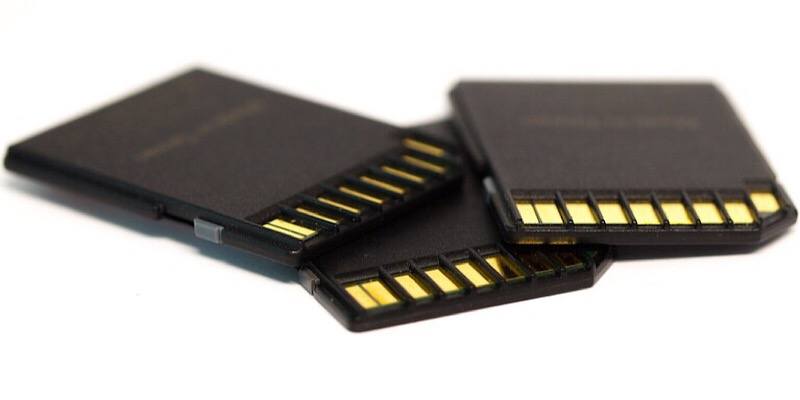

You’d be hard-pressed to find an industry that makes better use of refurbished items than tech: computers, tablets, printers, etc. But at least one item isn’t necessarily that great of a deal when you buy it second-hand: memory cards. New research is showing that two-thirds of all used memory cards still hold data from prior usage.
The Research
What are you going to do with that old memory card once you’re done using it? It still has life in it, but perhaps it no longer holds enough for your usage. Your choices are to give it away, throw it away, or sell it. In the case of giving it away or selling it, that means the memory card will be finding a new home.
Flip the situation and imagine yourself as the buyer/new owner. You need a memory card but don’t want to put down all that cash for it. A friend either agrees to give you their old one they are no longer using, or you pick one up somewhere really cheap. Both are great deals, right?
The University of Hertfordshire’s research, commissioned by Comparitech.com, shows two-thirds of the second-hand memory cards used in mobile phones and tablets are holding old data. Many times the data is sensitive as well, such as personal information or materials, including copies of passports, contact lists, and identification numbers. If they can find it, it means there’s also a way for the new owner of the memory cards to also get their hands on it.
For the study, the research team bought and analyzed one-hundred used SD and micro SD memory cards through a period of four months from eBay, traditional auctions, second-hand stores, and other sources. Most of the cards had been used in phones and tablets, as well as cameras and drones. The team created a forensic image of each card and then used readily available data recovery software.
This sensitive data included personal information, copies of passports, intimate photos and selfies, pornography, browsing history, etc.
Just stop and think about it for a few moments. Run down a list in your head of all the information and materials you have stored on your own memory cards. Sure, you deleted it, but there it is, showing up on the memory card now in use by either a stranger, or perhaps worse yet, someone you know.
How Does This Happen?
There are constant instances of cybercrime, and it’s beat into our heads that we need to heed the warnings and take adequate steps to protect our sensitive data and information. But apparently, not everyone is listening before they give up their memory cards.
“Particularly important is satellite navigation systems (SatNav) data which can be used to determine the home location of the user and also the routes that they regularly use and locations that they have identified as being of interest, which may include their place of work and the homes of family and friends. Again, this information in the wrong hands could easily put previous owners at risk,”
explains Andrew Jones, Professor of Cyber Security at the university.
“At the University of Hertfordshire’s Cyber Security Centre,” he continues, “we are focused on investigating and developing tools and techniques capable of detecting and responding to a variety of cyber-based attacks, including the collection of digital forensic evidence.”
Of the one-hundred cards studied, thirty-six were not wiped at all, twenty-nine appeared to have been formatted, though the data could still be recovered, two had their data deleted, meaning it was easily recovered, twenty-five were properly wiped, four could not be accessed, and four had no data.
Readying Memory Cards for New Owners
Paul Bischoff of Privacy Advocate for Comparitech.com explained often the problem wasn’t that people didn’t wipe their memory cards but that they didn’t do it the right way. Deleting files isn’t enough. It only removes it from reference and doesn’t remove the file itself. If you’re readying a memory card for a new owner, you need to fully erase it and reformat it.
Is this something you’ve had a problem with before? Have you found someone else’s old files on your refurbished memory card? What do you do when you get rid of a memory card? Do you properly wipe it? Let us know in the comments section below.