

The FaceApp app first appeared a few years ago and has now gone viral in the space of just a few days. It has turned into a hysteria over the privacy behind this app, whether or not it infringes on privacy issues and whether there is a particular danger because the app originates from Russia.
We take a look here, outside of the hysteria, at what the privacy dangers are of using FaceApp and whether it’s safe to use or not.
FaceApp Privacy
Before we go any further, we have said this so many times here on Make Tech Easier. There are privacy dangers all around – all around. The only way your privacy will be 100 percent protected is if you stay off the Internet. This means not emailing, not using a browser, not using any apps, and certainly not using social media.
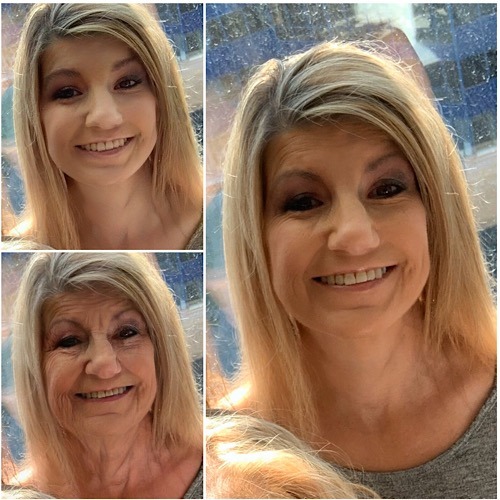
Look below and you’ll see what I have done with the FaceApp app. I took a picture of myself from this past weekend at 55 years old, made myself younger, like 20-ish, and made myself older, like 75-ish. I am not overly concerned with using the app, but that is not because it does not provide danger — it is because I already do so many things online, party because of the nature of my business, that really one more app accessing my photo doesn’t matter.
This is an app that you can download from the App Store or Google Play. But if you’re a regular reader of Make Tech Easier, you’ll see I just published the news this week that Google Play Store just had an app up for several months that was hiding malware. This was definitely not safe. Again, there are dangers all around. But there are suddenly way more people worried about this app and its privacy than are worried that Google allows apps with malware.
A lesser-known website, Fast Company, published the news on Wednesday that the FaceApp app uploads your photos to its servers and does its age magic there with their AI. It also mentions that the app doesn’t warn you that they are uploading your photo to the cloud and doesn’t mention in its policies that it keeps your original photo.
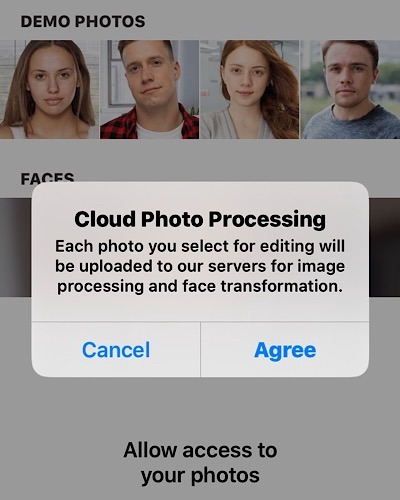
Sure enough, I downloaded the app this morning, and there were no warnings. But downloading it again tonight, there is suddenly a warning. Looking at the app’s website, I finally found the privacy policy.
Before I uploaded that photo above, the warning said, “Each photo you select for editing will be uploaded to our servers for image processing and face transformation.” I could have cancelled at that point if I didn’t agree.
Previously, it was being reported that the reason the app was able to upload user photos to its server was that Apple gave the app the right to do so. Apple was already doing that with user information, and I’m assuming Google was as well. This is not the first app to come along to do so. That’s Apple’s policy. It was already doing that with other apps without your knowledge.
The other faction behind this app that is worrisome to some, especially in the United States, is that it originates from Russia. This is due in part to the 2016 presidential election where Russia was known to hack emails and was also caught up in receiving Facebook data from Cambridge Analytica.
So now when this app arrives on the scene and it’s learned that it originates from Russia, there is immediate cause for concern. The origin of the app doesn’t mean they are more likely to steal your data or your privacy, however. It’s just extra worrisome.
Should You Download FaceApp?
Whether or not you download FaceApp is completely up to you. Just be sure you know the facts first. Yes, there are privacy dangers. If that is of particular concern to you, don’t download and use it. However, if that is a concern to you, know that there are many other apps, websites, and social networks you should not be using either.
Will you still use the FaceApp app? Or has the privacy concerns turned you off from it? Let us know your thoughts in the comments below.