
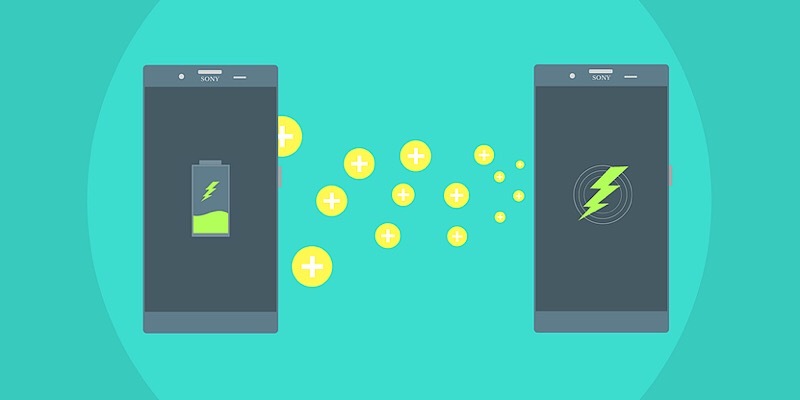

The hangup with wireless charging is that you can’t be any great distance away from the charger. You still have to be close to the charging pad or charging system. It’s a little less hassle, as you don’t have to actually plug it in, but it’s still a hassle to have to be within a certain distance.
But the FCC has just approved a system that will allow you to be a little bit further away. It’s not across the room, but it will still give you a little more freedom.
Current Charging Options
Currently, you have four options for charging your devices.
- Plug in to your charger
- Wireless charging pad
- Pi wireless charging
- Power bank
Plugging in to your charger is self-explanatory. It’s what your device most likely ships with. It’s easy, but while your device is charging, your range is limited to the length of your power cord, and it has to stay plugged in.
A wireless charging pad isn’t truly wireless. The pad has to be plugged in to an outlet. However, your device isn’t connected to a wire and simply lies on top of the pad while it charges. You’re still limited to the length of the cord on the charging pad.
With Pi wireless charging, you don’t have to have physical contact with a pad of some sort and don’t need to be plugged in, but you have to be within a foot of it for it to work.
A power bank allows you the free range to move about at will while you charge. However, while it’s not attached to a wall outlet, it has to be attached to your device while it charges, meaning you have to carry it around. And eventually it will die and will need to be plugged in to be charged up and ready for use again.

Power at a Distance
Energous, a San Jose-based startup, has announced that the Federal Communications Commission has approved its wireless charger that will work from up to three feet away. It’s WattUp Mid Field transmitter will offer “power-at-a-distance” charging.
This transmitter converts electricity into radio frequencies. That energy will then be beamed to any devices within three feet that have a corresponding receiver. It’s a different resonant induction method than the Pi wireless charging system uses.
The WattUp transmitter will be able to charge multiple devices at once and should work with phones, tablets, keyboards, earbuds, etc., no matter the manufacturer. However, they need to have the right type of receiver.
The Future of Charging
Energous doesn’t have anything ready to hit the market yet at this point. However, they are going to demonstrate their power-at-a-distance charging at CES 2018 in Las Vegas in January.
Clearly the options get better as technology advances. With this charging option advancing the distance to three feet, hopefully in time we’ll be able to charge devices from across the room or even across a building or a different floor.
Will the WattUp technology make your charging experience easier? Or is it still not quite enough of a distance for you? Leave a comment down below and let us know.