

Are you aware of the threats that exist against you when you’re online? Cybercrime is a bigger threat than you might imagine. Just as our time online is increasing, the threats against us when we’re online are increasing as well.
Norton, the same company we count on to protect us against viruses and malware, published its yearly report examining cybercrime. It’s definitely an eye-opener to be sure, as it shows how many are affected by cybercrime as well as how many don’t even know they are leaving themselves open to being hit.
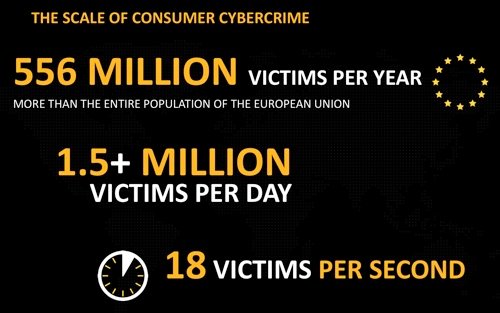
Just take a few moments to run the stats from the image above through your mind. 556 million cybercrime victims a year. It’s such an astounding number it makes you wonder how it’s even possible. 18 victims per second. In just a minute that it has taken you to read to this point of the article, there have been around 1000 victims of cybercrime.
It may seem like not a very big deal, as it’s not like these crimes measure up to murder and rape. Yet there are still victims left behind with viruses, malware, hacking, scams, stalking, etc. And sometimes the crimes can hurt just as much as those that are committed “in person.”
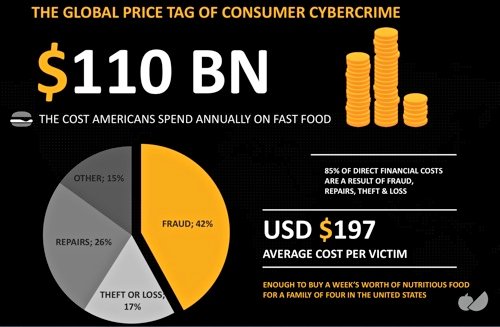
The graphic above shows one big way people are hurt in cybercrime. Look at those dollar amounts. The total cost is the same as what we spend on fast food in a year. And we know that amount isn’t small. Yet the average cost of cybercrime for one individual is nearly $200. It may be “just” Internet crime, but it’s still hurting people in a big way financially.
Sometimes cybercrime is committed specifically to steal something in particular, but often that $200 is just replacing what was damaged or taken. Viruses are sometimes created just to mess up people’s computers. And because of that, it’s taking on average $200 to fix or replace what has been damaged.
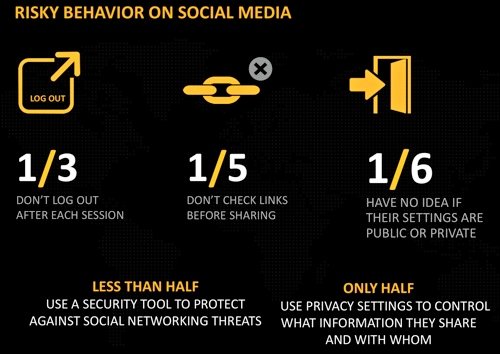
Much of the cybercrime takes place on social networks. They have safeguards in place to help, but apparently, many people don’t know about them, according to the graphic above. One in three people log into a social network and don’t even bother to log out, meaning all of their information is displayed there for everyone to see.
But it’s the other stats in that graphic that seem so incredulous. One in five people don’t check links before sharing. That is so important! You never know what is going to show or pop up when you click a link. Of course, you should verify them before sharing them with others. And one in six have no idea if their settings are public or private. I know this to be true, as I know people like this, but it is still just as incredulous.
There’s one thing for sure looking at all these stats. Those committing cybercrimes are counting on our ignorance. They’re counting on us not realizing how important it is to verify links and to leave our computers unprotected from viruses. The only way to keep yourself safe is to always be informed. Keep reading Make Tech Easier every day. We’ll be sure to always keep the readers informed.