


Scams are getting smarter, faster, and harder to spot. Most people pause, google, and still guess. Now there’s a quicker and more effective option. With Malwarebytes built into ChatGPT, you can check suspicious links, messages, and emails in seconds and move on with confidence.
Malwarebytes Threat Intelligence Inside ChatGPT
The ChatGPT Malwarebytes scams checker connects directly to Malwarebytes’ huge pool of data, updated live from millions of devices. Instead of guessing, it checks what you paste in ChatGPT against known scam patterns, phishing campaigns, and malicious domains.
You can use it to review links, emails, text messages, phone numbers, and even full message threads. When something looks risky, the tool explains why and what to do next. For example, it might point out a newly registered domain, or signs of impersonation, and ask you to block or report the sender.
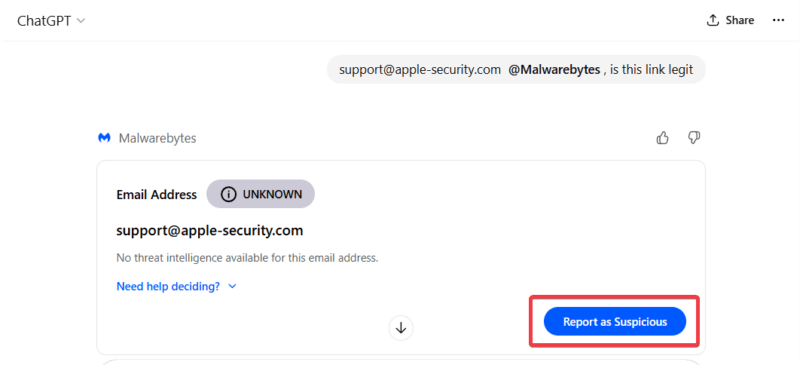
It’s free to use on all ChatGPT plans and does not require a Malwarebytes account. Reports submitted through the tool also help improve its threat data over time. This is better than searching on Google because it gives real, checked scam alerts right in your chat.
For more ways to use AI for safety, see our guide on using ChatGPT to stay safe online. And if AI tricks worry you, check protecting yourself from AI scams.
Catch Everyday Scams Faster
This ChatGPT Malwarebytes scam checker is most useful for everyday scams that people regularly fall for. Think fake delivery alerts, urgent bank messages, and emails asking you to verify your account immediately. It’s also helpful for spotting fake job offers, giveaway scams, and messages from unknown numbers claiming customer support.
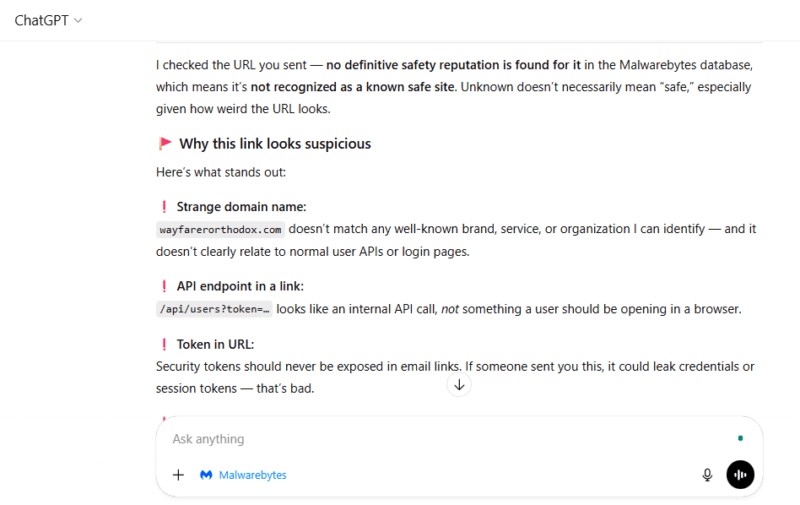
It also flags dangerous domains before you open them, which matters when browser-based threats are involved. Some scams lead directly to malware, including data-stealing threats like the PXA stealer.
When I tested it with a scam link impersonating my bank, it detailed every reason to buttress why the link is fake.
Running a Scam Check in ChatGPT
To use the Malwarebytes scam checker in ChatGPT, open ChatGPT and go to Apps.
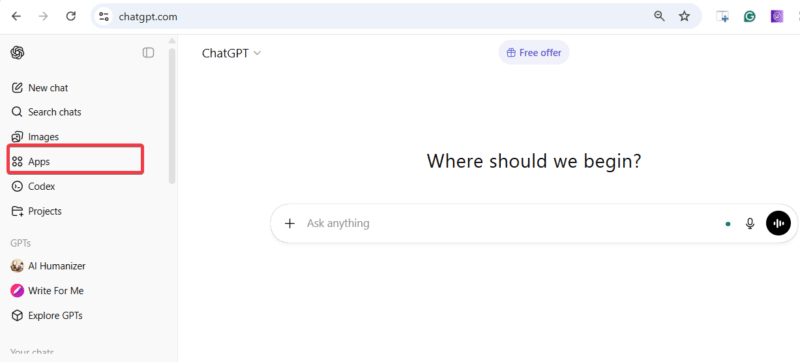
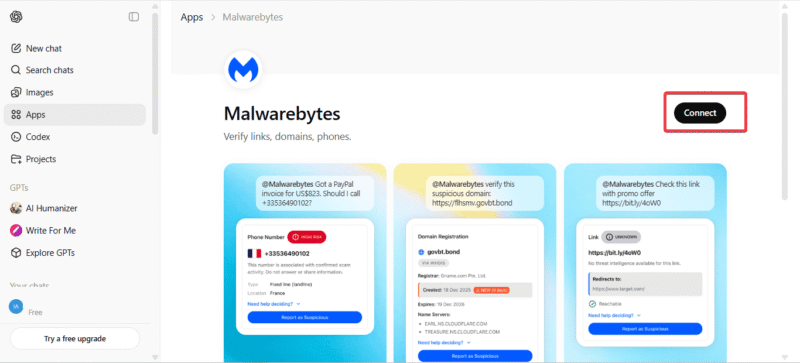
Search for Malwarebytes, click Connect, grant permissions, and confirm. No sign-in needed.
After that, open a chat, paste your shady email, link, message, or number, tag @Malwarebytes, and ask if it’s a scam. It gives you the answer with details.
For pictures, upload screenshots. For example, a job message got flagged for a sketchy source, with advice to check it out officially and block it.
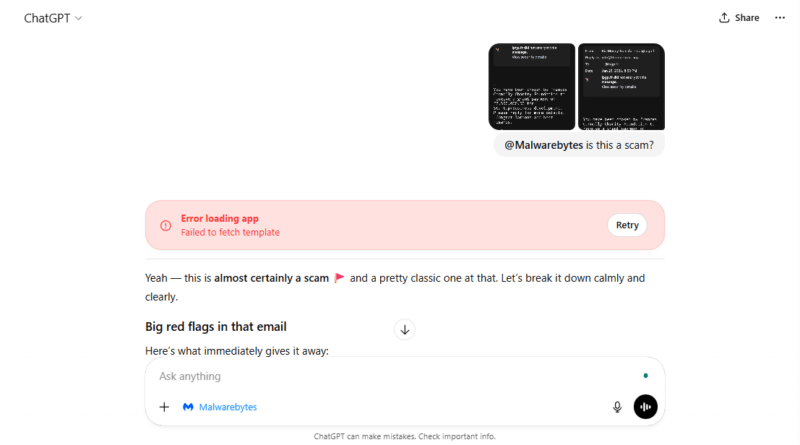
If you’re new to ChatGPT, our guide on running apps inside ChatGPT explains how these tools work in general.
Note: if the system cannot confidently identify a threat, it usually responds with an “unknown” result and recommends caution.
Performance Hits and Misses
This tool performed best with known scam patterns, reused phishing messages, and malicious domains that already exist in Malwarebytes’ database. It’s especially effective as a quick check before clicking or replying.
That said, it’s not perfect. Brand-new scams may not be detected immediately. Additionally, it does not block threats on your phone or PC, and it has some geographical limitations. It’s not a full replacement for your antivirus and anti-malware tools. It works best as a first check, paired with proper security software.
The ChatGPT Malwarebytes scam checker is not a cure-all, but it’s a practical upgrade for anyone who already uses ChatGPT. It helps you make faster decisions, avoid obvious traps, and move on without second-guessing. For a free tool that lives where many people already spend time, that alone makes it worth enabling.