
Long Reads

Longer explainers,
fewer dead ends.

Deeper how-tos, history, and tech explainers from the Make Tech Easier editorial team. Pieces here get extra research and review.

Tech Explained

When a lightning return stroke heats a channel only centimetres wide to roughly 30,000 kelvin, about five times the temperature of the Sun’s visible surface, the air expands so violently that the pressure wave rolls across the ground as thunder

A single lightning stroke lasts a few tens of microseconds, but in that flash it drives a slender column of air to temperatures no natural process on Earth's surface can match. The bang that follows is the air itself getting out of the way.

Tech Explained

In October 1957, a beachball-sized aluminium sphere called Sputnik 1 began sending 0.3-second pulses on two radio frequencies from orbit, signals amateur operators around the world could receive, making the space age suddenly audible from Earth

The Soviet Union's first satellite weighed just 83.6 kilograms and carried nothing but two radio transmitters, yet its steady beep from orbit rewrote geopolitics, science and the imagination of a generation.

Tech Explained

In 1968, Douglas Engelbart sat before roughly 1,000 computing professionals in San Francisco and demonstrated the mouse, hypertext, video conferencing and shared-screen editing in one 90-minute session, a concentrated glimpse of the interactive computer future later remembered as the Mother of All Demos

On 9 December 1968, a Stanford researcher spent 90 minutes showing a room of engineers a working future — windows, a mouse, live video collaboration — decades before any of it reached a desk.

Internet

Content and cloud networks now account for three-quarters of used international bandwidth, while Google, Meta, Microsoft and Amazon own, co-own or buy capacity on a growing share of the 600-plus submarine cable systems carrying over 99 per cent of data between countries, a private map hidden below the wireless internet

Almost every message, video call and cloud file that crosses an ocean travels through a bundle of glass fibres thinner than a garden hose lying on the seabed. A small number of tech giants are quietly reshaping who owns them.

Tech Explained

In 1987, a year after the breakthrough that revived high-temperature superconductivity, physicists cooled a ceramic of yttrium, barium and copper oxide to 93 kelvin and watched it levitate a magnet indefinitely — the first superconductor cold enough to run on liquid nitrogen instead of scarce, expensive helium

In 1986, two IBM researchers in Zurich found a copper oxide ceramic that superconducted at temperatures no metal ever had. It broke a 75-year ceiling and made liquid nitrogen — cheap, abundant, boiling at 77 kelvin — enough to unlock the effect.

Tech Explained

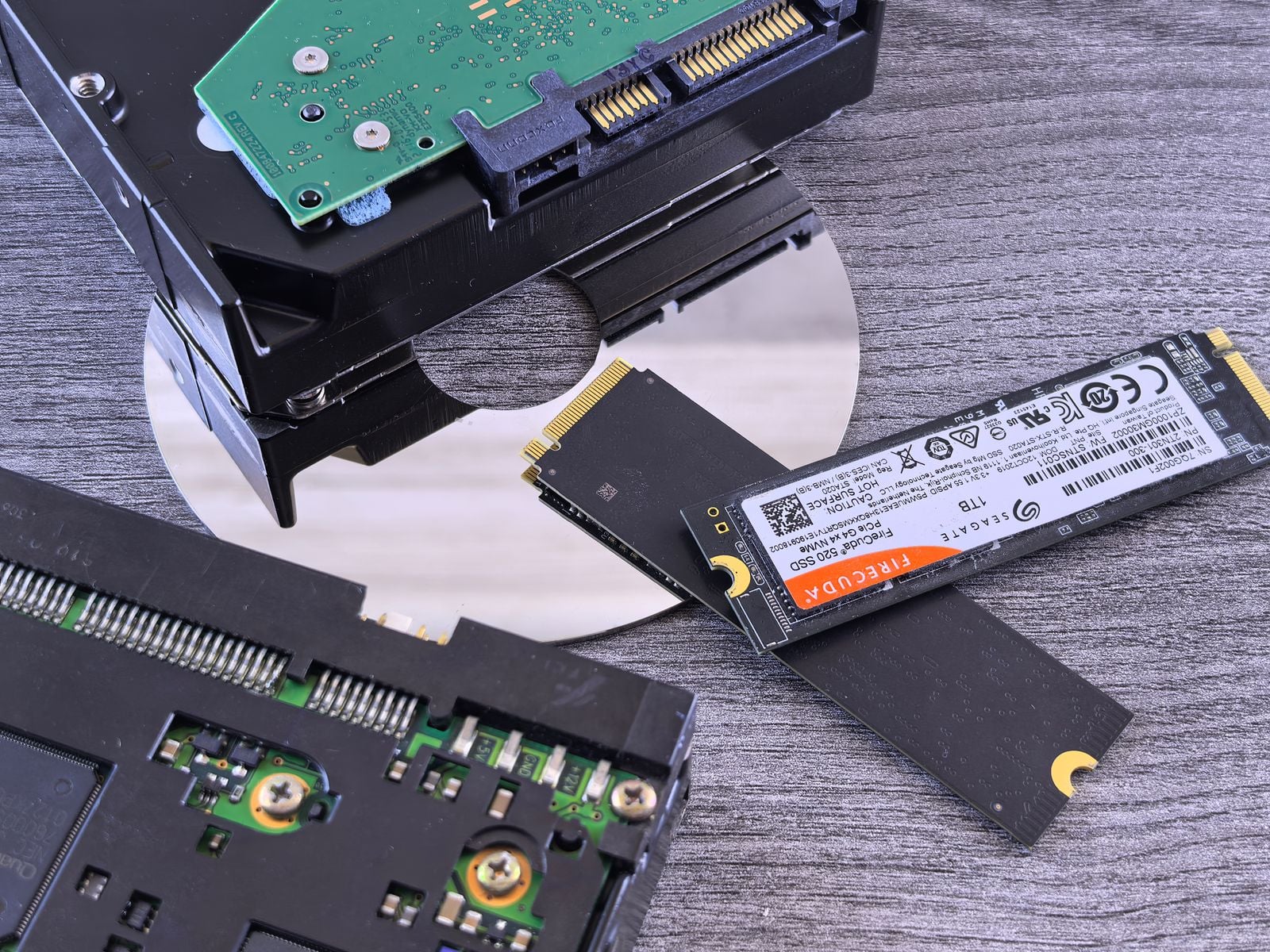
Your SSD doesn't forget files the way a hard drive does — it uses a background process called TRIM that actively wipes deleted blocks, which is why undelete tools rarely work on modern laptops

Deleting a file on a spinning disk leaves the data intact until something overwrites it. On an SSD, a quiet housekeeping command called TRIM erases those blocks in the background, often within seconds — which is why the old undelete playbook mostly fails on modern laptops.

Tech Explained

In 2026, scientists assembled the Greenland shark’s 5.9-billion-letter genome and examined retinas from animals more than a century old, finding intact vision, expanded DNA-repair pathways and unusual chromatin machinery inside a vertebrate believed capable of surviving for nearly four centuries

A female Greenland shark hauled from Arctic waters carried lens tissue formed while Shakespeare was still alive. Nearly a decade later, biologists still cannot say why her cells refused to age.

Tech Explained

When Adobe announced Flash's end-of-life in July 2017, it closed a technology that had once run on 99 per cent of desktops — and took with it an estimated four million animations, games and interactive works now preserved only by an amateur archive called Flashpoint

Adobe's July 2017 announcement that Flash would reach end-of-life on 31 December 2020 quietly condemned two decades of web culture — a loss now partly held back by volunteers running a 1.5-terabyte archive called Flashpoint.