Long Reads

Longer explainers,
fewer dead ends.

Deeper how-tos, history, and tech explainers from the Make Tech Easier editorial team. Pieces here get extra research and review.

Tech Explained

Airplane mode was never just about planes: it combines a 1991 FCC network rule with an FAA interference rule dating to 1961

The FAA has quietly admitted for years that phone signals don't actually threaten cockpit avionics. The real reason airplane mode exists has more to do with the buzzing sound your Nokia used to make through desk speakers than anything happening at 30,000 feet.

Tech Explained

In 1947, Harvard’s Mark II ran on roughly 13,000 electromechanical relays, stored numbers across 100 registers, and read instructions from punched paper tape, turning thousands of clicking metal switches into a Navy calculator vulnerable to dust, loose contacts, and one famously misplaced moth

The famous moth in the Harvard logbook is often told as the origin of the word "bug" in computing. The truth is more interesting: the joke only works because engineers had already been calling faults bugs for more than sixty years.

Tech Explained

In 1971, engineer Ray Tomlinson sent the first networked email between two computers sitting side by side in the same room — he chose the @ symbol to separate user from machine because it was the only punctuation on the keyboard nobody was using

The story of how a bored engineer at a Cambridge research firm picked an obscure typewriter symbol in 1971 and, without meaning to, gave the internet its most recognisable punctuation mark.

Tech Explained

How did a single computer worm written by a Cornell graduate student in November 1988 crash roughly 6,000 machines and force the internet to invent security?

On the evening of 2 November 1988, a 99-line C program escaped from an MIT computer and began spreading through the fledgling internet. By morning, an estimated 10 per cent of connected machines were unusable — and network security, as a discipline, had to be invented in a hurry.

Tech Explained

When you tilt a smartphone, gravity shifts microscopic silicon fingers inside its accelerometer by only a few nanometres, changing the capacitance between them and producing the electrical imbalance the phone reads as a new direction for down

Every smartphone contains a silicon structure smaller than a grain of rice that senses gravity by measuring how far a comb of tiny fingers moves when you tilt the device. The distances involved are a few nanometres — smaller than a strand of DNA.

Tech Explained

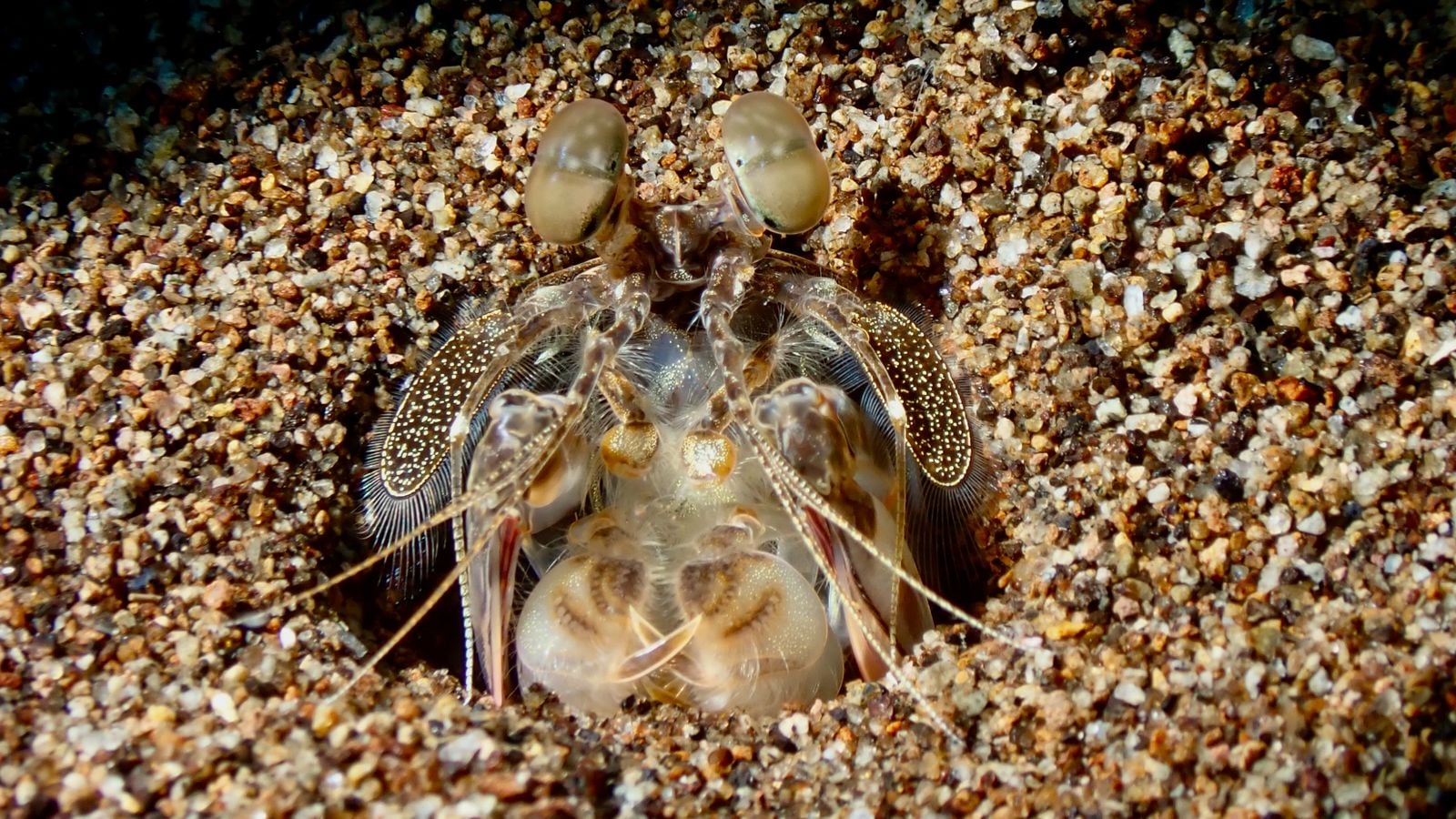
The retina of the mantis shrimp carries twelve types of colour receptor to the human eye's three — and yet experiments suggest it sees colour worse than we do, using the extra channels for speed instead of subtlety

The mantis shrimp has the most elaborate colour vision hardware ever found in an animal eye, but behavioural tests suggest the extra receptors are not for finer discrimination. They are a shortcut, trading resolution for reaction time on a coral reef where milliseconds matter.