Facebook has dominated the Web with its “LIKE” button. There’s no way that Google will like that. So it is not surprising to see Google release a new feature “+1” (pronounced “Plus One”) to fight back. With this “+1” feature, you can now put a vote to the search result and let your friends know about it.
Here’s the official “+1” video by Google;
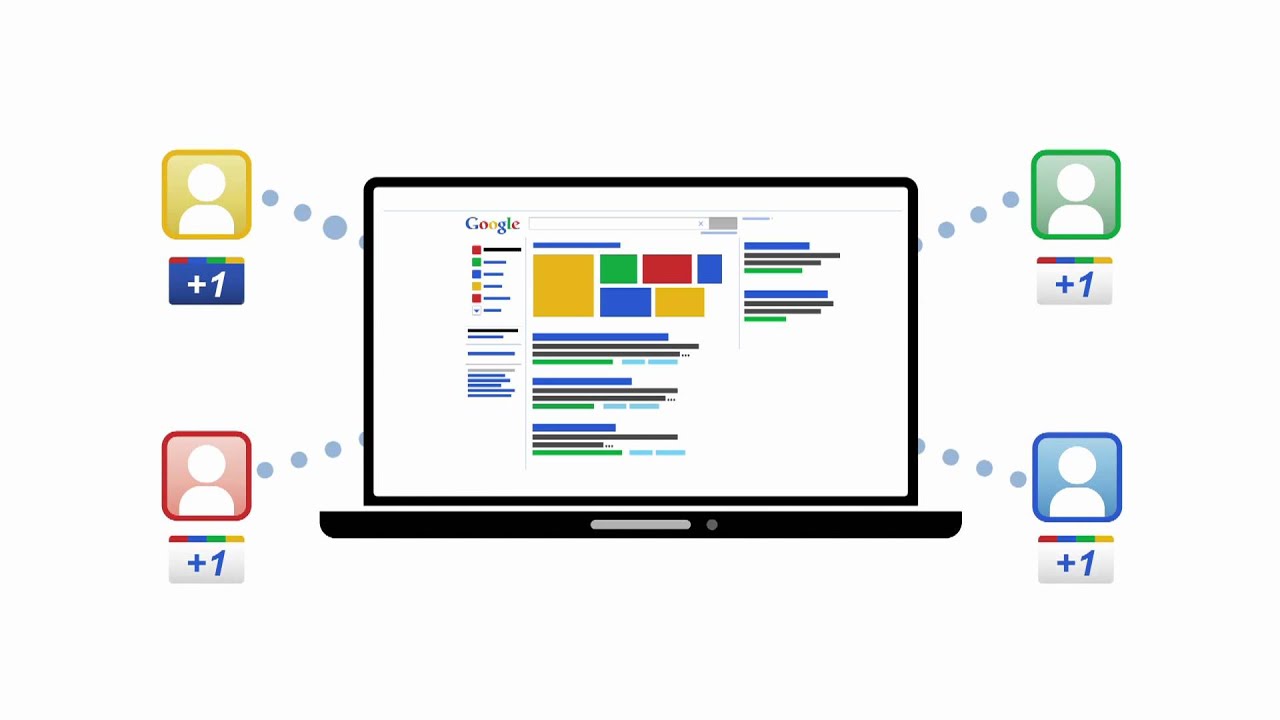
How it works
While Google has announced the release of “+1”, it won’t be available to all immediately. They will slowly roll it out, starting in English on Google.com.
Meanwhile for those who are keen to try it, log into your Google profile (simply log into your Gmail account and you are logged into your Google profile) and visit this page . Click the “Join Experiment” button under the +1 section.
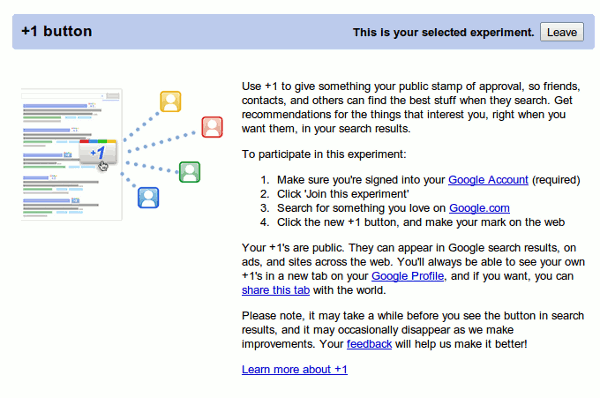
Now, go to Google.com and perform a search. You will now see a “+1” icon beside the search result.
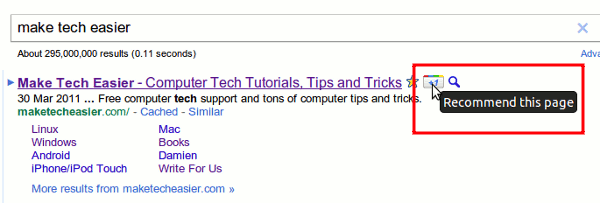
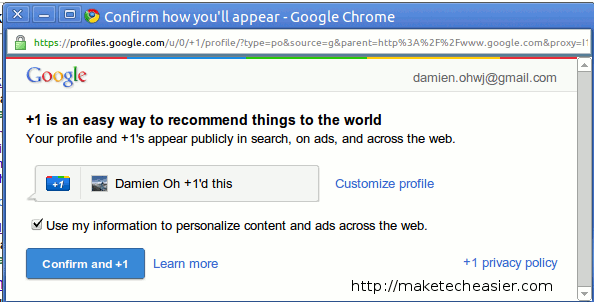
You can then click on the button to vote it up. A popup window will appear asking for your confirmation.
Underneath the search result will show a “You +1’d this publicly” message.
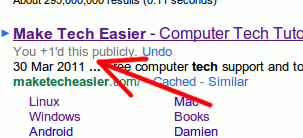
And yes, you can “Undo” it (strange that they call it undo instead of “-1”).
In short, by “+1” to the search result, you are now stamping your approval to the particular search result (or that web page). When your friends (must be connected in Google) perform a search, it will see your you can now
Where can I see the links I +1’d?
Log into your Google profile and you can now see a new “+1” tab. Click on that and you can see all the stuff you +1’d.
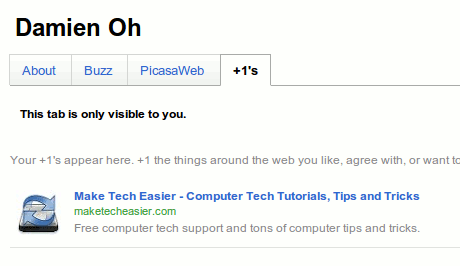
How will +1 affect my search experience
For the time being, it might not affect the search result that appear on the search result page, but it will give you more insight to the quality of the sites, via recommendations, before you even visit them. This in turns translate to a better search experience.
Who can see what I “+1’d”?
By default, when you +1’d a link, your name (and photo) will appear at the bottom of the search result when the same link appear at your friends search result. Your friends, in this case, refer to those in your Gmail & Google Talk chat list, contacts in Google Contacts and people you follow in Google Reader or Google Buzz. People who are not logged into their Google Profile or are not linked to you in any of the above way will not see your name and photo. You can check out your Google social connection here.
+1 for AdWords
Other than search results, you can also “+1” to AdWords.
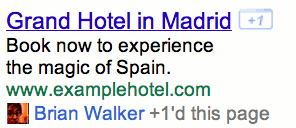
+1 to AdWords has the benefit of telling you which ad is worth checking out. For advertisers, you are indirectly relying on the end users to help promote your ads, which is a good thing. Advertisers will have to step up their effort to improve the ads, and also the landing page.
Can I use +1 on my site?
At the moment, +1 is only for Google search result (and AdWords). You won’t be able to implement on your site, at least for the time being. However, you can register your interest here and get notified when Google releases +1 for website.
According to SearchEngineLand, “Google did say that if someone does a +1 on a web page, then that will show up to others who find that page in search results.” This would give a great incentive for webmasters to implement this on their site. Can this also be a way for webmasters to manipulate the search result when people perform a search? Possibly, but we will see.
That’s it for now. We will update you again when we have more info on +1.
Will you see yourself becoming a regular +1 user?