
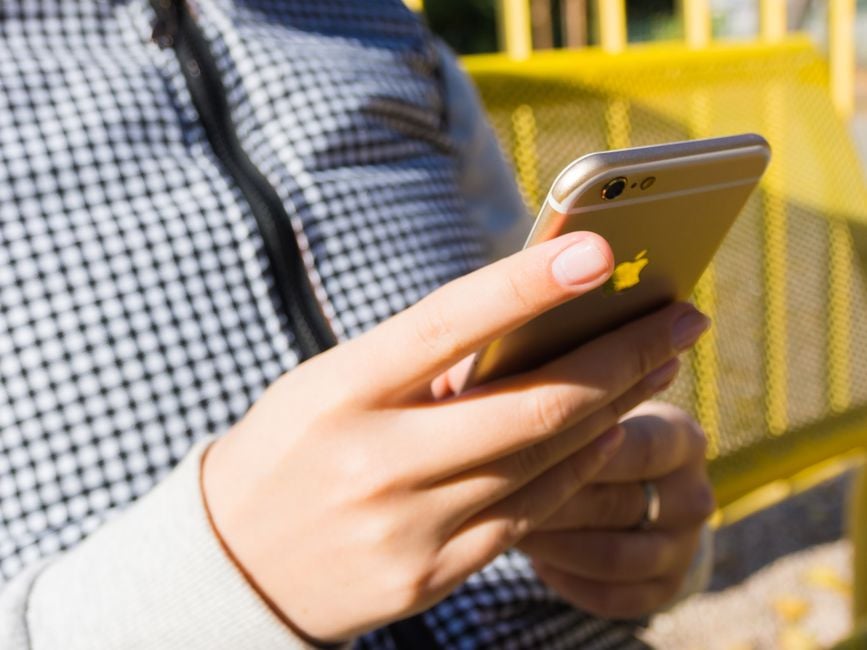
Twenty-five years ago, the only people sleeping with their email device on the nightstand were lawyers, bankers, and a handful of executives whose firms paid for a BlackBerry Enterprise Server licence. The nickname those users eventually coined for the device — CrackBerry — turned out to describe the next two decades of consumer technology with uncomfortable precision.
The behaviour itself had been formalised much earlier, by B. F. Skinner working with pigeons in the 1930s and 1940s. The pigeons pecked hardest not when food arrived on a fixed schedule, but when it arrived on a schedule the bird could not predict. Variable-ratio reinforcement, Skinner called it — and it produced behaviours more resistant to extinction than any other conditioning he ran. The BlackBerry, with its blinking red LED that might mean an urgent message or might mean spam, was a near-perfect human version of his apparatus.
The average smartphone owner now unlocks their phone somewhere between 80 and 250 times a day, depending on the study, with heavy users blowing past that ceiling. That is more often than a pack-a-day smoker reaches for a cigarette during waking hours. And the neural circuitry firing during both behaviours overlaps in ways neuroscientists are still mapping.
The nickname users gave it
RIM’s two-way pager, the BlackBerry 850, launched in January 1999, followed by the 957 in 2000 — the slab with the thumb keyboard that most people remember. The devices were sold to corporate fleets first: lawyers, bankers, executives whose firms paid for the BlackBerry Enterprise Server licence. Within months, the people issued the devices were sleeping with them on the nightstand.
The earliest documented usage of “CrackBerry” turns up in a Usenet post from May 2001, by a user complaining that the device was, in his words, absolutely addictive. The label moved into the wider business press over the next few years, and by 2006 Webster’s New World College Dictionary had named it the word of the year. It was funny then. A joke about workaholic lawyers. The joke aged badly.
What those early users were stumbling into was a delivery system for variable-ratio reinforcement. The little red LED blinked when a message arrived. Sometimes the message mattered. Sometimes it was spam. The user could not predict which. So they checked. And checked. And checked.
Why intermittent reward is the strongest leash
Skinner’s pigeons pecked at a lever hardest not when the reward was guaranteed, but when it arrived on an unpredictable schedule. The brain treats uncertain payoffs as more valuable than certain ones, because the prediction error — the gap between what was expected and what arrived — is what dopamine neurons encode.
This is the same machinery a slot machine exploits. It is the machinery an email inbox exploits. And it is the machinery every push notification on a modern phone exploits, only refined to a degree the 1999 BlackBerry engineers could not have imagined.
Recent neuroscience has complicated the older story that dopamine functions primarily as a reward signal or feel-good neurotransmitter. The current consensus is closer to: dopamine signals wanting, not liking. It is the chemistry of pursuit, not satisfaction. That distinction matters. It explains why checking the phone rarely feels good, and why people do it anyway, often without remembering they did it.
Phones, cigarettes, and the same reward pathway
Nicotine acts directly on the ventral tegmental area, the cluster of midbrain neurons that produces dopamine and projects into the nucleus accumbens — the reward circuit. Behavioural reinforcers like phone notifications act on the same circuit, just less directly. The route is different. The destination is the same.
Anna Lembke, the Stanford psychiatrist and author of Dopamine Nation, has argued that compulsive smartphone use shares the diagnostic features of substance dependence: tolerance, withdrawal, loss of control, continued use despite harm. Her work is summarised in a Psychology Today piece on dopamine detoxing that traces how repeated reward-circuit stimulation downregulates baseline dopamine, leaving the user flatter when not stimulated and hungrier when cues appear.
The comparison is not perfect. Nicotine has a chemical half-life and a clear pharmacology. A phone notification does not. But the behavioural signature — the inability to stop checking, the discomfort of not checking, the relief of finally checking — sits on the same neural rails.
The actual number: 2,617 touches a day
Where does the touch figure come from?
The most-cited piece of data is a 2016 study by the mobile research firm Dscout, which tracked 94 Android users continuously for five days. The average user touched their phone 2,617 times every day — every tap, swipe, and type counted as one touch. The heaviest tenth of users hit 5,427 daily touches. Separately, Apple has confirmed iPhone owners unlock their devices around 80 times per day, which is a narrower measure but still works out to roughly once every twelve waking minutes.
By comparison, a person smoking a pack of 20 cigarettes a day, spread over a 16-hour waking period, lights up roughly once every 48 minutes. Even accounting for puffs per cigarette, the total number of nicotine-delivery events is in the low hundreds.
The phone wins. And unlike cigarettes, the phone fits the pocket of every person in the room, including the children.
What the BlackBerry era was actually demonstrating
Operant conditioning, as Skinner formalised it, predicted that behaviours reinforced on a variable schedule would prove the most resistant to extinction — meaning, the hardest to quit even after the reward stopped arriving. Pigeons would peck the lever for hours after the food pellets were cut off, simply because they had been trained to expect that sometimes the next peck would pay.
The BlackBerry executives of the early 2000s were running the human version of that experiment without realising it. Every red-LED check that returned nothing reinforced the next check. Every check that did return something — an urgent email, a deal closing — supercharged it. The users who named the device CrackBerry were not being cute. They were describing, in the most direct language available, what they were watching happen to themselves.
By the time the consumer smartphone arrived, the design language had been standardised. Pull-to-refresh, introduced by Loren Brichter in the Tweetie app in 2008 and later folded into Twitter, took the slot-machine motion literally: thumb pulls down, screen spins, new content appears or does not. The gesture is a lever. The lever pays variably.
Why the brain treats a notification like food
Recent animal studies have begun probing why reward circuits are so easily hijacked by abstract stimuli that have no nutritional or reproductive value. A 2025 paper from the Shenzhen Institutes of Advanced Technology, published in Nature Neuroscience, found that “winning” experiences — even non-pharmacological ones — could remodel the mesolimbic dopamine system in ways that altered subsequent reward-seeking, and that social rank shifted activity in the same circuits implicated in substance dependence. Phones, of course, are social-rank instruments — likes, follower counts, read receipts, ranked replies. The circuitry treats them accordingly.
For a sense of how durable that kind of biological remodelling can be: a ScienceDaily summary of long-term cardiovascular studies found that even light smoking — a few cigarettes a day — raises heart disease risk for decades after the person quits. The biological damage outlasts the behaviour. Whether the same will turn out to be true of compulsive phone checking, in terms of attention, sleep architecture, or mood regulation, is the question a generation of longitudinal studies is now trying to answer.
The nickname was the diagnosis
RIM’s market share peaked at roughly 20 per cent of the global smartphone market in 2009 before collapsing under the iPhone and Android. The company rebranded as BlackBerry Limited in 2013 and exited handset manufacturing around 2016. The hardware is gone. The interaction model it pioneered — push notifications, persistent connection, instant inbox — runs every phone on the planet.
The texture of all those touches
Two thousand six hundred and seventeen touches a day, spread across 16 waking hours, works out to a touch roughly every 22 seconds. Even at the much lower iPhone-unlock figure of about 80 a day, the gap is twelve minutes. There is, in practice, no meaningful stretch of the modern waking day in which most adults are not within a few minutes of the next glance at the screen.
The early users named it before the dictionary did. The pigeons in Skinner’s boxes pecked the lever long after the pellets stopped. Somewhere in the corporate hallways of two decades ago, an executive sleeping with a BlackBerry on the nightstand was already running the experiment, and the nickname they came up with for the device turned out to be a forecast.