On the hunt for a new smartphone? Naturally, the first thing you’ll look at is the spec sheet. It’s packed with clues about performance, battery life, and display quality, but let’s face it, sometimes it reads more like a foreign language than helpful info. In this guide, we break down those cryptic terms and make sense of the tech so that you can choose the right phone without the confusion.
Good to know: need a phone case for your smartphone? Check our guide on how to choose the perfect accessory.
1. Built Quality & Design
Let’s be honest, most of us don’t want a phone that feels like a brick. That’s why design matters. The top of the spec sheet usually lists the phone’s dimensions like height, width, thickness, and weight, giving you a good idea of how slim, sleek, or chunky the device really is. It’s your first clue to whether that phone will be comfortable to hold or slide easily into your pocket.
Beyond size and shape, it’s also helpful to consider what the phone is made of. For instance, the Google Pixel 9 Pro features a sleek aluminum frame with glass on the front and back, giving it a premium feel. In contrast, the Samsung Galaxy A16 5G utilizes plastic for both the frame and back, a material more commonly found in budget devices. As a rule, premium phones tend to use high-end materials, and it usually shows in both looks and feel.
2. Display
The display is the part of your smartphone you interact with most, so it’s essential to know exactly what you’re getting. Display details are typically one of the first things you’ll see listed in a smartphone spec sheet. They usually include data about the type of display the smartphone uses, resolution, PPI and more.
Display technology
Most smartphone makers use flashy names for their display, but the core technology is often the same. Samsung calls it Dynamic AMOLED or Super AMOLED, while Apple goes with Super Retina XDR. Behind the branding, it all comes down to OLED (also called AMOLED) display tech. Found mainly in higher-end phones (but not limited to), OLED screens deliver richer contrast, wider color range, and better viewing angles.
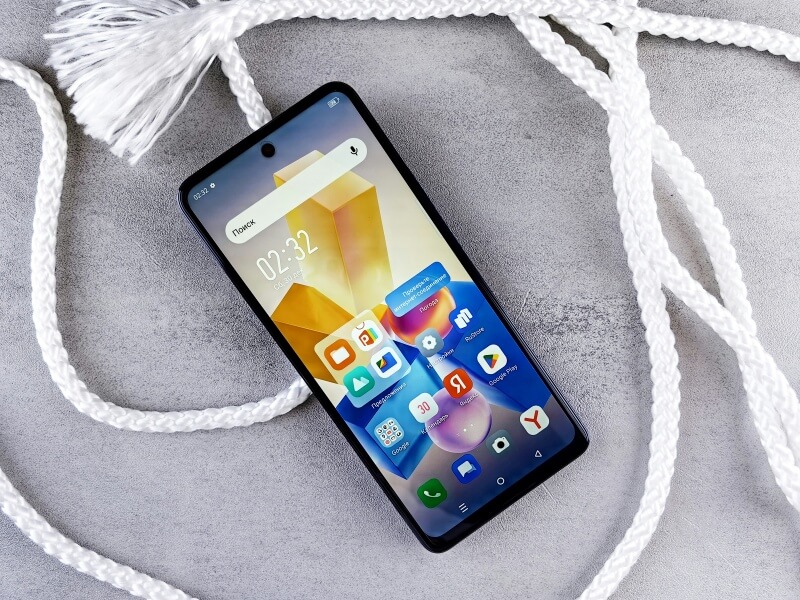
Of course, not all phones go the OLED route. Many use IPS LCDs, which take a different approach by using a single backlight to illuminate the entire display, unlike OLED panels, which light up each pixel individually. That means LCDs can’t quite match OLED’s perfect blacks, but they make up for it with truer, more natural colors, uniform brightness, and no risk of burn-in.
The IPS in IPS LCD stands for In-Plane Switching, and refers to the panel technology. It’s favored for its wide viewing angles and accurate colors.
Tip: read all about the differences between OLED and LCD in our comparison article.
Resolution
Resolution refers to how many pixels the smartphone screen packs. The higher the resolution, the more pixels can fit into the space, resulting in sharper, more detailed images.
Today’s budget and mid-range smartphones typically come with screen resolutions of either 1280 x 720 (720p) or 1920 x 1080 (1080p). In contrast, high-end devices often push the envelope with sharper displays, reaching 2160 x 1440, while premium flagship models can even offer ultra-high-definition 4K screens at 3840 x 2160. That said, not all manufacturers conform to these exact standards. For example, the Apple iPhone 15 has a slightly different resolution of 2556 x 1179 pixels.
But resolution isn’t the whole story. Pixel density, measured in pixels per inch (PPI), gives a better sense of how sharp a display really is. It factors in both the resolution and the size of the screen, which, by the way, is another detail to consider. Consider whether you prefer smaller or larger smartphones? Anyway, the rule of thumb regarding PPI is the higher the number, the sharper the image.
Refresh rate
If you’re into gaming or just want a silky-smooth scrolling experience, don’t forget to check for the refresh rate. It’s measured in hertz (Hz) and shows how often the screen refreshes.
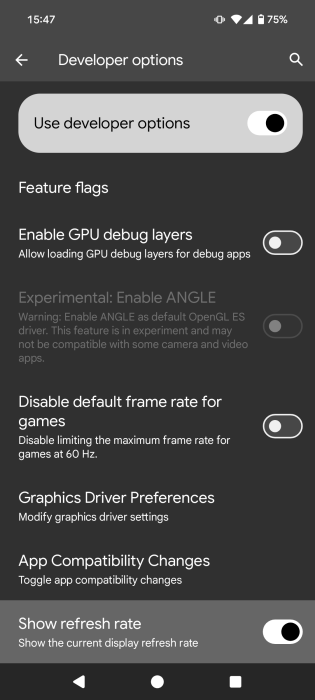
As with PPI, a higher refresh rate is generally considered better. While 60Hz remains the standard for many devices, 90Hz/120Hz (and up) displays are becoming increasingly common, even in some budget devices.
You might also see something called LTPO listed next to OLED in a phone’s specifications. That just means the screen can adjust its refresh rate depending on what you’re doing. Playing an intensive game? It’ll crank up the refresh rate.
3. Software
Every smartphone runs on an operating system, and your experience depends on it, so choose carefully. It all comes down to two major players: Android or iOS. All iPhones run iOS, while nearly all other smartphone brands rely on Android.
Some exceptions do exist, like Huawei’s phones running HarmonyOS. Originally based in part on Android’s open-source project, the mobile operating system has now diverged to become an independent platform.
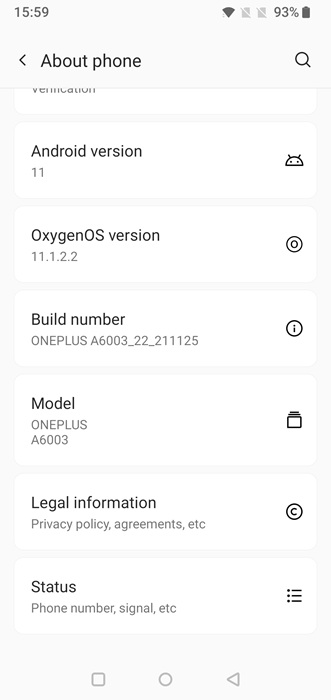
That said, Android isn’t exactly the same on every phone, as each brand adds its own twist through their custom skins. Samsung has One UI, OnePlus goes with OxygenOS (outside Asia), and Google’s Pixel phones keep things simple with stock Android.
4. Processor (CPU & GPU)
Moving further down the spec sheet, you’ll find information about the phone’s CPU (central processing unit, aka the phone’s brain power). It’s a key part of your phone, responsible for powering everything that happens on the device.
Manufacturers
When it comes to smartphone processors, Qualcomm is a household name, especially in the Android world. Their Snapdragon lineup is organized in four main tiers: 4, 6, 7, and 8. The higher the number, the more powerful and efficient the chip, so the Snapdragon 8 Elite is superior to the Snapdragon 6.

Another name you’ll see pretty often, especially in phones from Asia, is Mediatek. While not as common as Qualcomm in the US or Europe, their chips are showing up in more global models. They make the powerful Dimensity 9400+ or Helio G200 processors for pricier phones, and the Dimensity 600/700-series for everyday mid-range or budget devices. Additional options are available in between.
Some phone makers built their own chips. Samsung’s Exynos, Huawei’s Kirin and Google’s Tensor lines are homegrown efforts that can compete with the Snapdragon in speed and capability. On the iOS side, Apple uses its own A-series chips, labeled with an A that’s followed by a number. As with other chip families, higher numbers indicate better performance.
Cores & speed
After the processor name, you’ll usually find details such as the number of cores. A higher core count, like eight compared to four, usually indicates better performance. However, this is not a given. The effectiveness of a processor also relies heavily on factors such as core architecture, design, and clock speeds.
Clock speed, typically measured in gigahertz (GHz), is commonly used to estimate processor speed, with higher values implying better performance. However, core design complicates the picture. Many octa-core chips feature a mix of high- and low-performance cores, meaning not all cores are designed for speed or active simultaneously. Apple’s A-series chips demonstrate this well: despite having fewer cores, typically four or six, they’ve been regularly outperforming octa-core processors thanks to more efficient architecture and better optimization.
5. GPU
Right below the CPU entry on the spec sheet, you’ll most likely see the GPU details. The GPU is responsible for rendering visuals, so if mobile gaming is a priority for you, a powerful mobile GPU can make a noticeable difference in gameplay quality.
Four main GPU lines dominate the mobile landscape: Qualcomm’s Adreno, ARM’s Mali, Integration’s PowerVR, and Apple’s in-house designs. As with CPUs, higher numbers usually indicate better performance. PowerVR is mostly seen in low-cost devices, while Adrenos comes with Snapdragon chips. Mali is used in phones with Exynos or MediaTek processors, and iPhones rely entirely on Apple’s own GPU technology.
6. RAM
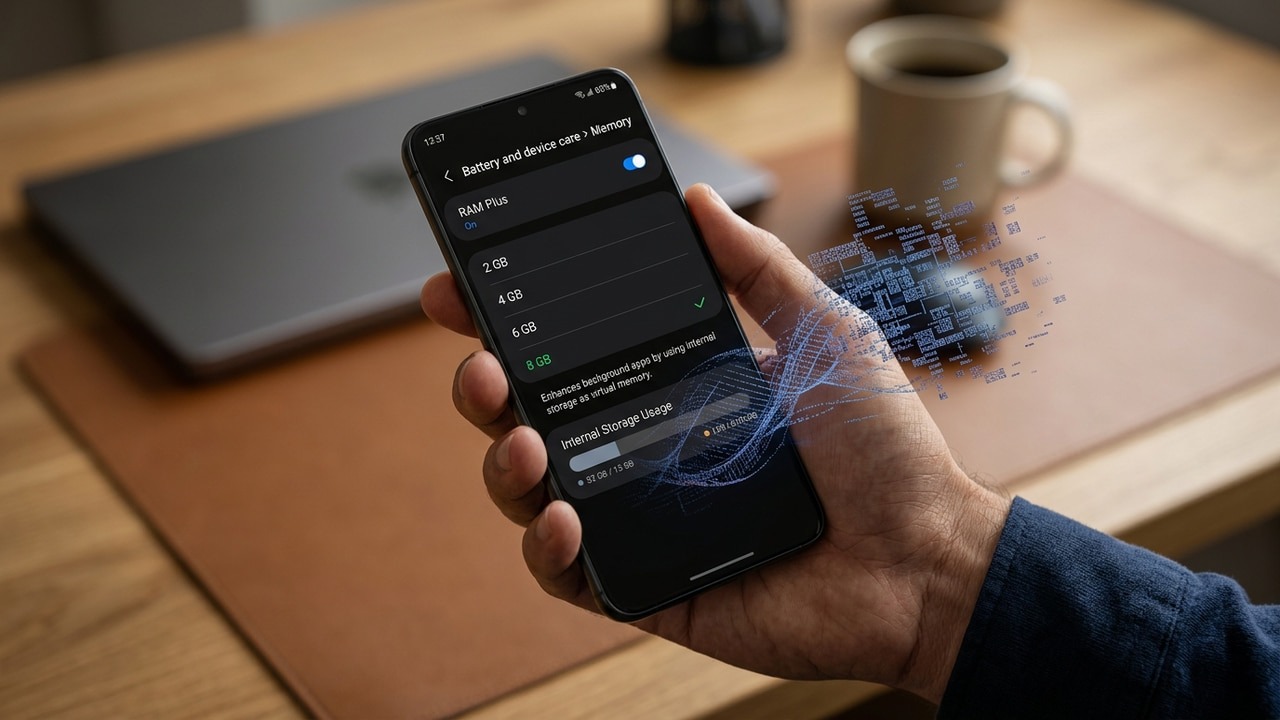
RAM specifications are typically listed in close proximity to the processor details in a smartphone’s spec sheet. It serves as temporary storage that keeps apps and data readily accessible while you’re using them.
More RAM generally allows for smoother performance and improved multitasking. While entry-level smartphones will start at around 2GB or 3GB of RAM, the standard has been gradually increasing, particularly in the Android ecosystem, where devices with up to 16GB of RAM are increasingly common.
Apple, on the other hand, tends to use less RAM in its devices compared to many Android counterparts. Thanks to its tightly integrated ecosystem and efficient memory management, Apple can deliver performance that rivals or exceeds competitors’, even with lower RAM capacity.
7. Storage
Storage capacity is another key specification to pay attention to, as it indicates how much room you have for your apps, photos, and files. Do keep in mind that a portion of it is already taken by the operating system. For example, a phone with 16GB of storage might only offer about 12GB of actual usable space, while a 32GB model may leave you with around 28GB.
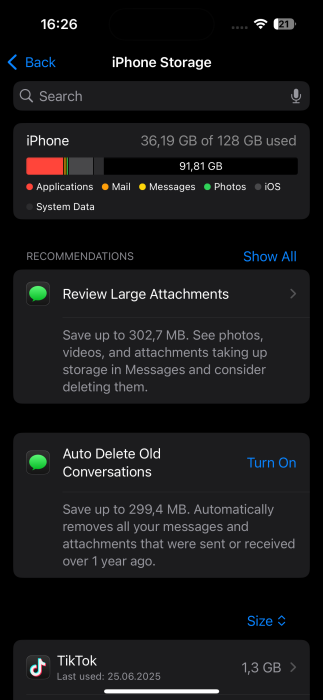
The good news is that internal storage capacities have increased in recent years, with 64GB now being the standard for many smartphones. That’s particularly relevant as more manufacturers move away from including microSD card support.
8. Cameras
If you enjoy taking pics with your smartphone, understanding these specs is especially important. Every smartphone features both a front-facing camera and a main rear camera, each with its own megapixel count. Typically, selfie cameras have fewer megapixels than the main camera, though there are exceptions.
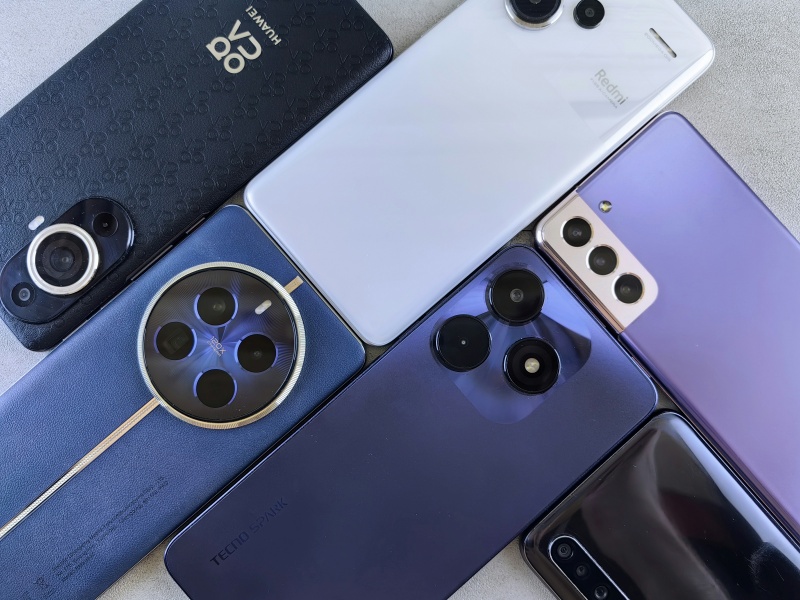
More megapixels usually translate to sharper photos, but aperture size, sensor type, lens quality, and software optimization are equally important. Google Pixel devices, for example, rely heavily on sophisticated image processing to deliver outstanding photos despite not having extremely high megapixel sensors.
It’s worth noting that many current smartphones feature multiple sensors in their main camera system, and occasionally in the front camera too. Each sensor offers unique capabilities. For instance, the Samsung Galaxy S24 Ultra combines a 200MP main wide sensor with a 10MP telephoto lens, a 50MP periscope telephoto, and a 50MP ultrawide sensor.
9. Battery and Charging
Today’s smartphones typically use lithium-based batteries, with capacity listed in milliampere-hours (mAh). These capacities can differ widely, depending on the model; some offer modest capacity, while others pack in significantly more power.
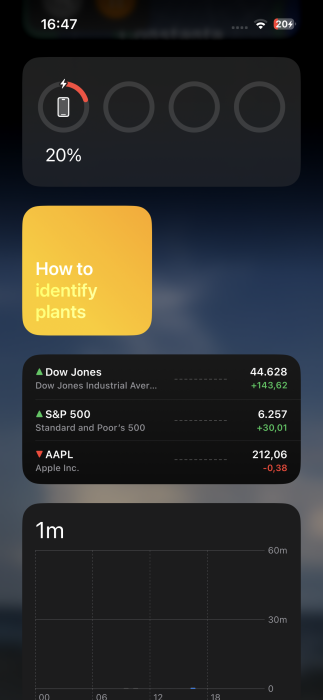
Although a bigger battery usually provides longer life, higher capacity doesn’t always guarantee extended screen time. As smartphones feature more power-hungry apps and brighter, higher-definition displays, energy demands have risen as well.
As a general rule, most modern smartphones come equipped with batteries of at least 3,000 mAh. This should provide a full day-worth of charge with moderate use, but if tend to use your device more frequently you might need to charge it before you go to bed.
Some smartphones might offer fast-charging technology (such as OnePlus Charge) that allows you to juice up your device in record time. Select models can support wireless charging, but you’ll need a dedicated charger pad for that.
10. Connectivity & Extras
Staying connected is essential, and most modern smartphones support the latest standards like Wi-Fi 6, 5G (where available), and Bluetooth 5.
When purchasing a new phone, it’s wise to choose one that includes all these connectivity features to ensure optimal performance.
11. Additional Features

There are a few extra features worth noting when reviewing a spec sheet:
- IP rating: shows whether a smartphone is water-resistant or waterproof
- Connector ports: modern smartphones mainly use three types: USB Type-C, which is common on most new Android devices and latest iPhone models; microUSB, an older standard still found on some devices; and Apple’s proprietary Lightning connector, used on older iPhones.
- NFC: a wireless technology that operates at extremely close range is commonly used for mobile payments.
- Loudspeaker: this is the speaker built right into your phone, for listening to music, making calls etc. It may be mono (one speaker) or stereo (two). Features like Dolby Atmos or High-Res Audio mean superior sound quality.
No matter which phone ends up in your hands, protecting your online privacy should always be a priority. That’s where the top VPN apps for Android and iPhone you should know about come into play.