

Google announced AI Overview this week, and of course, made it seem like it would be beneficial for everyone involved. But will it help web publishers? And is this really what the public wants?
What Is AI Overview?
First, let’s quickly go over what AI Overview is. For months, Google was testing it, and now they have decided to go ahead with it. It will roll out to the U.S. first and other countries later. It’s an AI change to Google Search.
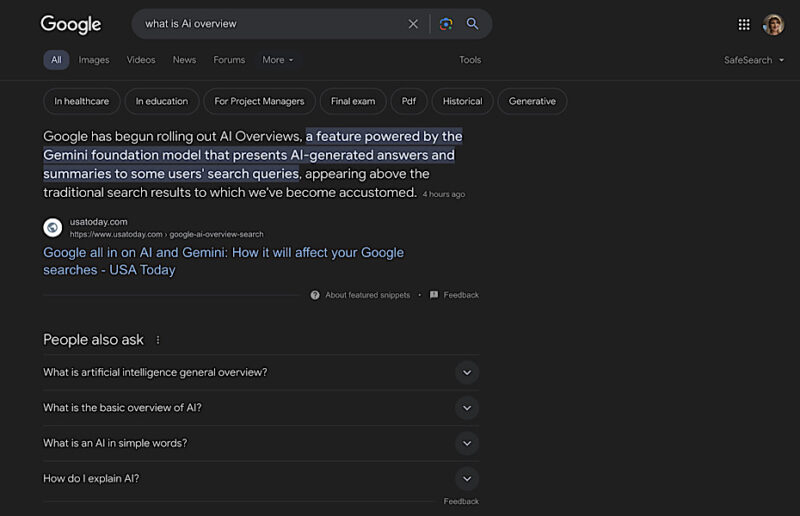
Instead of entering a search term and receiving a long list of links, sometimes accompanied by a small relevant paragraph at the top, AI Overview expands on that. It searches the Web and gives you a much fuller answer than a paragraph. It aggregates multiple articles on the matter and slams it together.
Along with that aggregated answer, there will be a box of information pulled from an article somewhere on the Web. Following this, you’ll have a list of similar questions people ask, then a section with relevant Reddit and Quora posts.After this, you’ll get the top 10 relevant links.
Google won’t always show an AI Overview, as sometimes it just doesn’t have the data to support it. But dishearteningly, you can’t turn the feature off. The best you can do is add a “Web” option to the bar of search options at the top that include Shopping and Images. Clicking the Web option every time will allow you to skip the AI Overview.
How Will AI Overview Affect Web Publishers?
The first question is, how is this going to affect web publishers? Usually, they make money two ways: running ads and publishing sponsored content. For the ads to make them money, however, visitors to their website need to click them.
But Google is now taking away the Web traffic. There won’t be as many visitors to their website, as they can cull most of the information needed from the AI Overview. They may need to do a deep dive for further info, but by the time they get to the top 10 links, they’re going to be tired of looking.
This means website traffic, which is oh so important to web publishers, is going to tank, unless the website already has dedicated traffic that doesn’t come from a Google search.
How Will AI Overview Affect the Public?
There are some people who just prefer other search engines, such as Bing, DuckDuckGo, etc. But for the majority of the people who use Google Search, how will this affect them?
Google seems to be operating on the belief that no one wants to browse the Internet and that they just want answers. I’d say that many do. If they can get the answer right away, they can move on to something else. Working in web publishing for more than 20 years, I know what the average time is that people stay on a web page, and it’s only a matter of a few seconds.
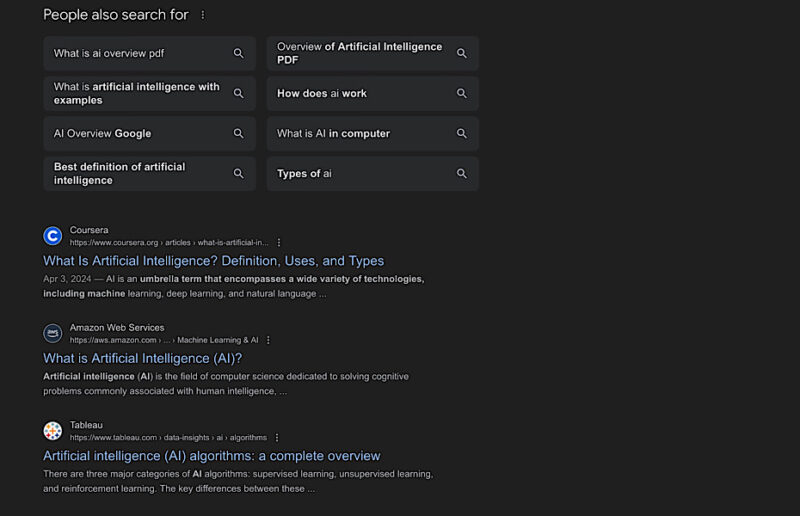
So yes, people do want that quick answer. But will what Google puts together in the AI Overview satisfy them? Or will that not be the entire information they were looking for? And now they will be forced to look longer to get to the options to find it for themselves.
I believe that some people will stick with Google and those quick answers from AI Overview. But I think there will be other people who become frustrated with what Google is providing, and they will jump ship and head to Bing, Brave, DuckDuckGo, etc.
The question is where the balance is: what percentage of people will stay with Google, and what percentage will look elsewhere. And that will determine how much web publishers will lose out. It seems this won’t just change search engines, but will change the Internet as we know.
Read on if you’re interested in more AI in your browser.
Image credit: Unsplash. All screenshots by Laura Tucker.