
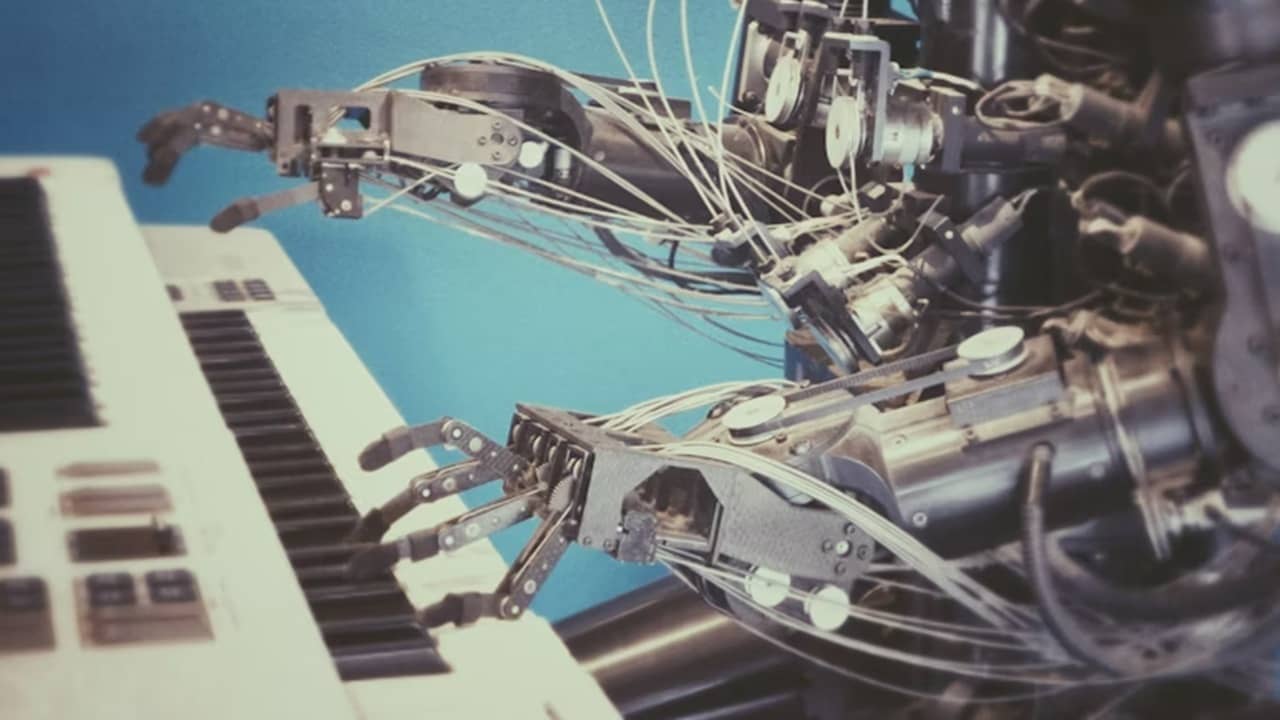

Is that amazing new band you’re listening to human or AI? Yes, AI-generated music is creeping into your playlists on popular streaming services and it’s not labeled. But, there are several ways to identify what’s real and what’s not.
AI-Generated Music Appears Human At First
It’s a sad fact that we’re forced to second guess so much of what we see online. Is that YouTube video real? Was that blog post written by a human or ChatGPT? Now, is my new favorite band just the result of some AI prompts or a group of actual people?
AI music started creeping onto music streaming playlists a few years ago, with many users complaining. Many of those have since been removed, but that hasn’t stopped the flood of AI-generated music that keeps popping up.
These fake bands create AI-generated album covers, social media “photos,” and music videos to try and fool unsuspecting listeners. It does work.
Just check out The Velvet Sundown. Originally, the band’s bio on Spotify never mentioned AI, but users started complaining after noticing the band’s obviously AI-generated social media photos. Now, the profile’s changed and states it’s a synthetic project that’s a mix between AI and human creativity.
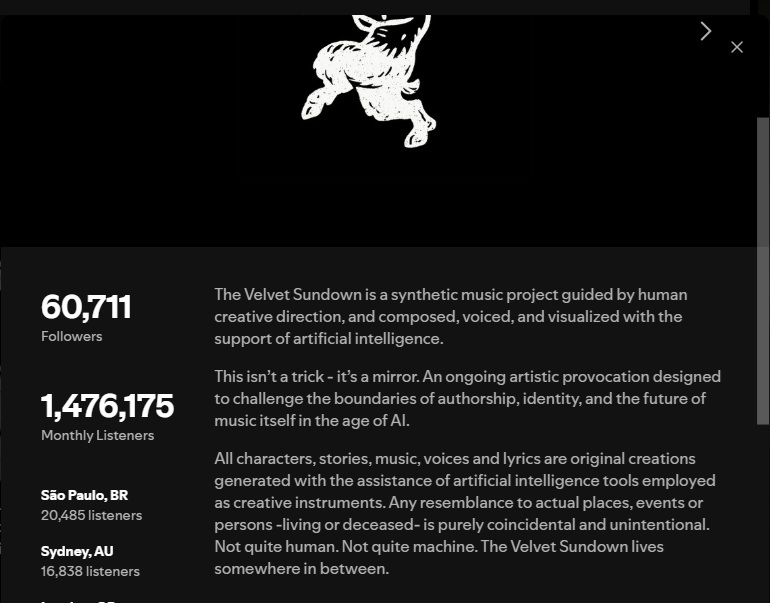
If you’re curious, some of the most popular AI-generated “artists” include The Velvet Sundown, Aventhis, The Devil Inside, and Jet Fuel and Ginger Ales. Despite sounding human at first, listeners are instead hearing music created by AI. And, the more you listen, the more your Release Radar, Daily Mixes, and other Spotify created playlists are filled with more AI music.
Admittedly, some AI tunes sound pretty good. But, if I’m paying for a music streaming platform, I want my money to support true musicians, not just computer prompts that I could easily create myself in a few minutes.
To keep your playlists from getting hijacked with AI music, you’ll have to learn a few tricks to easily tell the difference.
Issues With the Chorus
The one thing we all know about the catchy chorus of a song is it should be consistent. It shouldn’t lose track of itself. But, many AI-generated songs have chorus issues.
It may sound fine the first time. Then, by the second and third choruses, words are mixed up and it may not even make sense any more.
Listen for inconsistencies within the chorus. AI is good, but it often forgets what it created. This is a common way to distinguish human from AI.
Eerie Similarities With Other Song Titles
The one thing that immediately tipped me off when The Velvet Sundown popped up in my release radar is the titles sound eerily similar to other songs in the same genre. If you haven’t listened to them, they have a 70s rock sound.
For example, their most listened to song is Dust on the Wind. For any Kansas (a popular human rock band from the 70s) fans, you might wonder if this is a cover of Dust in the Wind.
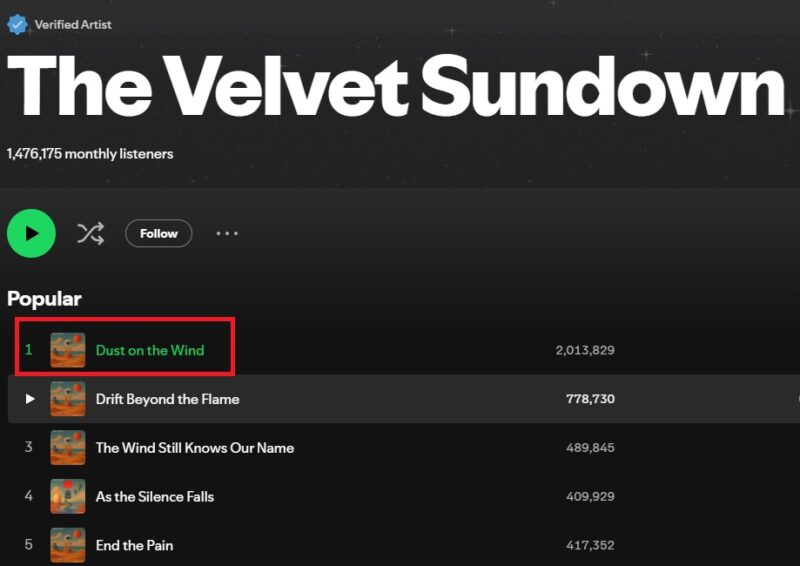
Since AI trains on other music, the titles and sometimes, even the lyrics, are only a few words from the music it was trained on.
Also, you may notice similarities in band names and album covers. For instance, The Velvet Underground (human) versus The Velvet Sundown (AI).
Often Sounds Low Quality
If you’ve ever listened to lo-fi to relax or focus, you know it’s a far cry from what you’d typically hear on a streaming music service. Of course, with lo-fi, that’s what you expect. You don’t expect it from a trending artist on Spotify, YouTube Music, Apple Music, or any other music platform. Even free music streaming services usually offer far better quality than many AI-generated tunes.
Listen for distortion in the voices, such as an unnatural graininess or autotune that doesn’t sound quite right. You might also hear random glitches, skips, or wrong notes.
For example, Aventhis Mercy on My Grave may have over two million streams, but you can tell the quality is low and the voice is artificial.

AI music may sound more like something recorded cheaply in a garage than a studio. That’s not always the case, though, as AI music is getting more sophisticated.
Take a minute to listen to tracks created by Suno, Riffusion, and Udio. All of which are AI music generating tools.
Lack of Human Emotion
When a human sings or plays an instrument, there’s usually emotion behind it. For example, during Eric Clapton’s Tears in Heaven, you can hear the voice break and a tremble as he sings. AI can’t duplicate this.
Instead, the songs either sound way too perfect or as if a robot is attempting to sing to you. You simply don’t feel anything when you listen, other than realizing something’s odd about the music.
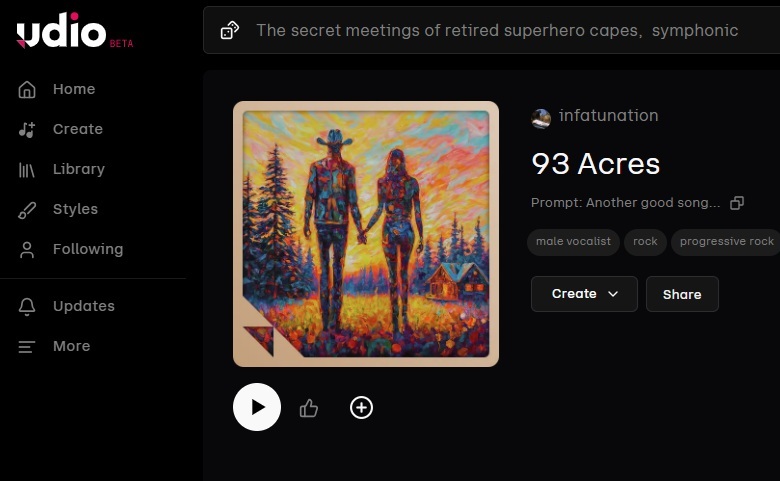
Just listen to 93 acres on Udio. It’s not only bland, but the quality is terrible.
Check Profiles and Social Media
Creating music isn’t easy, so I get the appeal of AI-generated music to create something easily. But, it should be clearly labeled as AI-generated.
One quick way to determine if you’re listening to something real or fake is to check out the artist’s profile – both on the streaming service and on social media. Some profiles will state that it’s an AI project. Others try to make their AI work sound like it was created by a real band of actual humans. But, when you look at social media, those humans don’t actually exist. And, any images are AI-generated.
Another issue is you usually won’t find details about the producer or writer on any of the songs.
Use AI Music Detectors
These are still iffy, but it’s a good start. You can either upload an audio file or paste the song’s URL (typically Spotify) depending on the tool. A few to try include:
Also make sure you have these other AI detector tools on hand to detect all types of AI content.
If you want less AI on streaming services, request a feature to mark AI-generated music clearly. Then, hide it from your playlists. The fewer listens, the less it’ll appear.