

For many internet companies and content creators, adblocking is a controversial subject.
There are many strong opinions on adblocking – what adblocker is the best, whether it is a necessary evil, and if it’s even legal (it is). This past month, Google made the news for seemingly bypassing adblockers on Chrome, leading to another great discussion on the subject of both adblocking and advertising on YouTube.
Quick Vocabulary
This section’s just for some quick vocabulary in case you aren’t familiar with some of these terms. Skip ahead if you already know this stuff.
- Adblocker – A program or extension designed to block online advertisements typically seen in web browsers.
- Non-intrusive advertising – Advertising said to be non-intrusive to the user experience.
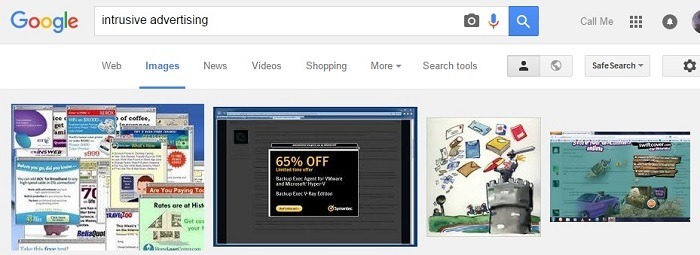
- Intrusive advertising – Unskippable pre-rolls, pop-ups, page-disrupting advertisements, etc.
So, what happened?

Essentially, Google (apparently unknowingly) made a revision to Chromium (and, by extension, Chrome and Chrome OS) that made advertisements on YouTube unskippable.
The bug was first discovered in uBlock, but people investigating the issue on the Chromium Development forums quickly discovered that it applied to all adblockers, old and new.
Of course, this news spread like wildfire in no time at all. Before long a ton of news sites were covering the incident, especially as individual users began to notice the problem.
Speculation began quickly – was Google doing this intentionally, using their advantage in the browser market and video sharing to nip adblocking in the bud? Was this just an unfortunate bug that popped up – and if so, was it Google’s fault or the developers of AdBlock, uBlock and other extensions? According to various sources over a long period of time, Google is planning a premium YouTube model – could this be part of that?
It was soon discovered to be a bug and Google’s fault, with one of the known fixes involving uninstalling the YouTube app on Chrome before it was patched out.
Of course, if this were just any other news story, we wouldn’t be covering it here. This incident passed by relatively quickly, but for nearly a week Internet users everywhere were wondering if Google had crossed a sacred line between a user and their browsing experience. I’m not going to be a conspiracy theorist and say they were – it was clearly an accident – but it raised a lot of interesting questions, and I’d like to discuss those questions with you.
What’s the big deal?
Most of the content you find on the Internet is offered for free, including this website. What some users may not know is that the advertisements that come with this content is what pays for it. Even with the rise of power users and abdlockers, Internet advertising revenues are getting higher than ever and are rather unlikely to decrease. While some smaller sites may find themselves plagued by an over-abundance of adblock users, most big Internet companies and advertisers are doing perfectly fine for themselves. Google is currently one of the biggest companies in the world, and it started with a search engine and advertising platform.
With that in mind, I’d like to ask you the following questions. Note that there are no wrong answers.
1. If Google wanted to remove adblocking capabilities from their browsers, would that be okay? Would you stay on an old version or switch browsers?
This one’s my favorite. Morally and legally speaking, it’d be totally okay for Google to do that – it’d just be detrimental to user experience. To me, Chrome simply offers the best user experience for web browsing. Your mileage may vary, of course, but when faced with this decision, I would likely elect to stay on Chrome and simply grin and bear with the advertising.
2. If you switched browsers – to FireFox or Opera perhaps – what if they started doing that, too?
This is likely never going to happen, but think about it. If the companies behind making web browsers decide to crack down on adblocking in the same manner that Apple cracks down on user customization and privacy, what position would that put you in?
3. Should websites be allowed to prevent adblocking? If yes, why, and if no, why not?
This is the question of questions for adblocking, and, again, there are no wrong answers. Personally, I believe that websites should be allowed to make the choice to prevent adblocking, because, you know, freedom. Personally, websites that literally cease to function without page-breaking ads aren’t worth my time. I prefer websites that offer quality content or nicely ask me to not block their ads, and once I whitelist them, using that trust well to provide non-intrusive ads that don’t negatively interfere with my user experience and still help pay their bills.
What do you think, though?