
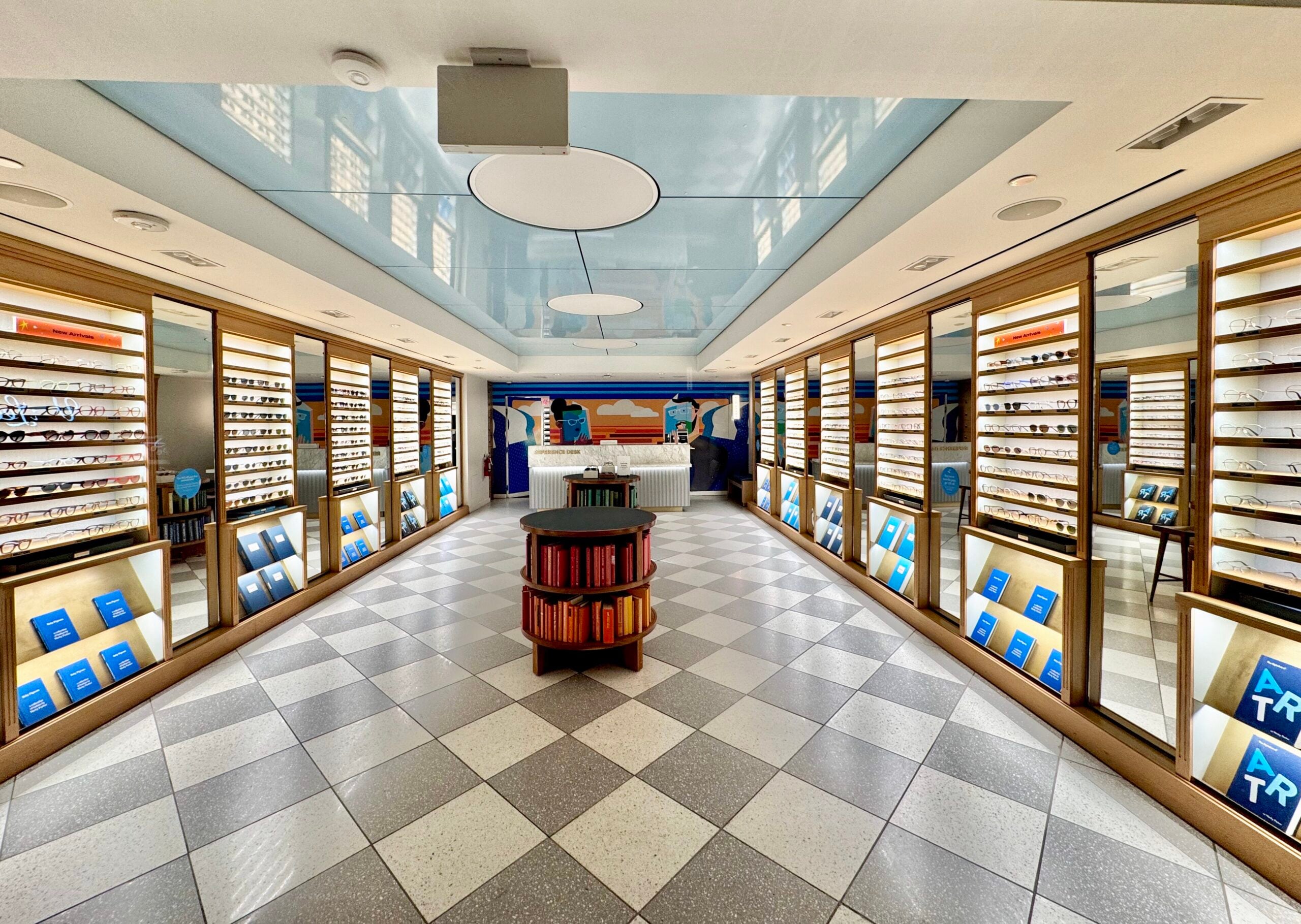


Warby Parker Intelligent Eyewear will start at $395 in the United States and reach stores on 10 December, Samsung Electronics said on 12 November, setting out prices and a release date for the Gemini-equipped eyewear lineup it developed with Google.
“In the U.S., Warby Parker Intelligent Eyewear will start at $395, while Gentle Monster Intelligent Eyewear will range from $449 to $489, depending on the model,” Samsung said. The release covers the United States and South Korea. Both collections go on sale in the US, and the Gentle Monster line also launches in Korea.
Pre-orders opened the same day. “Intelligent eyewear will be available to purchase in stores and online on December 10,” said a Google post written by Shahram Izadi, vice president and general manager of its XR unit. Make Tech Easier reported the Warby Parker pre-order date on 11 November, before prices or an in-store date were confirmed.
Two collections, 30 designs
Samsung put the combined lineup at 30 designs. The Gentle Monster collection includes 16 variations based on six frame styles, in colors including dark red, pink, gray and yellow, with tinted, clear, blue or brown lenses. The Warby Parker collection includes 14 variations based on three frame designs, named Alden, Reid and Wren, in Pine, Saddle and Jet Black, in optical or sun versions and with prescription, width and lens options.
Customers can buy through Warby Parker’s retail and online channels and through Gentle Monster’s official online store. Google said pre-orders are live online and in store at both brands, with hands-on demos at select Gentle Monster, Warby Parker and Google Store locations, and a guided demo sign-up at more than 360 Warby Parker retail locations. Samsung said demonstrations will be available at select Samsung retail locations from 10 December.
Google will not sell the glasses directly at launch, Bloomberg reported in coverage cited by Quartz, which added that the devices run Google’s Android XR operating system and that Meta Platforms leads the smart-glasses category.
Camera and audio, with no heads-up display
None of the nine styles has a heads-up display, The Register reported, leaving cameras and audio feedback from Gemini as the interface. Izadi has separately promoted the XREAL Aura, described on the same blog as wired XR glasses.
Samsung said the glasses weigh around 41 grams, based on the GGS002 configuration, with a stated range of 39.6 to 43.9 grams for Gentle Monster frames and 40.4 to 42.6 grams for Warby Parker frames. The charging cases weigh 194.5 grams and 166.8 grams respectively.
The published specification lists a 12MP HDR camera that records 3K video at 30fps, two open-ear speakers, four microphones, 2GB of memory, 64GB of storage, Wi-Fi 6E, Bluetooth 5.4 and IPX4 water and dust resistance for the glasses only.
The Snapdragon AR1 Gen 1 platform runs the hardware. Samsung rated battery life at up to nine hours on a single charge and up to 72 hours with a charged case; Google said the case can recharge the frames up to seven times. With Galaxy phones, Samsung said, a split-computing system moves part of the processing load to the connected handset.
Samsung listed compatibility as Galaxy S, Galaxy S FE, Galaxy Z Fold, Flip and Fold Ultra models running One UI 9.0 or higher, Pixel 7 series and later on the September 2026 Android 17 update or later, and iPhone 13 and later with at least 6GB of RAM on iOS 26.6 or later. A footnote on Google’s announcement instead lists iPhone 13 Pro and above.
Wearers say “Hey Gemini” or tap the frames. Google Maps gives turn-by-turn directions in the ear, and Google Translate handles real-time speech translation with automatic language detection across more than 70 languages. Samsung gave the example of photographing a whiteboard during a meeting, asking Gemini to summarize it and saving the result into Samsung Notes. Google also listed Guided Vision, which gives conversational audio descriptions for people who are blind or have low vision, and a tie-in with Aira that streams the camera feed to a trained human interpreter.
Recording light, face redaction and an age check
An LED shows when the camera is active, Samsung said, while an inner light and a sound alert the wearer. Capture is designed to shut off if the external LED is covered or fails. Visuals collected by Gemini are not used for AI model training or ad targeting, and the glasses are designed to redact bystanders’ faces before Gemini processes an image. Google said every pair has an off switch. Use is restricted to people aged 18 and over, with age verification required for activation and app downloads, and the devices work only with Google accounts from the United States or South Korea.
A Google spokesperson told The Register that a combination of hardware and software detects attempts to disable or disrupt the privacy features. “We’re committed to continuously improving the effectiveness of these solutions as new attack vectors are identified,” Google told the outlet. The company also said it saves audio recordings and transcripts of Gemini conversations made while wearing the glasses, while insisting those are not used to train its models, and that face redaction does not apply to photos or videos saved to a wearer’s camera roll.
Google’s terms of use require wearers not to record others without permission or in “sensitive places”, and the company reserves the right to brick devices, The Register said. Apps that use the glasses for real-time streaming or facial recognition are barred from the Play store. Camera-equipped frames carry privacy and safety risks that recording indicators address only in part.
“As glasses become more capable, our focus is on creating helpful experiences that make both wearers and bystanders feel protected,” Izadi wrote, in remarks reported by Bloomberg and carried by Quartz.