
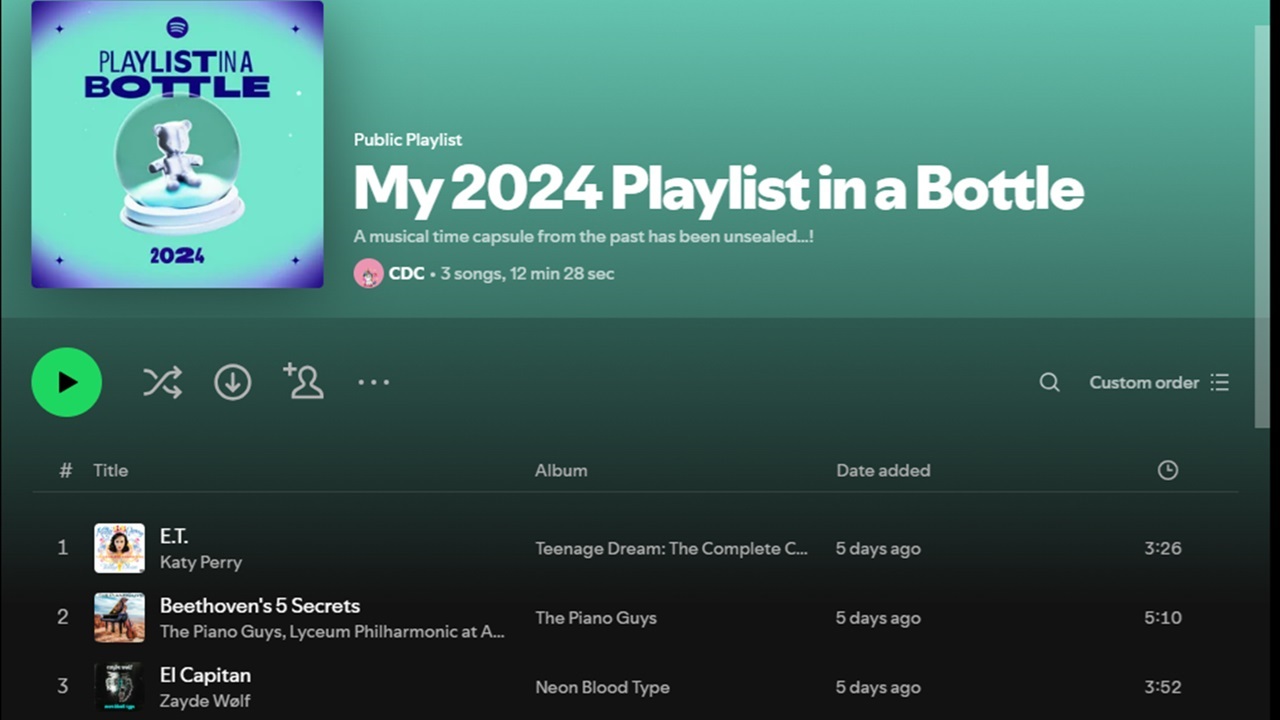

It’s finally time. If you’re like me, you may have completely forgotten about creating a Spotify Playlist in a Bottle early in 2024. But, I was excited when Spotify prompted me to see what my music tastes were a year ago.
What Is Spotify Playlist in a Bottle
Think of this playlist as a teeny tiny Wrapped, but you picked the songs. For the last few years, Spotify prompted me to answer three questions with a song of my choice. Then, it was sealed away in a “bottle.” I had several bottle styles to choose from, such as a flip phone, teddy bear, an actual bottle, slow cooker, a trash can (I guess if you really hated your songs?), and a bird nest complete with eggs.
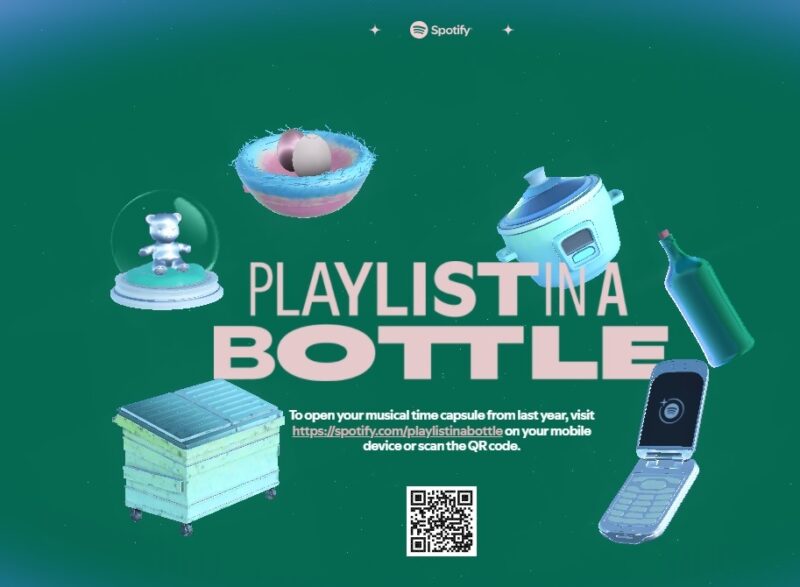
Essentially, it’s a time capsule that lets you go back and see what songs were most on your mind a year ago. These aren’t like Wrapped, where the list is based on what you listened to most. Instead, you choose them yourself, so in a way, it feels more personal.
Act Quickly to Check Out Your List
The Spotify Playlist in a Bottle is only available until January 31st. After that, it’ll disappear out into the proverbial sea, never to be seen or heard again. Of course, if you break your “bottle” open, it’s easy to save your list using the save feature just like any other Spotify list.
Outside of the nostalgia itself, I love taking the time to fill out the list with recommended songs. You start with your original three and add to it to create your own personal mix.
For me, I just opened the Spotify mobile app and was prompted to open my playlist. But, I’ve seen where other users aren’t getting that handy prompt. Just go to https://playlistinabottle.byspotify.com/ or search for playlist in a bottle while logged into Spotify. Look for the 2024 version and ensure it has your Spotify profile name on it.
If you have any trouble doing this on the web player, try these fixes.
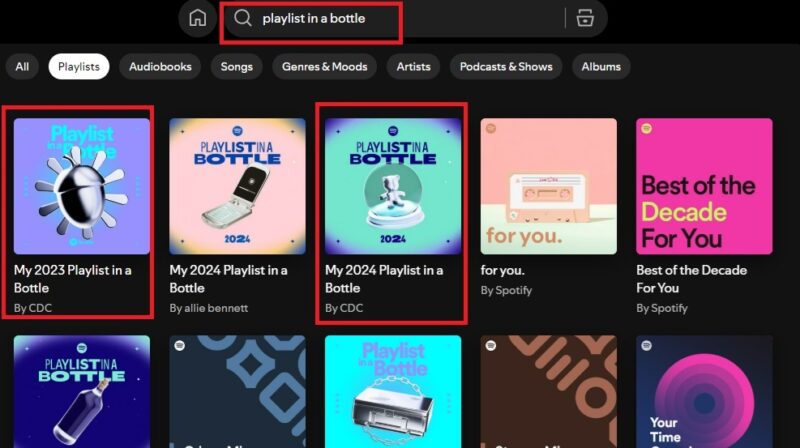
Keep in mind, you had to set this up last January for it to be available now. When I searched, I had both 2023 and 2024 show up, though both are saved to my playlist library. If you have both, take a moment to compare your choices to see how much you’ve changed between 2023 and 2024. And, don’t forget to share it with your friends.
Will Spotify Do It Again?
So far, I haven’t gotten a prompt to create another Spotify Playlist in a Bottle for 2025. Admittedly, I’d be a little disappointed if they don’t do it again. Don’t get me wrong. I love Wrapped, but this is a fun extra. Of course, if it doesn’t come back, just make your own three-song playlist and don’t look at it again until next year. Set a reminder on your calendar so you don’t forget.
After you’re done with your 2024 Playlist in a Bottle, check out some fresh music for 2025 with an AI playlist.
Image credit: All screenshots by Crystal Crowder