
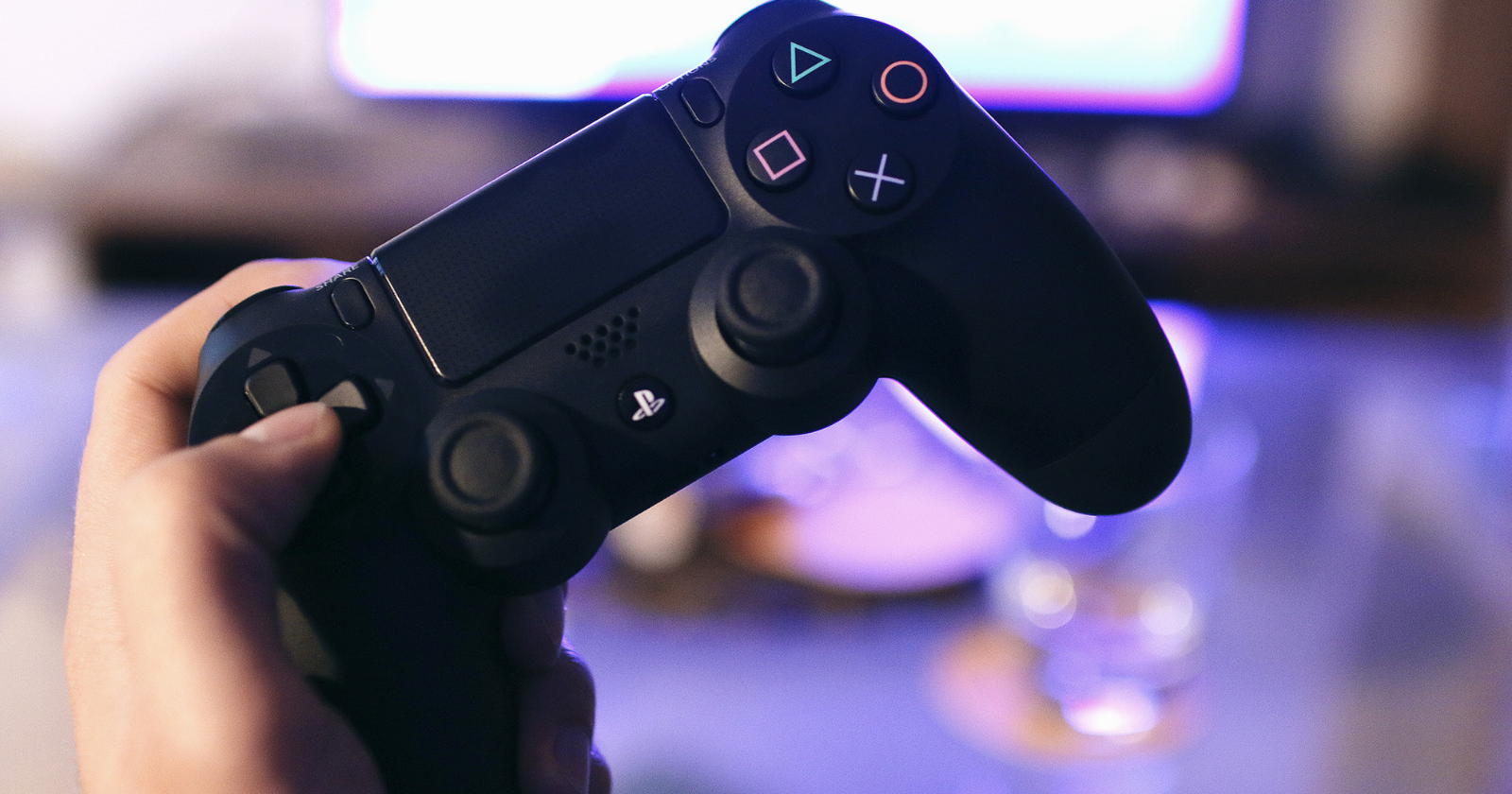

In December 2000, with the PlayStation 2 still impossible to find in shops for Christmas shoppers in America and Europe, a report surfaced that stopped intelligence analysts in their tracks.
Roughly 4,000 of the consoles, the report claimed, had been quietly shipped to Iraq in the previous few months. A country under one of the world’s tightest arms embargoes, ruled by Saddam Hussein, had somehow acquired thousands of units of one of the most advanced consumer technologies on Earth.
And the U.S. Defense Intelligence Agency took it seriously enough to investigate publicly. The fear, briefly and prominently aired, was that Iraq was planning to chain the consoles together — to build, on the cheap, a crude supercomputer capable of guiding missiles or drones.
It is one of the strangest national-security stories of the early 2000s. And it tells us less about Iraq’s weapons program than about how genuinely strange it felt, in that moment, that a children’s toy could suddenly be classified as a potential weapon.
A console that arrived with export-control paperwork
To understand the panic, you have to understand what the PlayStation 2 was when it launched in March 2000.
It wasn’t, by the standards of the time, just a game console. It was a genuine leap in consumer computing power. The PS2’s “Emotion Engine” CPU could perform roughly 6.2 billion floating-point operations per second — performance comparable to mid-range workstations of the era, packed into a piece of hardware that retailed for $299. Its built-in 128-bit encryption was strong enough that, under Japanese law, the console required export approval from the Ministry of International Trade and Industry before it could be shipped overseas. Japanese authorities openly acknowledged that the PS2’s graphics processor could, in theory, serve as the visual processing system — the “eyes” — of a missile guidance system.
Briefly, officially, in 2000, the PlayStation 2 was classified as a dual-use technology. A toy with weapon potential.
This wasn’t unique to Japan. The same fears existed in Washington. When reports emerged that thousands of these machines were turning up in Iraq, in apparent circumvention of UN sanctions, it landed on a system already primed to be alarmed.
What the DIA actually said
The Defense Intelligence Agency’s specific theory was this: the PS2’s processing power, while individually limited, could be multiplied by linking many consoles together. A cluster of perhaps 10 to 20 PS2s, the theory ran, might collectively produce enough computational muscle to handle the calculations involved in guiding a long-range missile or controlling an unmanned aerial vehicle.
The fear was concrete enough that it was discussed openly in the press. It featured in briefings. Gary Milhollin, a respected nonproliferation expert, gave the panic one of its memorable quotes: as consumer electronics get more powerful, he said, the line between what’s a toy and what’s a weapon is going to disappear.
In one specific sense, he wasn’t wrong. The PS2 was powerful. It was export-controlled. There were thousands of them turning up in a sanctioned country. Each individual claim in the official concern was, narrowly, true.
What was much less clear was whether any of it added up to what the headlines suggested.
Why the supercomputer was almost certainly never going to happen
Once technical experts looked at the theory carefully, it began to fall apart.
The first problem was the consoles themselves. Clustering machines into a working supercomputer is not, despite the common image, just a matter of plugging them together. It requires specialised networking, custom software, deep operating-system access, and an enormous amount of engineering work. The PS2’s architecture was specifically designed to be hard for outside developers to access — Sony locked it down to protect against piracy and unauthorised software. The very encryption that triggered the export controls also made the console a deeply uncooperative building block for a homebrew cluster.
The second problem was simpler. A UK government intelligence source, quoted at the time, described the DIA’s theory in bluntly British terms: “complete cobblers.” Iraq, the source pointed out, had no shortage of ordinary PC hardware. If Saddam Hussein’s regime wanted computing power, far easier and more capable options were available than building a make-shift cluster out of locked-down game consoles.
The third problem was practical. The PS2’s strengths were graphics processing and floating-point math — useful for some kinds of computation, but a long way short of what an actual missile-guidance system needs. The hardware existed. The fantasy of using it for war did not survive contact with engineering reality.
In the years since, the supercomputer claim has been broadly classified by historians of the period as exactly what it appears: a moment of techno-panic. A media narrative driven by a real but exaggerated piece of intelligence, amplified by genuine cultural unease about a new and unfamiliar piece of technology, and never substantiated by any evidence that Iraq was actually doing what was feared.
What was actually happening with the consoles
Here is the more boring answer to “where did the 4,000 PS2s go?”
They were almost certainly bought through grey-market channels by ordinary middlemen, then resold inside Iraq to whoever could afford them — which, in the country’s economy at the time, meant a small wealthy elite, including the families of regime insiders. The consoles were valuable, scarce everywhere in the world, and tradeable. As contraband luxury goods go, they were close to ideal.
There was never, as far as the public record shows, a confirmed Iraqi military program to weaponise PlayStation 2s. The DIA’s speculation remained just that. No supercomputer was ever found. No PS2-guided missile was ever fired. The story, when the dust settled, was a story about a panic, not a program.
Why the panic itself is the interesting part
It would be easy to file this under embarrassing intelligence-community moments. It’s worth one more look than that.
The PS2 supercomputer scare is one of the cleanest illustrations of something genuinely true about the modern world: the boundary between consumer technology and military technology is genuinely dissolving. The fear that powered the 2000 panic wasn’t crazy. It was just too early. Cheap, commercially available computing has, in the years since, become a routine component of military systems. Drones are flown with off-the-shelf GPUs. Modern conflicts are increasingly fought with hardware first developed for gamers and hobbyists. The “line between a toy and a weapon” really has, in the way Gary Milhollin warned, started to disappear.
The PlayStation 2 was the wrong device at the wrong moment to fulfil that prophecy. But the prophecy itself, twenty-five years later, looks less paranoid than it did at the time.
The supercomputer was never built. The fear that built it was, in its own way, ahead of its time.