
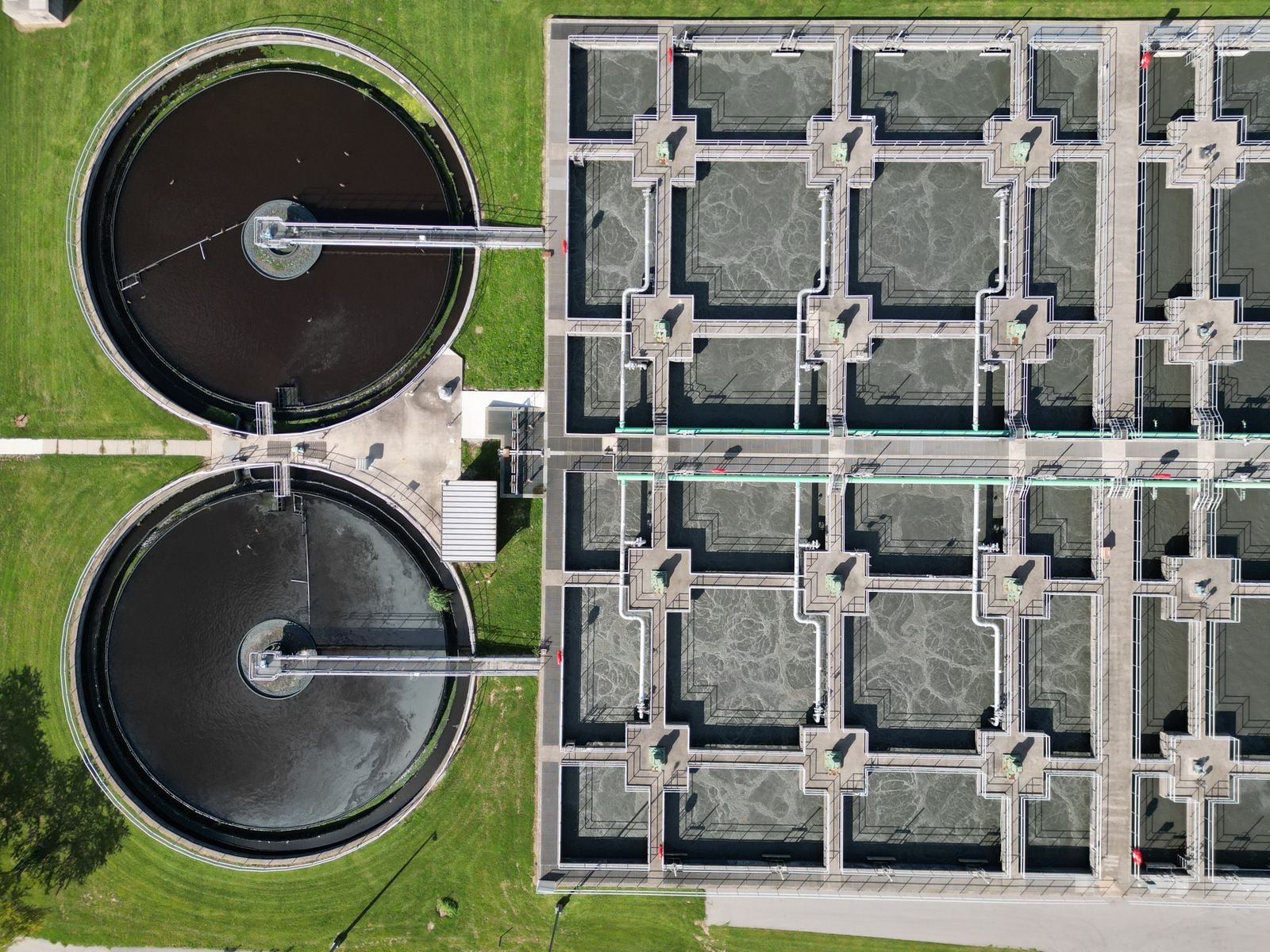

Singapore did it through NEWater, a national system that takes conventionally treated sewage and purifies it again with membranes and ultraviolet light. In 2017, the government said the five factories then operating could meet up to 40 per cent of current water demand, according to an official speech archived by the National Archives of Singapore. That was a production-capacity figure covering industrial and potable uses, not a claim that two glasses in every five poured from a kitchen tap came directly from sewage.
On 9 August 2002, then prime minister Goh Chok Tong led about 60,000 people in a National Day Parade toast with bottled NEWater. The first two factories opened at Bedok and Kranji in January 2003, after a demonstration plant and a two-year safety study, as Singapore’s National Library Board records.
The pressure was geographical as well as political. Singapore lacks large rivers, natural springs and glaciers, and it has limited land on which to collect and store rainwater. Even after turning two-thirds of its land into catchment and channelling rainfall to 17 reservoirs, the country consumes about 440 million gallons a day, according to the Ministry of Sustainability and the Environment.
Why a water agreement became a security problem
Singapore and Johor signed two long-term water agreements in 1961 and 1962. The first expired in August 2011. The second allows Singapore to draw up to 250 million gallons of raw water a day from the Johor River and runs until 2061.
The price is fixed at three sen per thousand gallons of raw water. The issue has repeatedly entered bilateral negotiations, most sharply from 1998 to 2003, but the legal position is more precise than the original draft suggested: the agreements were guaranteed in the 1965 Separation Agreement, and Singapore’s Ministry of Foreign Affairs says neither country can change them unilaterally. The history and terms are set out on MFA’s water-agreements page.
That dependence gave a deadline to a much broader engineering programme. Local catchment, imported water, desalination and NEWater became the Four National Taps. Of those, NEWater performs a trick the others cannot: it sends water already used once around the loop again.
What NEWater actually is
NEWater begins as sewage that has already passed through a conventional water reclamation plant. A portion of that treated effluent is then sent for advanced purification. PUB’s current NEWater page lists four plants in operation, following the closure of the Bedok factory in 2024.
The advanced treatment has three stages. Microfiltration or ultrafiltration removes microscopic particles and bacteria. Reverse osmosis lets water molecules through a semi-permeable membrane while rejecting contaminants including viruses, heavy metals, salts and pesticides. Ultraviolet disinfection then inactivates remaining bacteria and viruses as a final safety barrier.
The original two-year study involved about 20,000 physical, chemical and microbiological tests. Today, PUB says roughly 300 parameters are monitored across the supply chain, including those in World Health Organization guidelines and US Environmental Protection Agency standards. The agency publishes that monitoring framework on its NEWater quality page.
The idea itself was older than the plants. Singapore studied reclamation in the 1970s but judged the technology too expensive and unreliable. PUB revived the work in 1998, commissioned a full-scale demonstration plant in 2000, and moved to public use only after the expert review.
Why most of it never goes straight to the tap
Most NEWater is supplied through a dedicated network to non-domestic users. Wafer-fabrication plants, industrial estates and commercial cooling systems need water of unusually high purity, and using NEWater for those jobs preserves conventionally treated potable water for homes.
During dry periods, a smaller amount is added to surface reservoirs and blended with raw water. The blend then passes through Singapore’s conventional waterworks before reaching consumers. That is indirect potable reuse, not a pipe running directly from a sewage plant to a kitchen.
The potable share was deliberately small. When the government approved indirect potable use in September 2002, it planned to start with 2 million gallons a day, less than 1 per cent of total daily consumption, and increase the amount to about 2.5 per cent by 2011. The contemporaneous government announcement provides those documented figures; current PUB pages say only that most NEWater goes to industry and some is added to reservoirs during dry periods.
The reservoir step had three stated purposes. It followed the established practice of allowing reclaimed water to pass through a reservoir before conventional treatment, helped the very low-mineral water pick up minerals again, and made public acceptance easier. Those were design choices written into the scheme, not an after-the-fact explanation.
Acceptance was built before the household supply began. In 2002, officials held seminars for community leaders, business groups, workers and students; more than 98 per cent of the 3,000 participants supported indirect potable use. That figure describes seminar participants rather than a representative national poll, but it shows how deliberately the public campaign was run.
The contrast with Toowoomba, Australia, is sharp. In July 2006, more than 62 per cent of voters rejected a proposal to obtain 25 per cent of the city’s supply from recycled effluent, according to ABC News’ report on the referendum. Treatment chemistry alone could not settle a public vote.
What the membranes cost
Reverse osmosis needs pressure, electricity and membranes that must be maintained and replaced. Singapore therefore treats energy use and the percentage of feedwater recovered as central design constraints, not footnotes to the purification process.
Desalination shows the upper end of the pressure-and-energy problem. Singapore’s five desalination plants use reverse osmosis, and PUB puts the energy needed to make seawater drinkable at about 3.5 kilowatt-hours per cubic metre. The agency describes the plants and their treatment systems on its desalinated-water page.
PUB is now trying to squeeze more water and use less energy at the reclamation plants. In trials, flow-reversal technology raised reverse-osmosis recovery from 85 per cent to as high as 90 per cent, while a biomimetic membrane demonstration at Kranji cut energy use by 20 per cent. Those results are promising trials, not yet system-wide performance.
The physical network is also being rebuilt. PUB’s September 2024 expansion plan describes a third Changi factory and a Tuas factory planned for 75 million gallons a day, as used-water treatment is consolidated into three regional nodes by 2035.
What Singapore changed that membranes alone could not
Singapore did not invent microfiltration, reverse osmosis or ultraviolet disinfection. Its achievement was to join those established processes to sewers, reclamation plants, factories, reservoirs and waterworks at national scale.
The public campaign was part of that system. Bottled samples, public seminars and the NEWater Visitor Centre let people see the membranes and taste the output before indirect potable reuse began. When the Bedok visitor centre closed in July 2024, PUB shifted the story to the Sustainable Singapore Gallery and planned new displays at Tuas.
The order mattered. Industry became the main customer first, while only a small amount entered the potable system through reservoirs and conventional treatment. The country did not ask households to accept the most confronting version of reuse on day one.
What is left to solve
The scale keeps moving. Singapore’s latest water-policy page says demand is about 440 million gallons a day and is expected to almost double by 2065. More reclamation capacity means more tunnels, pumps, membranes and electricity on an island where infrastructure already competes for land.
The 1962 Johor agreement still expires in 2061. By then, local catchments, reclaimed water and desalination will have to carry more of the load, even as rainfall becomes less predictable and energy remains costly.
That is what NEWater changed. Rain still lands on roofs and roads, used water still leaves homes through sewers, and the island still has no large river to fall back on. But between the drain and the reservoir now sits a second route through the city, fine enough to stop a virus and large enough to alter the arithmetic of national survival.
For related reading on infrastructure that quietly holds the modern world together, see how a fibre-optic cable carries intercontinental internet traffic and how the Netherlands’ 1973 Sunday driving ban helped change its streets.