


It’s that time again, folks! The year 2013 has come to an end, and 2014 is upon us. This year is perhaps going to be one of the most optimistic ones, with several of 2013’s early-stage innovations coming to fruition and being used in a wider sphere. As we look back at all the innovation we’ve experienced, I’m happy to say that we’ve had a tremendous year. It is now time to look forward and see what kinds of new gadgets and gizmos we’ll see in our near future.
1: 64-bit Smartphones!

It’s one thing to have to contend with a small amount of space, fitting hardware into ever-shrinking frames. As phones’ bodies became larger to accommodate 5-inch (and even 6-inch) screens, manufacturers were pressured to come up with ways of making these behemoths lighter and thinner. This pressure is further exacerbated by the ever-increasing need to include more processing power to compete in the market. It seems very likely that we’ll see a proliferation of 64-bit processing in the smartphones coming out in 2014. Companies that rigidly stick to the 32-bit processing model won’t fall behind this year as quickly as some might think. It will still take some time for app developers to create the applications that will make use of the extra bit width in the CPU.
I see this as a major step forward for two reasons:
- Phones with 64-bit processors must include 4 GB or more of RAM to work properly, so we’ll certainly see a significant increase in the speed at which even 32-bit apps run. Samsung seems to already be preparing for this move.
- 64-bit apps can take advantage of new processor registries to create environments that were previously impossible to fathom, given the limited processing power found in mobile CPUs.
2: The Rise Of The Smart Watch
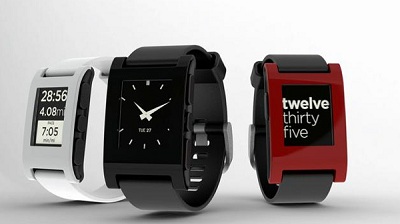
I’ve written an article earlier (this one) in which I was critical of smart watches. I may have been a bit harsh and have given the wrong impression. For this reason I’m thankful that a few days later a colleague of mine at MTE, Bertel King, Jr., wrote an eloquent piece describing what reasons you have for adapting to the trend now. In essence, I still believe that the technology is a bit young, but I also have reasons to believe that it will flourish this year.
And speaking of wearable technology…
3: Intel’s “Quark” x86 Processor
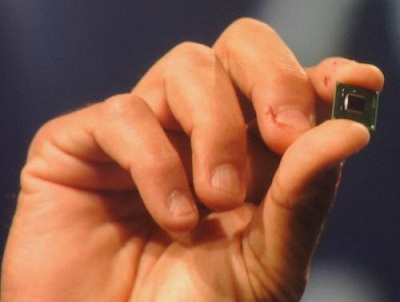
Intel has been a bit quiet in the wake of the mobile era, which is something surprising for such a competitive firm. I was quite happy to see news about a new processor from Intel, designated the “Quark,” which will be available for wearable technology. It will compete directly with ARM’s Cortex-M line, and my money’s on it surprising us with the amount of features it will bring with it. I’m just wondering why Intel took so long to wake up and smell the roses on this market.
4: The Rise Of Personal And Commercial Drones
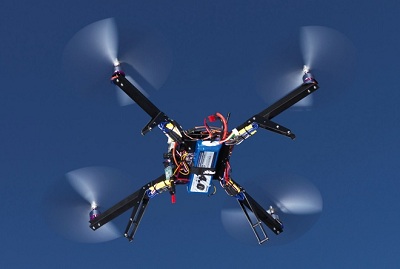
Perhaps even more exciting than all the things we just discussed is the fact that drones are starting to become popular among hobbyists and companies alike. Although Amazon’s drone program isn’t going to materialize this year, I see a trend developing within the hobbyist community. Commercial drones will definitely be a reality, and we’ll be seeing more of them. Whether or not they’ll be delivering your goods is open to speculation, though. I highly doubt that any drone delivery program will actually be implemented with success this year, but I do think that some ambitious firms out there are already making plans for it.
Do You Feel A Trend For 2014?
Now, it’s time for us to actually open up a dialogue. We’ve seen some of the most plausible trends of 2014, but I’d like to hear what you have to say about what will happen. Will we start seeing more curved displays? Or will holographic projection become a reality? Leave a comment below with your thoughts!