
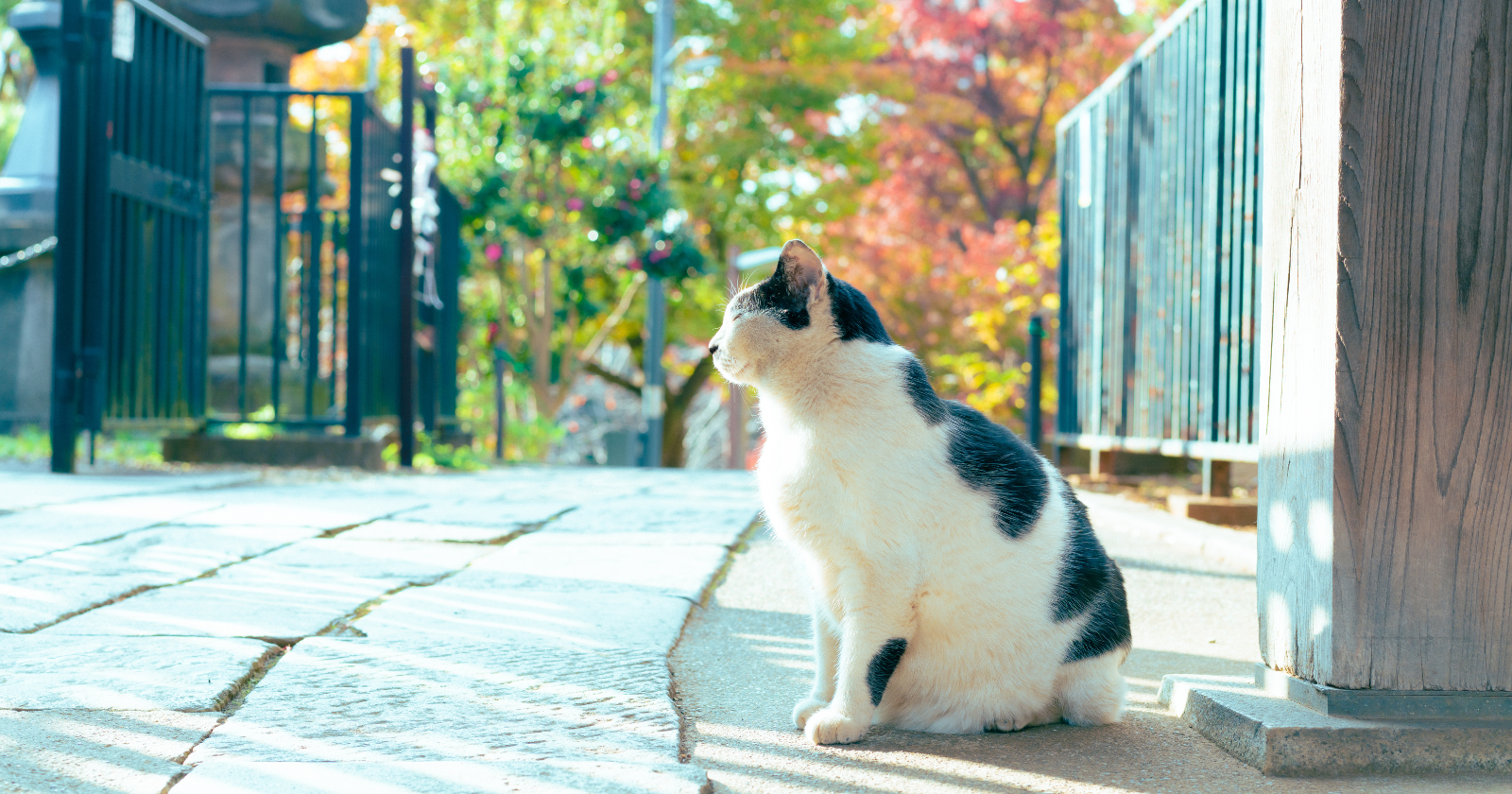

The answer is a calico cat called Tama, and the mechanism was a job title. On 5 January 2007 the Wakayama Electric Railway installed her as stationmaster of Kishi Station, the unstaffed terminus of the 14.3-kilometre Kishigawa Line in Kinokawa, Wakayama Prefecture. She wore a custom cap that had taken more than six months to make, was paid in cat food, and became the most consequential hire in the company’s history. Ridership at Kishi rose 17 per cent in her first month against the same month a year earlier, and an economist’s estimate credited her with roughly 1.1 billion yen in local economic impact.
What makes the case unusually solid is that the railway which hired her was, by every conventional measure, already finished.
A line that had already been written off
The Kishigawa Line had been run for decades by Nankai Electric Railway, and the decline was long and documented. According to a Wakayama University study of the line’s social value and rescue, ridership peaked in the 1974 financial year at 3.614 million passengers, fell to 2.533 million by 1985, recovered briefly to 2.739 million in 1996, then collapsed again to 1.926 million by 2004.
The causes were mundane. A new prefectural road bypass opened in December 1996, and a road overbridge followed in September 2001. Each one made driving easier, and each one took passengers off the trains.
Nankai announced it would abandon the route. In April 2006 Wakayama Electric Railway, newly created as a subsidiary of the Okayama Electric Tramway within the Ryobi Group, took over on condition that local authorities help fund the line for a decade. It inherited fourteen stations, most of them tiny, and no financial margin whatsoever.
The first act of the new operator was to remove people. In April 2006 every station on the line was destaffed to cut costs, and Kishi, at the end of the track, lost its last human employee.
What remained at Kishi was a colony of strays that had been fed for years by passengers and by Toshiko Koyama, who kept a shop by the station and functioned as its informal manager. When the company cleared the ground around the stations, Koyama asked the railway’s president, Mitsunobu Kojima, to let the cats live inside Kishi Station instead.
The appointment
Kojima looked at the calico and saw a maneki-neko, the beckoning cat that Japanese shopkeepers place by the door to draw customers in. He agreed, and then went further: he gave the cat a rank.
On 5 January 2007 Tama was formally installed as stationmaster, or ekichō. Her sole listed duty was greeting passengers. In place of a salary she received a year’s supply of cat food and a gold tag for her collar bearing her name and position. A disused ticket booth became her office.
She was also given staff. Two feline assistant stationmasters were appointed: her sister Chibi, born in 2000, and her mother Miiko, an orange tabby who died in 2009.
Japanese national media picked the story up within weeks. By the middle of 2007 camera crews were arriving from Tokyo and Osaka, and eventually from broadcasters overseas. In October that year a visitor stole Tama’s gold name tag, and the company had a replica made within days.
What the numbers actually say
The earliest figure is the sharpest and also the narrowest. Passenger numbers at the station in January 2007, Tama’s first month in post, ran 17 per cent above January 2006. By March 2007 the year-on-year increase had settled to around 10 per cent, on a line that had previously been shedding passengers at more than 5 per cent a year.
The often-quoted billion-yen figure comes from Katsuhiro Miyamoto, then a professor in Kansai University’s Graduate School of Accountancy and a specialist in costing cultural phenomena. His back catalogue includes the economic impact of a Hanshin Tigers championship, of Osaka’s Kuidaore mascot doll, and of Ueno Zoo’s pandas, as Kansai University’s own summary of his work records. In October 2008 he put Tama’s contribution at about 55,000 additional trips on the Kishigawa Line during 2007, and a wider local economic impact of 1.1 billion yen once tickets, taxis, meals, souvenirs and overnight stays were counted.
Two cautions belong with that number. The 55,000 extra trips are roughly 3 per cent of the line’s annual traffic, not 17 per cent, so the two most-repeated statistics about Tama measure completely different things. And the 1.1 billion yen is contested in scope: the railway’s own account of its cat stationmasters presents it as the effect for 2007, while Kojima, speaking at her funeral eight years later, described the same figure as her contribution across her whole tenure. In dollars it was reported at the time as somewhere between 9 and 10 million, depending on the rate used.
The durable number is duller and more convincing. Annual ridership on the line went from 1.92 million in the 2005 financial year to 2.27 million in 2014, an increase of about 18 per cent on a route that had been falling for a decade. For a prefecture running on agriculture, fishing and day-trip tourism, that was a measurable jolt.
Why it worked
The interesting question is not why a cute animal attracted tourists. It is why this particular cat generated revenue for a train operator, when most mascots simply sell plush toys on someone else’s behalf.
Three things compounded. The first was pure geography. Kishi sits at the end of a single-track branch line with no convenient parking, no bus alternative and a narrow winding road in. To see the cat you bought a ticket on the Kishigawa Line, which meant every fan funded the railway that employed her directly, rather than enriching a merchandiser.
The second was capital, not novelty. On 21 March 2009 the company introduced the Tama Densha, a train redesigned inside and out by Eiji Mitooka, the industrial designer behind Kyushu’s shinkansen rolling stock. According to the operator’s description of its fleet, the exterior carries 101 separate depictions of Tama, running and lying down, and the refit was paid for by donations from supporters in Japan and abroad. Tama was registered as a supporter herself, having saved her New Year money.
In August 2010 Kishi Station was rebuilt in the shape of a cat’s face, with pointed ears on the roof, round windows for eyes, and a traditional cypress-bark thatch. Mitooka oversaw that too. Neither project was a sticker on a wall.
The third factor was timing. The international press found the story while Japan’s rural depopulation was becoming a global-interest subject, and Tama became shorthand for dying towns improvising a way to survive. That kept her in circulation far longer than a normal viral animal.
Promotions, and a shrine on the platform
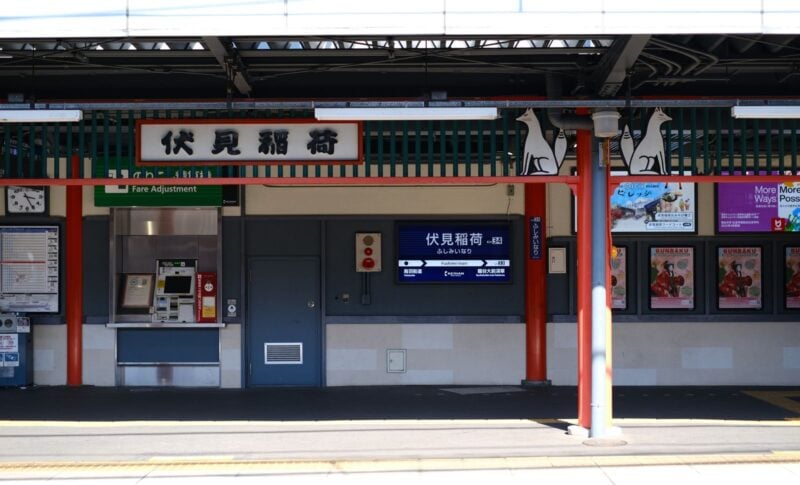
On 5 January 2008, one year in, Tama was promoted to super stationmaster at a ceremony attended by the company president, the local mayor and around 300 spectators. The promotion made her the only female in a managerial position at the company. That October, Governor Yoshinobu Nisaka knighted her, awarding the title “Wakayama de Knight” for her work promoting tourism.
In January 2010 she was made an operating officer, the first cat to become an executive of a railway corporation. A year later she rose to managing executive officer, third in the company hierarchy, and the prefecture named her a deity of tourist attraction. In January 2013 she became acting president. In 2014 she was made ultra stationmaster, with nominal charge of all fourteen stations on the line. By then her hours had been cut to four days a week on account of her age.
Tama died of heart failure on 22 June 2015, aged 16. Her funeral at Kishi Station six days later drew an estimated 3,000 people. Sake, watermelon, apples and cabbage were laid on the altar beneath her portraits. Kojima gave her a final title: honorary eternal stationmaster.
After the funeral, Kojima and other executives walked to the Kishi River where she had been born and chose stones for her memorial. On 11 August 2015 she was enshrined as the spirit goddess Tama Daimyōjin at Tama Jinja, a small Shinto shrine that now stands on the station platform, her name carved in Kojima’s own calligraphy.
Where the line stands now
The stationmaster’s post has never been vacant for long. After the traditional fifty-day mourning period, Tama’s deputy Nitama, a calico rescued from beneath a train car in Okayama and trained at Idakiso Station five stops down the line, took the name Tama II and the job at Kishi. She held it for a decade.
Nitama died on 20 November 2025, aged 15, and was given a funeral of her own and the title honorary special stationmaster. On 7 January 2026 Kojima placed an engraved medal around the neck of Yontama, previously the stationmaster at Idakiso, making her the third cat to hold the Kishi post. Gotama was elevated to run Idakiso in her place, and a one-year-old rescue named Rokutama was introduced as a stationmaster-in-training.
The operator still lists who is on duty at Kishi, complete with the cats’ days off and working hours. The station remains officially unmanned.
The Kishigawa Line is also still open. Passenger numbers have held around 2.2 million a year, which is not enough to make the route commercially self-sustaining without the local support the 2006 takeover required, but enough to justify running it and to keep fourteen small stations alive along a valley that would otherwise have lost its railway.
Trains still leave Kishi from a single platform, thirty minutes and 14.3 kilometres from the ninth platform at Wakayama, past three shrines and a good deal of rice. On the platform at the far end there is a fourth shrine, a small one, with a bronze cat in it.