
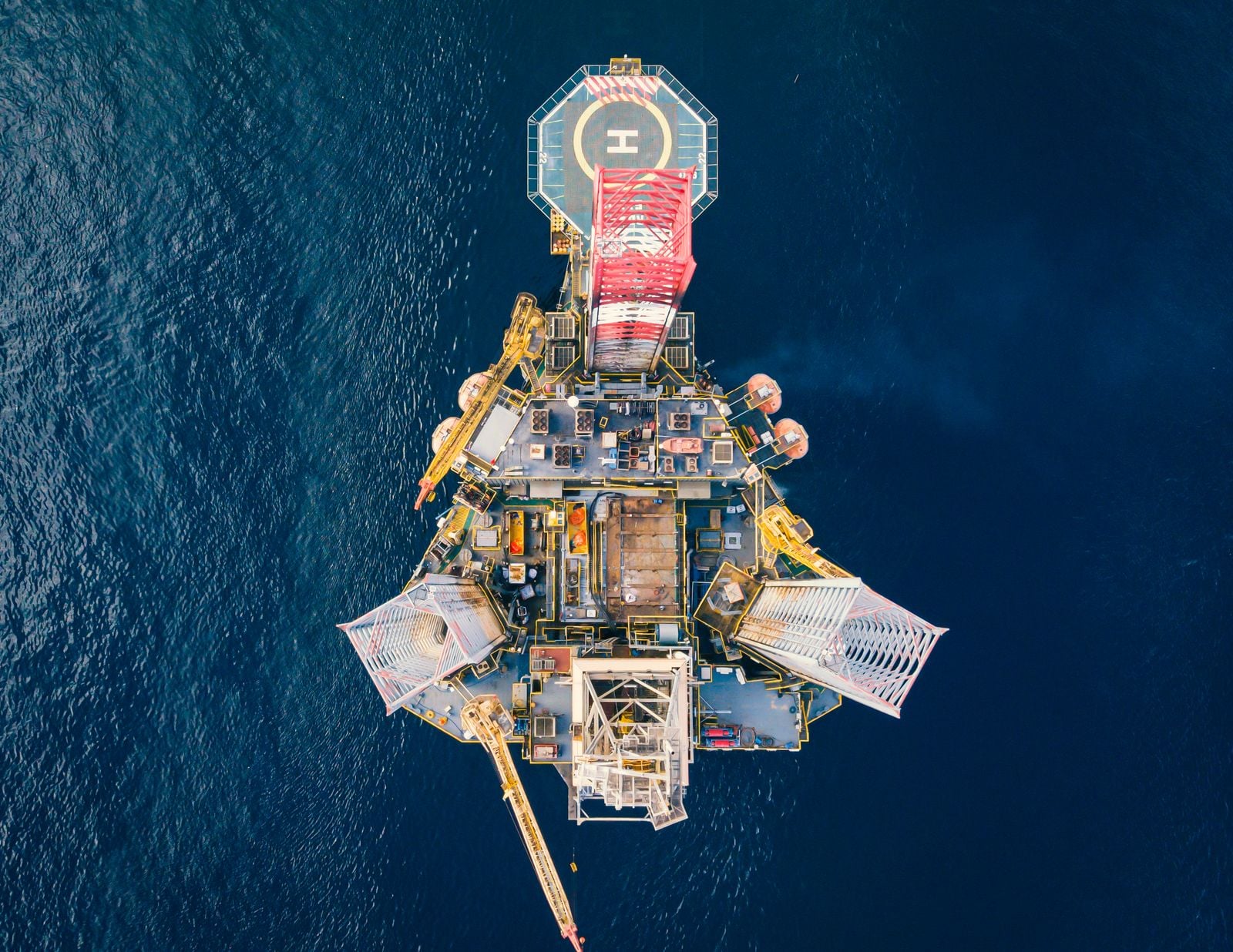

The Gulf of Mexico is studded with roughly 1,300 fixed platforms, most of them past their productive prime, and each one is legally required to come down once the wells beneath it stop paying. Removing a single deepwater platform can cost tens of millions of dollars and takes explosives, heavy-lift vessels and years of permitting. A new research effort out of the Gulf Coast is asking a different question: what if some of that steel is worth more standing than scrapped?
In April 2026, the Gulf Offshore Research Institute (GORI), a Mandeville, Louisiana-based nonprofit, announced it had been named one of two winners of a $20 million Gulf Futures Challenge award — a $50 million competition run by the National Academies of Sciences, Engineering and Medicine’s Gulf Research Program together with Lever for Change, not a federal agency grant. The award funds a five-year effort, led by GORI, to study and eventually retrofit offshore oil and gas platforms, wells and pipelines for reuse in clean energy, critical-mineral recovery, aquaculture and ocean monitoring, rather than decommissioning them at enormous cost. The University of Houston is one of several partners in the consortium, not its leader.
What the money is actually for
The award funds a research and demonstration consortium, not a single construction project. GORI has assembled partners that include the University of Houston, through its Repurposing Offshore Infrastructure for Continued Energy (ROICE) program; the Harte Research Institute at Texas A&M University-Corpus Christi; Louisiana State University; the University of Michigan; the University of Southern Mississippi; and industry and nonprofit partners including Blue Latitudes, Gulf Trust, the FerVid Group and Blue Silo Aquaculture. The University of Houston’s share of the award is about $1.3 million over five years, split between the ROICE program’s techno-economic work and a workforce-development effort run through the university’s Cullen College of Engineering.
The stated goal is to produce technical, economic and environmental assessments of what “repurposing” would actually involve for specific asset types — a jacketed shallow-water platform, a deepwater production hub, a subsea pipeline network — and to compare those pathways against the baseline of full removal. That means desk studies, modelling, site characterisation and stakeholder work, not new hardware in the water on day one, though permitting for the first demonstration platform is already underway through the Bureau of Ocean Energy Management, with GORI aiming to have five operational platforms producing measurable returns by 2030.
It also builds on the ROICE program at the University of Houston, which began in 2022 as an internal thought experiment about repurposing dead Gulf infrastructure. ROICE is now one of the named partners in GORI’s winning proposal, receiving about $800,000 of the $20 million award to lead the techno-economic analysis. GORI is, in effect, that early idea scaled up with a national research-philanthropy award and a much broader academic and industry bench.
Why the Gulf has so much idle steel
The Gulf of Mexico has been drilled industrially since 1947, when Kerr-McGee completed the first out-of-sight-of-land offshore well off Louisiana. Since then the industry has installed thousands of platforms on the Outer Continental Shelf, the large majority in shallow shelf waters and a smaller, far more valuable population in deepwater.
Under the federal “idle iron” policy, first formalised in a 2010 Notice to Lessees from the Bureau of Safety and Environmental Enforcement, operators must plug wells that have been inactive for five years and remove the associated structures within a set window after production ends. The rule was written partly to stop the Gulf from filling up with rusting, unmaintained platforms after Hurricane Ike destroyed several dozen shelf platforms in 2008. It has been effective: hundreds of structures have been dismantled since. But it also locks operators into a single end-state — removal — regardless of whether the steel might have another use.
That is the policy gap GORI’s work is aimed at. Any alternative to full decommissioning has to satisfy BSEE, the Bureau of Ocean Energy Management and, for some uses, the Environmental Protection Agency and the Army Corps of Engineers. Producing the technical case is a prerequisite for producing the regulatory case.
Clean energy, minerals, aquaculture, monitoring — what each pathway actually is
The reuse pathways named in GORI’s award are not equally mature, and it is worth being precise about what each one means.
Clean energy is the broadest category and covers several distinct technologies: green hydrogen production, offshore wind and solar mounted on existing jackets, and geothermal energy drawn from the heat of depleted reservoirs. The engineering challenge is that oil platforms were designed for the loads of drilling and production equipment, not for the very different fatigue loads of a turbine or the corrosion profile of a hydrogen electrolyzer. Reuse is not automatic; it needs case-by-case structural assessment, which is exactly what the research consortium is set up to produce.
Critical-mineral recovery is more speculative. The idea is that produced water from wells, and brines associated with Gulf formations, contain dissolved lithium and other elements that could be extracted. Direct lithium extraction from brine is already moving from research to commercial development onshore, notably in the Smackover Formation in Arkansas, where the U.S. Geological Survey estimates several million metric tons of lithium in place. Whether the concentrations and volumes in Gulf offshore fluids justify similar offshore extraction is exactly the sort of question the institute has to answer before anyone builds anything; GORI’s partners have said they plan to use a machine-learning screening tool to match individual platforms to their highest-value reuse.
Aquaculture on platforms — often called “rigs-to-reefs aquaculture” — has been discussed for decades. The existing Rigs-to-Reefs program, which lets operators topple or partially remove platforms to create artificial reefs, has been running since the 1980s and has converted more than 600 Gulf structures into permitted reef sites. Active aquaculture — farming fish or shellfish on a live, maintained platform — is a further step, and one that runs into a permitting regime that has historically struggled with offshore finfish operations in U.S. federal waters.
Ocean monitoring rounds out the four pathways: using instrumented platforms as fixed, powered nodes for continuous data collection on currents, water chemistry and marine life, something the Gulf currently gets only in patches from ships and buoys.
What the record does not yet show
The GORI award is a research and demonstration grant, and the honest framing is that almost nothing has been proved yet at Gulf scale. No Gulf platform hosts a commercial lithium-extraction plant. No U.S. federal-waters platform runs a commercial finfish farm or a permanent, platform-anchored ocean-monitoring network of the kind GORI envisions. The institute exists precisely because the technical, economic and regulatory case for any of these is incomplete.
The economic case is the hardest part. Decommissioning a Gulf platform is expensive, but it is a known cost with a defined end. Repurposing transfers long-term liability — the well below, the structure above, the pipelines outward — from an oil operator with decades of experience to some other entity that has to accept it. Who insures a converted platform against the next Category 5 hurricane is not a research question; it is a market question, and the market does not yet exist.
Why this is a technology story
Repurposing infrastructure is one of the quieter ways technology reshapes the world. The shipping container did not require inventing new ships; it required rethinking what the existing port was for. The GORI question is similar in shape. The Gulf already has the wells, the pipelines, the platforms, the helicopter routes and the workforce. What it does not have, yet, is a documented technical basis for using any of that for something other than producing oil and gas.
That documentation is what the $20 million is meant to buy. Whether any of the pathways survive the analysis, and which ones the offshore regulators are willing to permit, will not be clear for several years. The first deliverables from the consortium are expected to be published assessments rather than pilot installations.
The steel is not going anywhere in the meantime. Under current rules, the clock on each idle platform keeps ticking.