
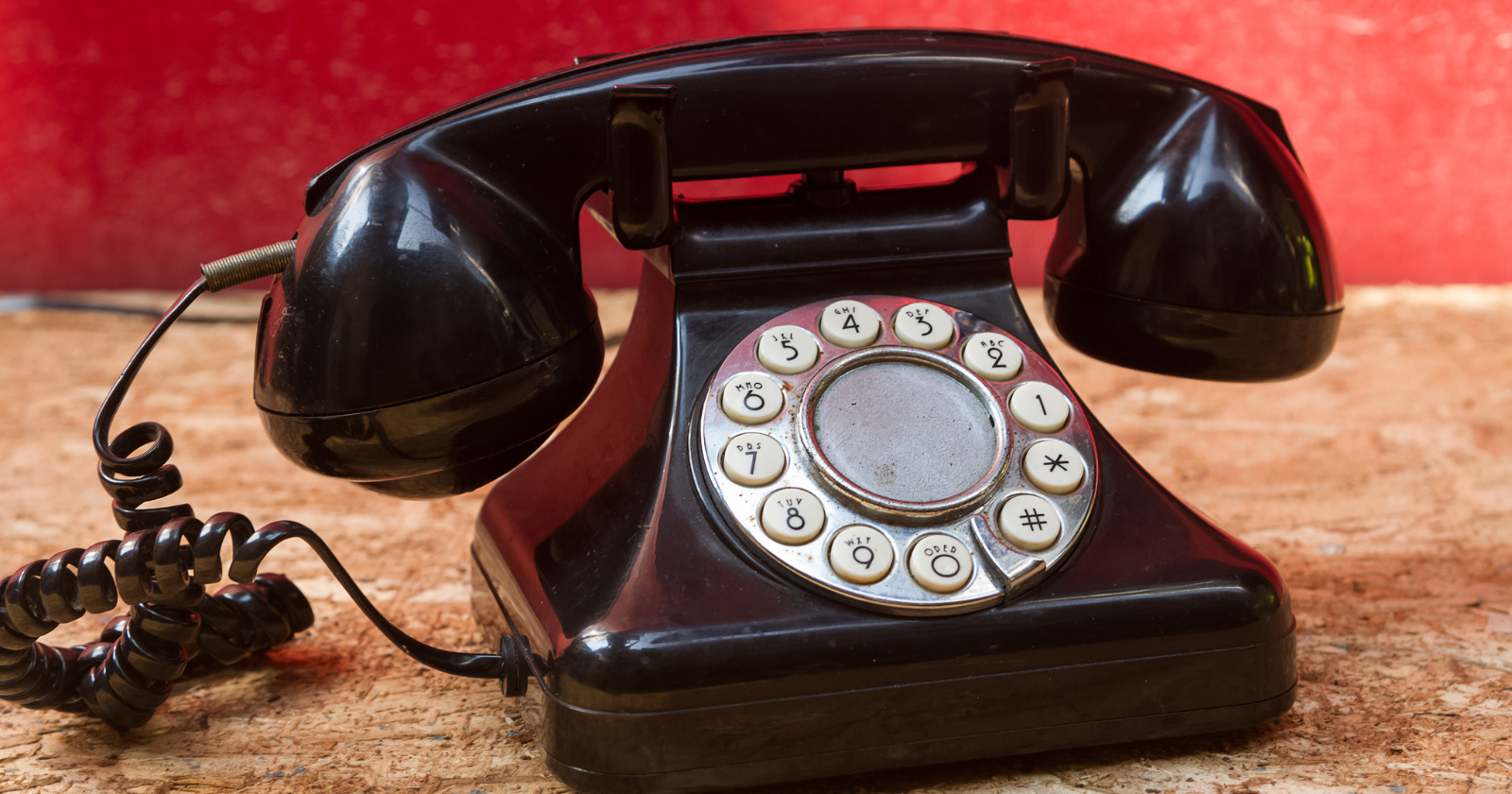

In the early 1970s, the most powerful machine on Earth was the American telephone network.
It was vast beyond comprehension — millions of miles of copper, tens of thousands of switches, the largest interconnected system human beings had ever built. And it was held together, in part, by sound. The network used audio tones, sent down the very same lines that carried people’s voices, to tell itself what to do. A specific pitch could signal that a line was free. Another could route a call across the country.
The engineers who built it never imagined that ordinary people would figure out the tones. But some people did. They were called phone phreaks — a blend of “phone” and “freak” — and they were among the first hackers in history, though the word “hacker” barely existed yet.
The most famous of them got his nickname from a box of breakfast cereal.
The whistle in the cereal box
In the late 1960s and early 1970s, boxes of Cap’n Crunch cereal came with a free prize: a small plastic boatswain’s whistle — a “bo’sun” whistle, the kind once used to pipe commands aboard ships.
It was a toy. It was meant for children. And it happened, entirely by accident, to produce a tone at almost exactly 2600 hertz.
That number meant nothing to the cereal company. It meant a great deal to AT&T. Because 2600 Hz was the precise frequency the phone company’s long-distance system used as an internal signal — the tone that told the network a trunk line had gone idle and was now free for a new call. The system played that tone to itself, constantly, on every available long-distance line, as a kind of “this line is open” heartbeat.
Here was the vulnerability. The network couldn’t tell the difference between its own 2600 Hz signal and the same tone coming from a person’s end of the line. So if you placed a long-distance call and then played a 2600 Hz tone into the receiver, the distant switch would hear it and conclude the call had ended — and release the line. But your local switch knew you were still connected, because that was signalled electrically, not by tone. The system was now in a confused, in-between state: the long-distance trunk was open and waiting, and you were sitting on it, free to route a call anywhere you liked at no charge.
A child’s whistle, blown into a phone, could do exactly that.
The man who became Captain Crunch
The person who made this famous was John Draper, a former U.S. Air Force electronics technician with a deep, restless curiosity about how systems worked.
It’s worth being precise about one thing: Draper didn’t discover the trick. He learned about the 2600 Hz tone, and the whistle, from other phreaks — a loose underground community that included people like Joe Engressia, a blind phreaker with perfect pitch who could whistle the tones with his own mouth. Phreaking was a collective effort, a shared body of knowledge passed between curious, technically gifted people, many of them blind, many of them more interested in understanding the network than in stealing from it.
But Draper became its public face. He adopted the cereal mascot’s name — Captain Crunch — and he took the craft further than most. Rather than relying on a whistle, he built an electronic device that could generate 2600 Hz and the full set of routing tones on demand. These devices became known as “blue boxes,” and with one, a phreak could do essentially anything a telephone operator could do: route calls around the world, stack connections through multiple countries, explore the hidden architecture of the network itself.
Draper later claimed he once used the technique to place a call that reached the White House.
How a cereal whistle led to Apple
The phreaking underground was small and obscure until October 1971, when Esquire magazine published an article called “Secrets of the Little Blue Box,” by Ron Rosenbaum. It described the phreaks, their tones, and their devices in vivid detail.
Among the people who read it were two young men in California: Steve Wozniak and Steve Jobs.
They were electrified by it. Wozniak tracked down Draper to learn everything he could. The two of them built their own blue boxes — Wozniak engineering them, Jobs handling the selling — and their very first business venture, years before any computer, was selling blue boxes to fellow students around Berkeley.
Jobs was unambiguous about what this meant. “If it hadn’t been for the blue boxes,” he later said, “there would have been no Apple.” The confidence that they could build a small company around a clever piece of electronics — that two people in a bedroom could take on a system as large as the phone network — came directly out of phreaking.
A toy whistle in a cereal box is, by a real and traceable line, part of the origin story of the most valuable company in the world.
Why the trick stopped working — and why it still matters
The 2600 Hz exploit had a fatal weakness, from the phone company’s point of view: it existed because the network sent its control signals down the same channel as the voice. This is called “in-band signalling,” and once AT&T understood how badly it could be abused, the long-term fix was obvious. Move the control signals out of band — onto a separate channel that users could never touch.
Over the following years, the phone system transitioned to exactly that. By the time the digital signalling systems were fully in place, blowing a 2600 Hz tone into a receiver did nothing at all. The whistle became a harmless toy again. The era of the blue box was over.
But the mindset it represented didn’t go away. It moved. The same instinct — take apart a complex system, learn the rules nobody meant to expose, find the behaviour the designers never intended — flowed directly from the phone network into the early world of computers. Phone phreaking is widely regarded as the direct ancestor of computer hacking. The phreaks of the early 1970s, blowing cereal-box whistles into payphones, were the first generation of people to treat a vast technical system as something to be understood, probed, and outwitted.
They started with a whistle that wasn’t supposed to mean anything. They turned it into the key to the largest machine on the planet.