


The vast majority of people online, nerds and non-nerds alike, use Google for all of their search needs. Statistics place their market share between 80-90% depending on your geographical area. In Australia, where I’m from, their market domination is closer to 95%. That raises the question – is Google really the best offering out there? Are there any up-and-coming challengers that are worth checking out? Bing practically throws out the same results as Google, which might have something to do with the fact that they were caught out copying Google’s results.
A search engine I’ve been hearing mentioned more and more lately is Blekko, so I decided to take a closer look to see if it actually offers anything different to El Goog’s algorithm. I don’t know if many of you have noticed, but Google’s search results have been looking more and more “gamed” lately, with spam becoming pervasive.
So What’s on Offer?
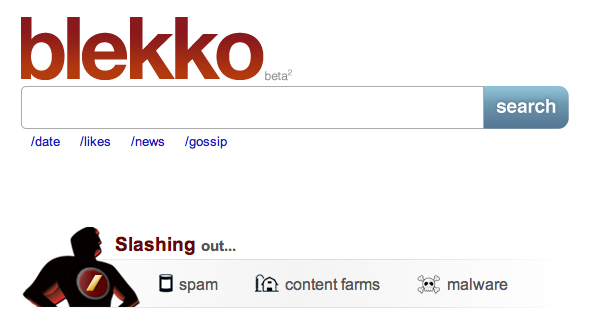
Blekko pitches itself as a search engine with a difference. Through its use of “slashtags”, it allows you to specify what section of the web you are trying to pull results from. Basically if you want to search for something health-related, for example, you would type “/health keyword” and so on. Blekko claims to filter out content farms, spam and malware. Google’s become quite good at filtering out malware, however as I mentioned earlier, its record on spam and content farms is not looking so great right now. Of course, it’s one thing to claim great features like these, but the proof should be in the proverbial pudding. So, does Blekko deliver?
The Results
Let me preface this by saying that this is a highly subjective analysis, and you are best trying it out for yourself. Anyway, I decided to try a bunch of searches in a variety of niches in both Blekko and Google, to test which search engine delivered more relevant results. I used google.com/ncr in order to ensure that Google was showing non-geographically determined results. For some queries, I ran two searches in Google to compare the results adequately, one using the Blekko slashtag as an extra keyword and one without.
Search 1:
Blekko search: “/health weight loss”
Google search 1: “weight loss”
Google search 2: “health weight loss”
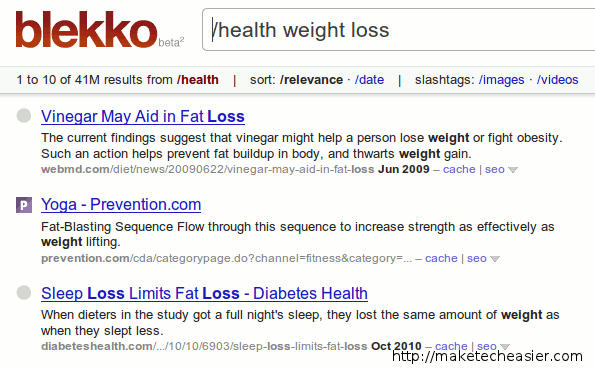

Results: Again, highly subjective, but I found the second set of Google search results to be the most relevant. The first result in Blekko was headed “Vinegar may aid in Fat Loss”, second was “Yoga – Prevention” and third was “Sleep loss limits Fat Loss”, whereas the Google search results #2 were “Healthy Weight Loss and Dieting Tips”, “Healthy Eating and Diet Center” and “Weight Loss – Mayo Clinic”.
Search 2:
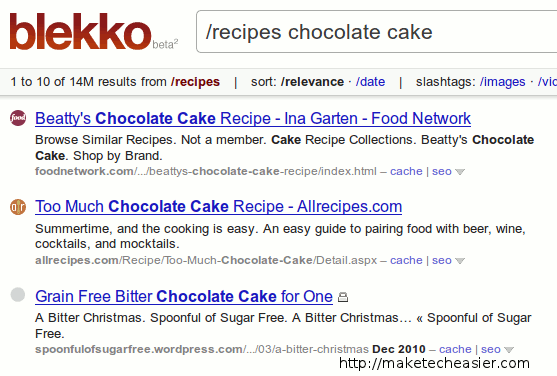
Blekko search: “/recipes chocolate cake”
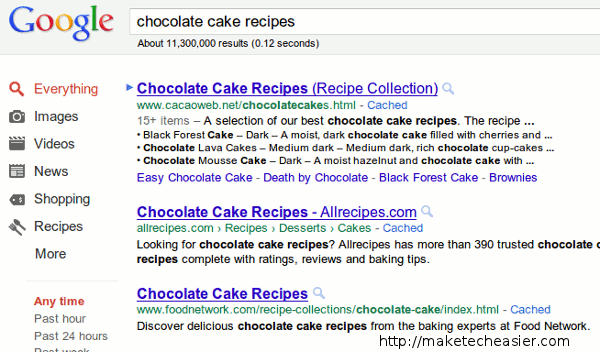
Google search: “chocolate cake recipes”
Results: To be honest, I could not discern a quality or relevance different between these results. A tie.
Search 3:
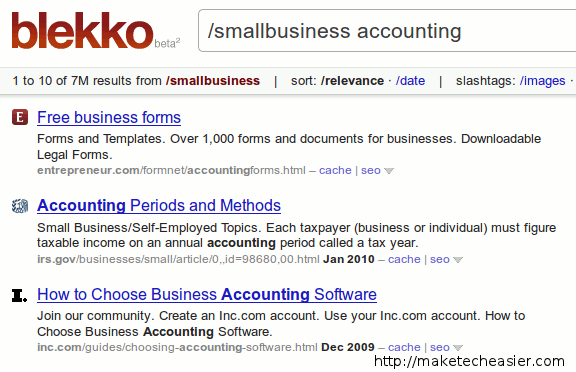
Blekko search: “/smallbusiness accounting”
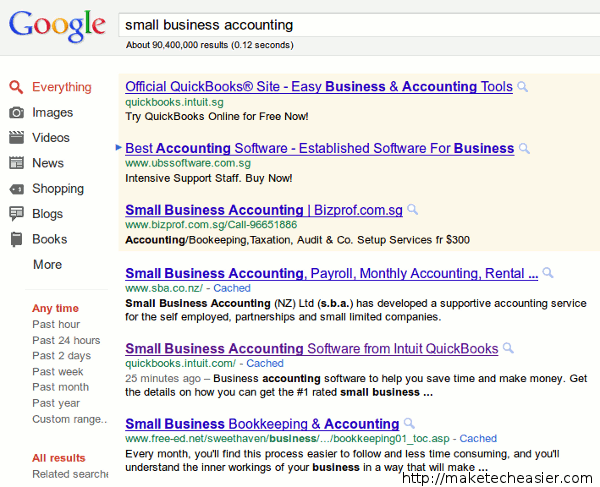
Google search: “small business accounting”
Results: Blekko wins this one. It linked to a number of pages that talk about how to select software for accounting, as well as a guide from the IRS. The Google results, on the other hand, were purely commercial – with software companies taking the top two places.
Search 4:
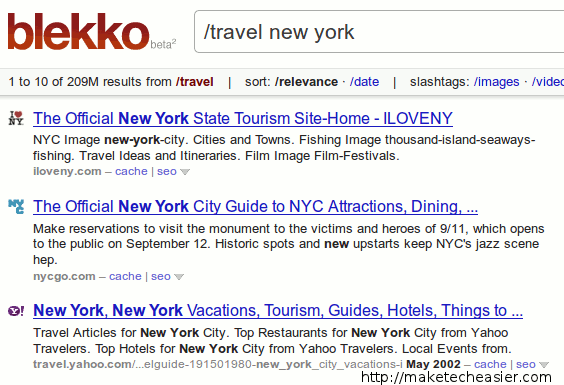
Blekko search: “/travel new york”
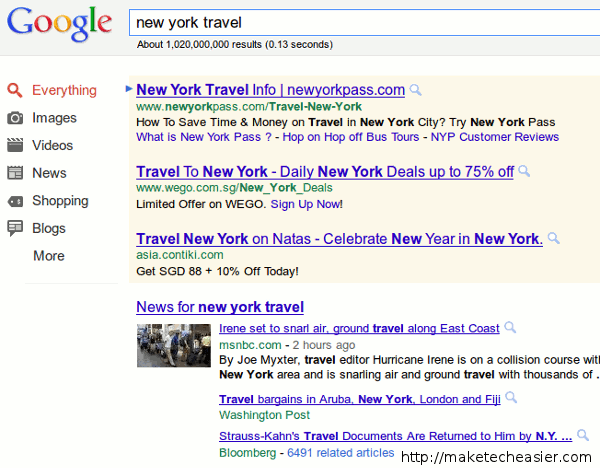
Google search: “new york travel”
Results: This one’s a tie. They both showed official NY tourism websites, with the only difference in the top 3 being a Yahoo travel link from Blekko and a NY Times link from Google
Wrap-up
This limited testing of mine suggests that, at the very least, Blekko is worth a look. Especially if you aren’t finding what you want on Google. While there is some overlap in the results, there are also some situations where Blekko shows markedly different results. Please comment on your experiences with Blekko below.