When your phone’s battery starts draining faster than normal, finding the cause can feel like guesswork. It happened to me, and after trying fix after fix, I eventually figured out what was really going on. Surprisingly, the solution involved adjusting a single, but easy-to-miss setting.
My Android Battery Was Slipping Fast, and I Couldn’t Explain Why
Recently, I noticed my Pixel 8’s battery was draining much faster than usual, to the extent that it was easily hitting 15% by 9 PM (usually I would get to around 40% by that time). The strange part was that my routine hadn’t changed at all. I wasn’t using my phone any more than usual or running anything particularly demanding.
To figure out what was causing the sudden drain, I started trying a few common fixes, like identifying power-hungry apps such as Instagram or lowering screen brightness. While these are useful tips to keep in mind, they only helped to some extent and didn’t completely solve the problem.
At this point, I started thinking more carefully about any recent changes in my daily routine. That’s when I realized I’d been dealing with spotty Wi-Fi for a while. Since I work from home, the connection issues have been pretty frustrating to deal with, and despite my Internet provider’s promises, the issue hasn’t completely gone away. It got me wondering, could this have anything to do with my phone’s battery drain?
I Found One Buried Setting that Made an Immediate Difference
As it turns out, it does. Most Android phones today include a feature that automatically switches to mobile data when your Wi-Fi connection drops or becomes unstable. So, if you leave the house while streaming a Spotify podcast, it will seamlessly continue playing content without interruptions.
Although this can be a convenient feature, it means your phone keeps the mobile data connection running in the background, even while you’re still connected to Wi-Fi. Add to that the frequent switching caused by my spotty Wi-Fi connection, and this constant back-and-forth was inevitably taking a toll on my Android’s battery life.
I’d never thought about disabling this auto-switching feature until now. As it happens, you’ll need to first enable Developer options on your Android in order to do so.
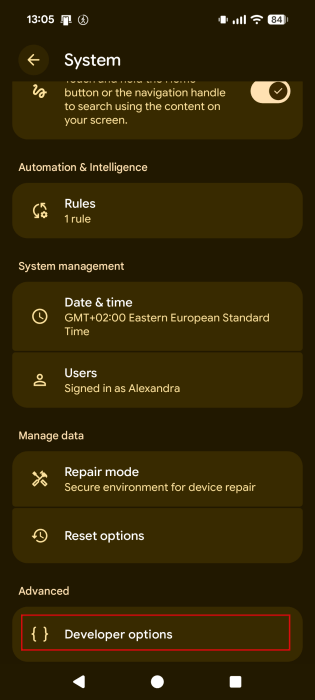
Once the new menu is available in your Settings app under System, access it. Go to the Networking section and look for the Mobile data always active option. Toggle it off.
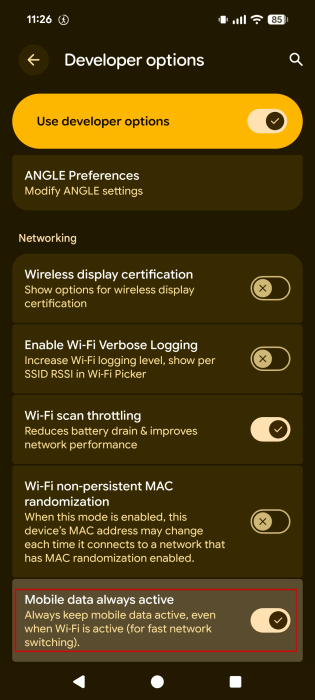
That’s it, this simple adjustment made a noticeable difference in my Pixel’s battery life. With this feature disabled switching between mobile data and Wi-Fi might take a few seconds, depending on connection, but I didn’t mind the slight delays.
The trick is worth trying on your own phone, even if your Wi-Fi seems stable. Even more so, if you’re constantly moving between places with and without Wi-Fi throughout the day, disabling this setting could help conserve your phone’s battery. On the other hand, you might want to abstain if your daily workflow relies on seamless connectivity for calls, streaming or working in online tools.
I Went One Step Further and Adjusted My Display Resolution Too
If you don’t see much improvement after trying this, there’s another method that might be worth exploring, particularly for Pixel Pro users.
Try lowering your device’s resolution. For those with a Pixel Pro device, this is super easy since all you have to do is head to Settings → Display & touch → Resolution and switch to High Resolution.
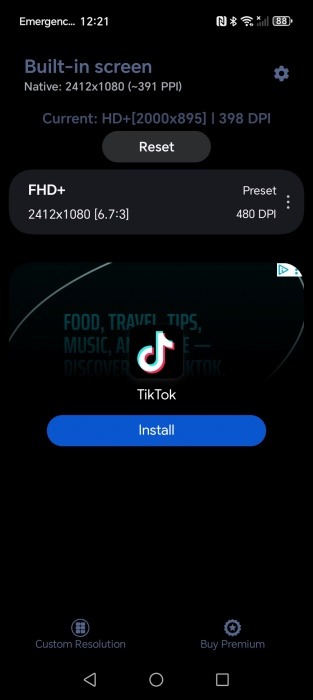
On other Android devices, you can try adjusting the Smallest Width setting also via Developer options. For more control, including the ability to create custom resolutions, you can use an app like Pixels. However, this method requires ADB, so it’s slightly more technical. You’ll need to run a command in your terminal before tweaking the screen resolution for better battery efficiency.
If you ever find yourself dealing with a different issue, such as your Android not charging, here’s what to do next.