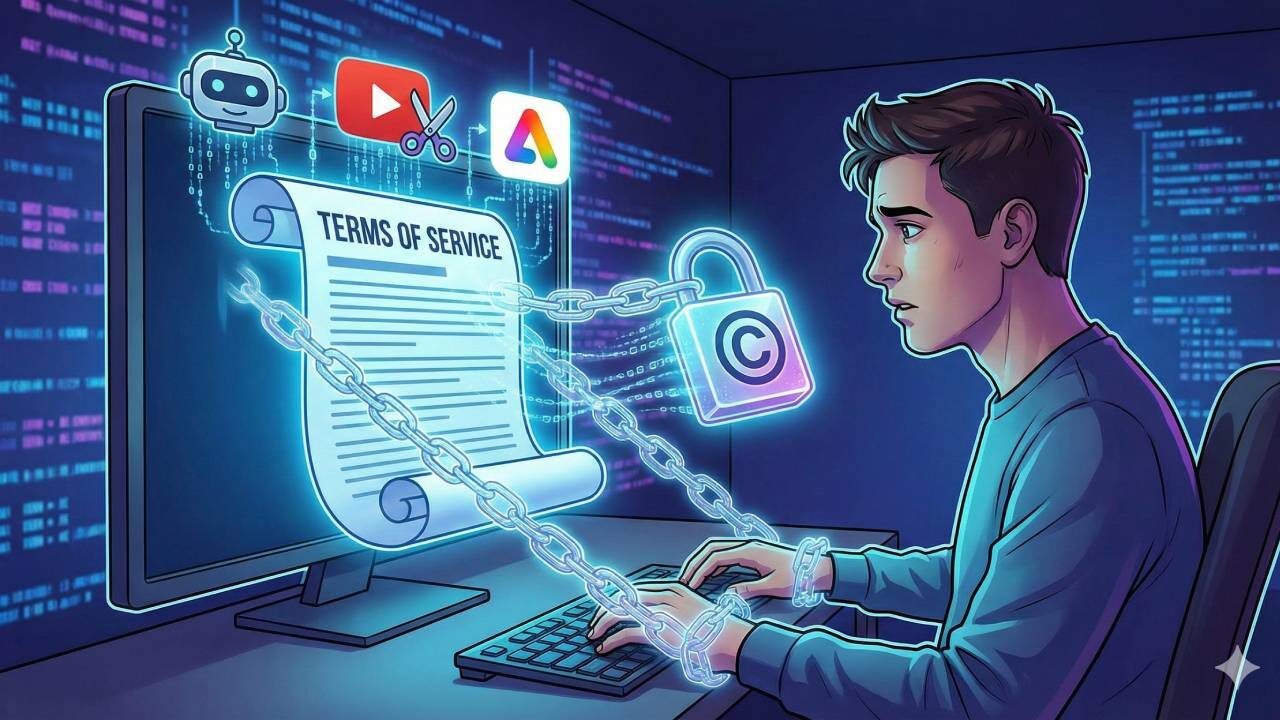
AI content generators are all the buzz these days – however, most of these popular AI tools have a huge buzzkiller when it comes to copyright ownership. When I decided to work on a couple of passion projects of mine, I went down this AI copyright rabbit hole, and what I found deep inside wasn’t pretty, to say the least.
The “We Own Everything” Clause
While working on a video-related project of mine, I wanted to use CapCut for video editing, as it’s beginner-friendly and offers great assets and templates for social media videos. That’s when I came across YouTube videos of content creators talking about a specific clause CapCut had added to its Terms of Service (ToS), which basically gives a royalty-free, perpetual, and irrevocable license to CapCut to use your content.
I verified the clause myself, and lo and behold, it was right there. Now, CapCut, being of Chinese origin, got a lot of hate for adding such terms, causing many users to switch to CapCut alternatives in anger. For me, this triggered a severe insecurity, as I was aiming to create a digital character that I wanted to file copyright ownership for. So, naturally, I began looking into the ToS of each and every AI tool out there, and things got uglier with each revelation.
I’ll be honest here. I didn’t just look into the ToS of five AI content generators — I read the fine print of all the tools I came across. But to keep things short, here’s the dreaded clause in the terms of five popular AI tools (hang on tight!).
1. CapCut
As you can see, you basically hand over your content to CapCut, where they can use, reproduce, and sublicense the content to their affiliates as well. There’s almost nothing they can’t do with your content, which is kind of terrifying.
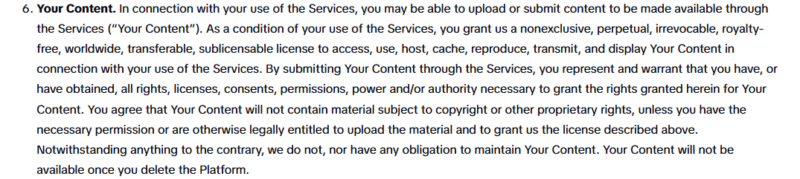
In CapCut’s defense, they’ve since added this About CapCut’s Terms of Service page, explaining why they’ve added such clauses (yes, it appears four times in the ToS!). I’ve embraced the explanation they gave, but I’m not confident enough to recommend that you do the same, so please do your due diligence before making a decision.
2. Adobe Express and Firefly
Adobe’s ToS has the same clauses, and, like CapCut, they’ve also added explanations as to why they had to add such terms. They basically need all those permissions and rights for operational reasons to manage and process your content, which aligns with what most of the AI tools say to justify such clauses.
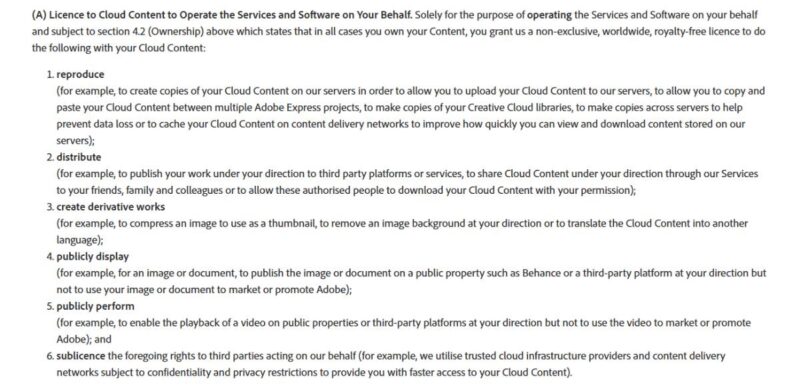
Apart from the operational rights, Adobe also uses the same terms to improve its services. They can sublicense the same rights to their affiliates as well, but overall, Adobe’s ToS is one of the less scary ones out there.
3. ElevenLabs
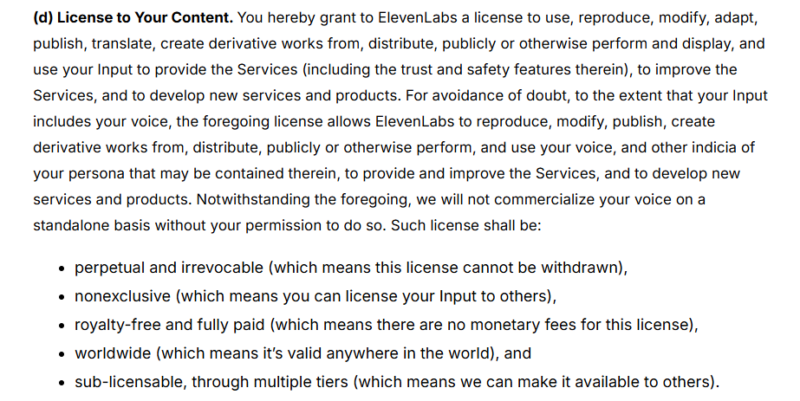
ElevenLabs is probably one of the best AI voice generators right now. And unsurprisingly enough, I found the same wording in ElevenLabs’ ToS. However, as you can see, they don’t really make an effort to cushion the blow with explanations. Yes, their Safety page has some assurances, but you won’t find many in the ToS itself.
4. Suno
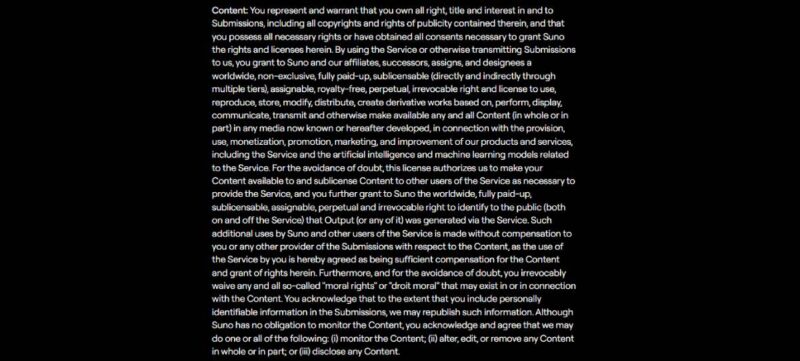
Suno’s ToS follows in ElevenLabs’ footsteps by going all guns blazing on the rights forefront. In fact, Suno takes it a step further by irrevocably waiving any and all so-called “moral rights” or “droit moral” that may exist. The wording is pretty harsh, to be honest, as no amount of creativity would ensure true ownership of the outputs you generate in Suno.
5. Canva

Canva’s ToS are much softer and in the “operational use” spectrum. However, as you can see, you do give them the usual perpetual, royalty-free, sublicensable license. Canva is more like Adobe — that is, you can argue that AI is not its main or sole product. But the point is these clauses do appear wherever AI gets involved.
Why the Copyright Office Rejects AI
On top of giving all those rights to these AI tools, if you create any AI-generated content that you want to own the copyrights to, the US and many other countries’ copyright offices likely won’t entertain your request. That’s because AI-generated content isn’t fully considered a product of a person’s creativity. Moreover, after learning about the ToS of the AI tools, having copyrights to your content wouldn’t really make too much of a difference unless you’re part of a big company with a powerful legal team.
The Workaround to Protect Your Content
In order to protect your AI-generated content, your best bet is to rely on the copyright detection systems of social media. YouTube has one of the most comprehensive systems, called Content ID verification. However, these systems are only partially useful to fight the copyright battles against other content creators in case they upload your content to their channels. If an AI tool you used decides to one day post your content on its social media, you won’t be able to fight it because of the ToS clauses we just discussed.
Don’t Put All Your Eggs in the AI Basket
Now, there are many content creators using AI to produce viral social media content and probably making tons of money with it. I’m also on that same bandwagon, as I’ve embraced these terms and have moved on to focus on producing content rather than worrying about the copyrights and ownership. The point isn’t to discourage you from using these AI generators — it’s to make you aware of what you’re dealing with.
Furthermore, the goal isn’t to single out the five tools I mentioned. Almost all the AI tools have similar wordings in their ToS. However, most of these companies have way more at stake than to usurp your content, but what you can’t ignore is the fact that they can if they ever wanted to. That’s why my mindset is to treat my AI projects as disposable assets that won’t be my sole source of income until and unless the AI terms and conditions change in the future. And this I can recommend to you with 100% confidence.
Frequently Asked Questions
Does paying for a premium subscription give me full copyright ownership of my images?
You do get commercial rights with most premium subscriptions, but the ToS almost always stay the same for free and premium users.
Do these terms of service apply if I run an AI model locally?
No, running AI models locally gives you a lot better privacy and a more wholesome ownership of content. However, running AI models locally requires expertise and a super expensive computer or a premium rented server.
What happens to my content if the AI platform changes its terms of service later?
That’s ambiguous and depends on each tool’s terms of service. However, it’s best to keep a copy of the ToS of the tool you’re using at the time of usage. This strengthens your case that only those terms apply to your content.