

While some AI-generated videos are obvious, I’m having more trouble deciphering whether some videos are real or not. Instead of just guessing or hoping someone in the comments knows the answer, you can now rely on Google Gemini to spot AI-generated video.
Dangers of AI-Generated Video
At first, AI videos might seem harmless. Often, they’re just cute animals or ambience videos. But now, they’re posing as legitimate videos with realistic creators offering helpful advice or encouraging viewers to download a file or try a troubleshooting solution or hack.
The problem is the advice, file, solution, or hack is either completely false or it’s malicious. An entire ghost network of AI-generated videos on YouTube convinced thousands of users to download malicious files. It doesn’t even have to be tech-related. These videos might offer health advice. You think it’s coming from a real expert, but it’s all completely fake.
The issue lies with sharing. You see a video that’s obviously real and share it on social media. Instead, it’s AI-generated. Sharing fake content is sometimes enough to cause you to lose followers and even your job.
Google Gemini wants to help you tell the different between real and AI with a new AI video detection feature. Currently, not even ChatGPT offers this functionality.
How Gemini Detects AI Videos
Currently, the feature is limited to AI videos and images created with Google’s AI tools. Everything Google’s AI creates has an invisible watermark that users can’t remove. The SynthID watermark lives inside all audio, image, and video AI created with Google.
The Gemini app scans for the SynthID watermark to determine if AI is used. Even if a video or image is just edited with AI, the watermark is there.
Checking for Google AI-Generated Video
Start by downloading the video in question. You may need a third-party tool or site to do this. Try these tips for downloading YouTube Shorts.
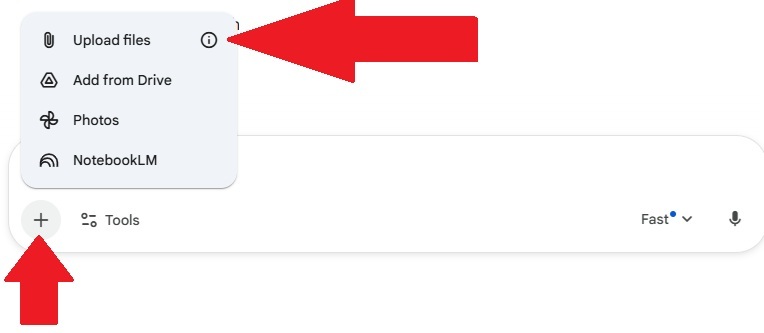
Login to the Gemini app (either mobile or web). Then, click the + button in the chat box to upload your video. The app accepts up to 90 seconds or 100MB. Once uploaded, ask Gemini if the video was created using AI.
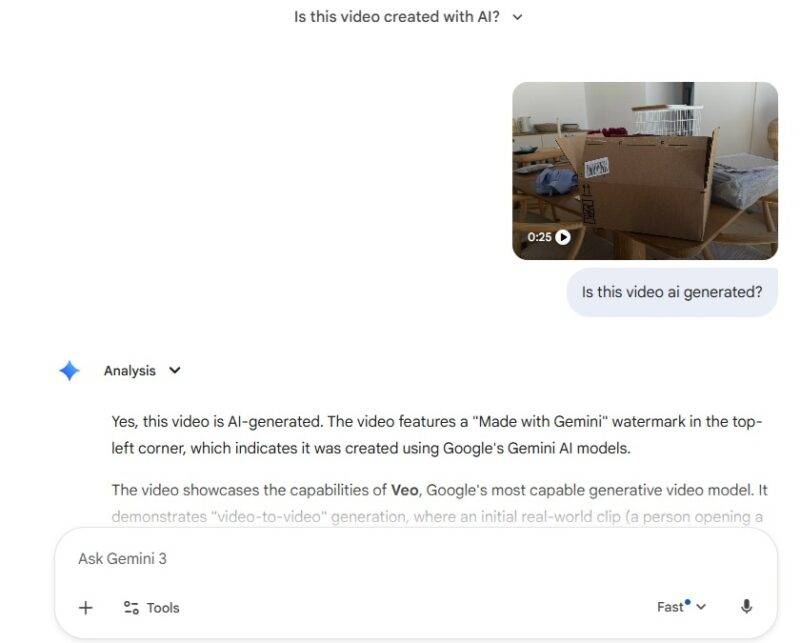
It typically takes less than 30 seconds to get a response. What I love most is not only does Gemini tell you whether it was AI or not, but also gives you lets you know the reasons why the video is AI. If the video has a SynthID watermark, Gemini tells you the watermark is there, along with mentioning any other signs the content is AI-generated video.
Just to test, I downloaded an AI clip from Gemini’s Veo site and asked Gemini if the video was made with AI. I had my AI-positive answer in seconds.
Testing for AI in Any Video
While not guaranteed, Gemini can also test any video for AI content. In my tests, it did quite well at spotting AI-generated video created by other tools.
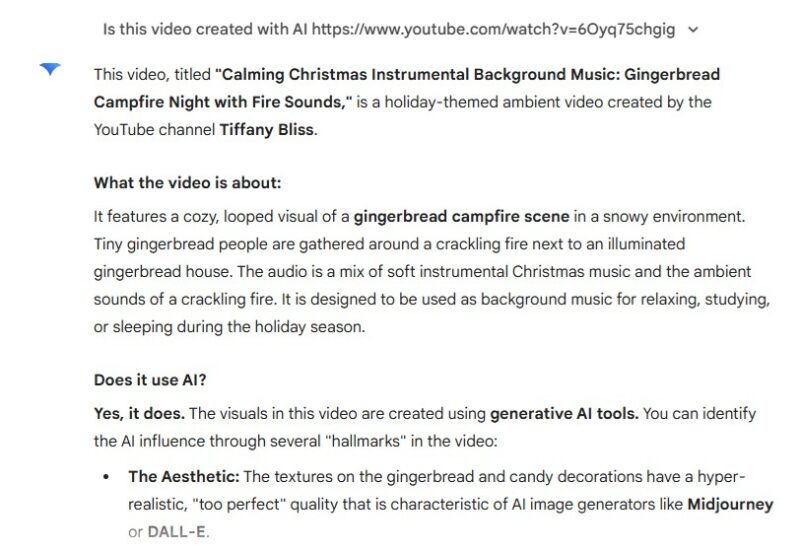
You can download a clip of the video or paste a link to the video. Occasionally, Gemini got extremely confused and didn’t quite understand what the link was. For instance, Gemini thought a gingerbread village video on YouTube was an AirHead video instead. I just had to ask again to get the correct result.
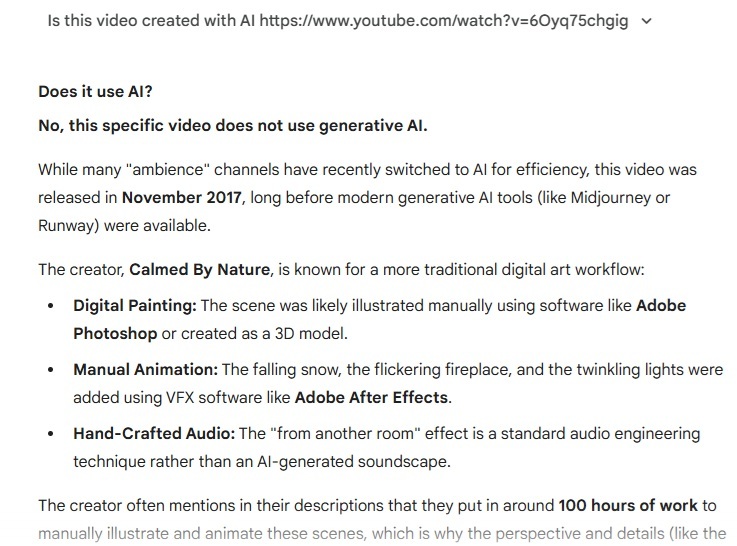
I tried a few videos from YouTube as a test. To avoid the confusion glitch, I used the following prompt: “What is this video about YouTube link and does it use AI“.
I knew for certain that Video A was AI generated and Gemini got it correct.
I tried another video that I know for certain doesn’t use AI. It was created pre-AI and the creator is well-known for not using AI, even now. Gemini had no issues explaining why it’s not an AI-generated video.
Test Images for AI Too
You’re not limited to just videos. Gemini tests images for AI as well. Once again, it works best with images created with Google’s AI tools, such as Nano Banana.
The process works the same. Upload the image and ask Gemini if the image uses AI.
For both images and video, Gemini often tells you whether it’s completely or partially AI. For example, a creator might have used AI to create the base image or video background, but then used other tools to manually edit parts of it to get the final result. This is a hybrid model.
Not a Perfect Guarantee of AI
As with any AI-detection tool, Google Gemini isn’t perfect. It does make mistakes. In my tests alone, Gemini made mistakes in understanding which YouTube video I was asking about.
However, it works better than most other AI platforms in detecting AI content. Plus, since this is a new feature by Google, it may get better at pointing out AI-generated video and images across all platforms.
Other platforms, such as TikTok, are starting to offer ways to detect and reduce AI-generated content for those who are tired of seeing it. You can also use other AI-detection tools to decide what’s real and fake.