


It seems Google’s troubles were just starting when a federal judge ruled the company violated antitrust laws. This has opened it up to smaller companies bringing lawsuits of some type of unfairness. The first big one to pop up is an antitrust lawsuit Yelp is bringing against Google.
Google Loses U.S. Antitrust Law Case
Alphabet, Google’s parent company, found itself on the wrong end of a lawsuit that was filed in 2020 by the U.S. Department of Justice. The case was heard nearly a year ago, and earlier this month, District Judge Amit Mehta announced his judgement.
Mehta decided that Google was acting as a monopolist to maintain its monopoly. With about 90 percent of the Internet search market, that makes sense. The company pays billions to other tech companies to be the default search engine. Apple is one of those other companies, as it has paid to keep Google as the default search engine on Safari.
Alphabet is planning to appeal the decision, arguing that the case means that it’s the best search engine but shouldn’t make it easily accessible. It will also be in court next month over its advertising business.
Yelp’s Antitrust Lawsuit Against Google
Yelp didn’t waste much time bringing its own antitrust lawsuit against Google. The business review site filed the lawsuit on August 28, 2024, stating that Google had restricted its possible reach after it rejected Alphabet’s offer to buy the reviews site.
Co-Founder and CEO of Yelp, Jeremy Stoppelman, said in a Yelp blog post, “Abandoning its stated mission to deliver the best information to users, Google has illegally abused its monopoly in general search to dominate the local search and local search advertising markets – engaging in anticompetitive conduct that has degraded the quality of search results and demoted rivals to grow its market power.”
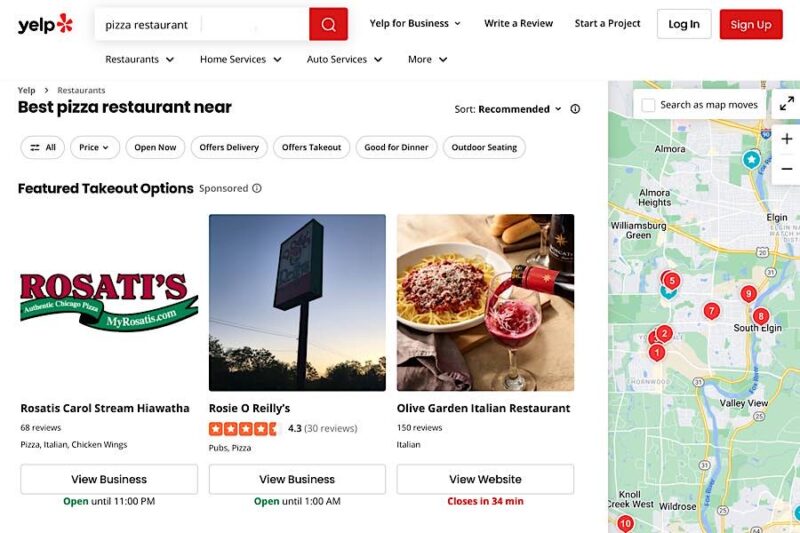
Stoppelman believes that through their multi-billion dollar arrangement with Apple, browsers, device manufacturers, and cell services, Google can control what consumers see and where, giving them much power.
He also charged that when someone “conducts a Google search with local intent, Google manipulates its results to promote its own local search offerings,” regardless of how great its own search offering is. This practice, assumably AI Overview, keeps users on the search results page, leading to zero clicks for Googe’s competitors.
The Yelp CEO added that advertisers are certainly losing because of Google’s practices. With users staying on Google to read the AI results, it allows them to charge advertisers a higher rate. He explained that Google increased its year-over-year search advertising revenue by 20 percent or more each year.
Wrapping it up, Stoppelman said that Google shouldn’t be allowed to conduct this monopoly of general search results while also being the curator of its own local search content. He compared it to being a judge and competitor in the same Olympic event. Are you worried about privacy in your searches? Check out the best search engines for privacy.
Screenshot by Laura Tucker.