

Perhaps the most confounding news of the day is that X (formerly Twitter) is going to start allowing users who you have blocked to see your public posts, yet not let allow them to interact with you. Doesn’t this go against the very reason you blocked them in the first place? Not only do you want no contact, but you also don’t want them to know what’s going on in your life.
Tip: looking for a more uplifting experience? Find out how to find your friends and contacts on X.
X Revises Blocking Policy
A user posted to X that the platform would be removing the existing block button so that public accounts would be visible to users they had blocked. X CEO Elon Musk commented on the post and said, “High time this happened. The block function will block that account from engaging with, but not block seeing, public post.”
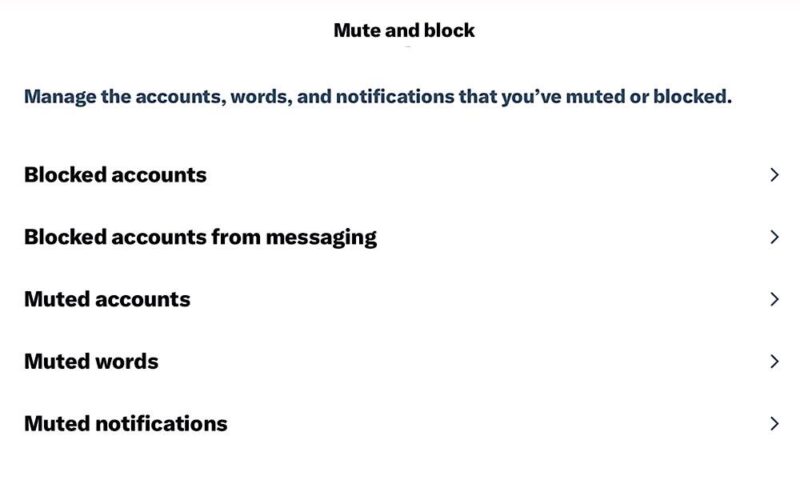
This means if I have a public account, deciding it was okay to keep it public as long as I blocked offenders, all those who I blocked would now see my content anyway. Sure, I could now make my account private, but that’s only if I saw this news. What if I didn’t see this news before Musk eliminated the block button, and all my content was now seen by people I didn’t want to see it?
It could lead to dangerous activity. Not every connection on X is an anonymous person. It could be an ex-friend, former lover, annoying neighbor, etc. You could be going on vacation, and now the person you blocked knows when you won’t be home. You could have mentioned where you’d be, and now they’ll know. And you would have mentioned that information, believing you were safe, as you’d blocked the potentially dangerous person.
Currently, if that person you blocked tries to access your account, they’ll see a message that says, “You’re blocked.” Along with not seeing your posts, they also can’t see replies, images, videos, and followers. It’s unknown how this will change after the block button is removed.
Good to know: is it all too much for you? Learn how to delete your X (Twitter) account.
Musk Believes Block Button “Makes No Sense”
This isn’t new for Musk. For one, he’s made a number of changes since buying Twitter – including changing the name of the platform to X. Last year, he said the block feature didn’t make sense and that it needed to take a step down to being like a mute button. He also discussed that he could stop allowing users to block people.
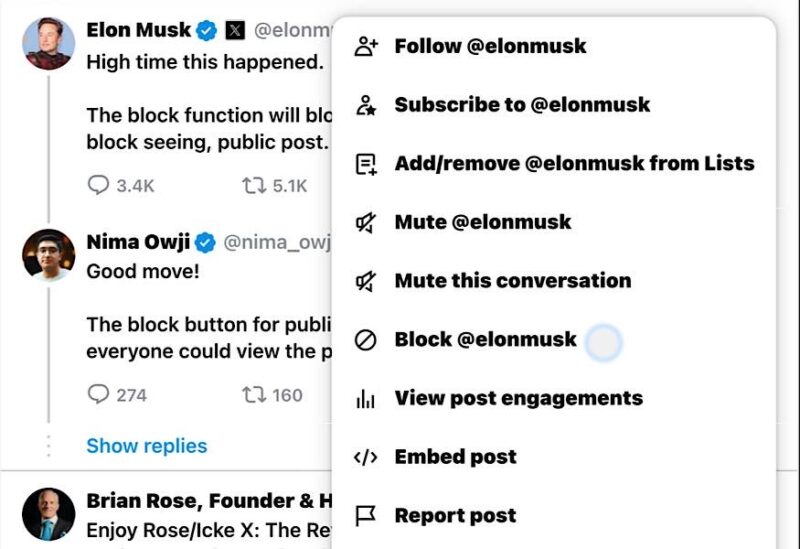
The question is, how will eliminating the block button improve the X experience for its users? I can’t see how it would improve anything. I can only see potential harm from it, leading to the question of why. What is Musk’s purpose in eliminating the block button from X? How is that helping the experience?
There seems to be only good reasons, such as safety, to have the block button on X. And X is far from being the only social network with a block button or similar feature. I use it sparingly, but I do use the block option on Facebook. I can’t imagine not being able to block someone that is harassing me. Follow this guide to find out if someone is blocking you on Facebook.
Image credit: Unsplash. All screenshots by Laura Tucker.