


With the coronavirus COVID-19 outbreak, countries around the world are urging people to work from home, if not making it legislation. As such, broadband and Internet companies are experiencing a larger-than-usual demand after everyone puts away the suits and boots up their computers.
Unfortunately, not all companies are ready for this additional usage. This came to light when Microsoft Teams went down for two hours due to excessive demand.
What Is Microsoft Teams?
Microsoft Teams isn’t one of the more popular Microsoft products, but it has become a vital tool for employers in the face of COVID-19. Teams is a virtual office collaboration tool that grants the workplace video-conferencing, workplace chat, and the ability to work together in Office 365 (a Slack alternative).

As such, some companies now rely on Microsoft Teams to perform work remotely. With the recent coronavirus outbreak and people working from home, Teams fill the gap created by the lack of a physical office space. However, for two hours on Monday, March 16, Teams experienced an outage where people couldn’t use it.
Why Did Teams Go Down?
Unfortunately, Microsoft Teams went down when people needed it the most; however, that’s also the reason it went down in the first place. As it turns out, Teams wasn’t strong enough to withstand the added demand caused by the wave of work-at-home employees.
This becomes more evident when you realize that Teams went down at around 8:30 am UTC on a Monday. At that time, the work-at-home employees in Europe were waking up and logging on to get work done. Given that Europe is currently the epicenter of the virus, this equaled a lot of people.
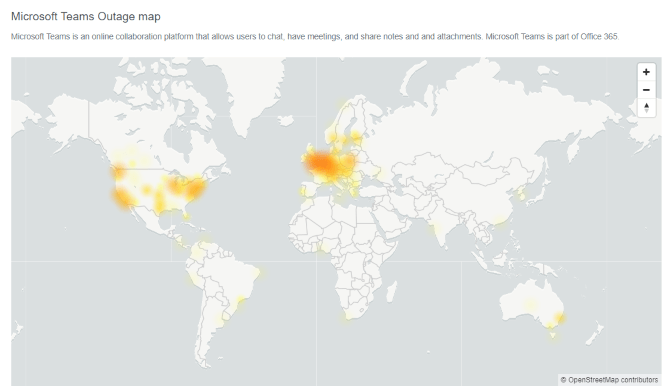
As per the outage map from DownDetector, the majority of Europe experienced downtime from Microsoft Teams. That’s not to say that every other country was unscathed, as parts of the USA and the vicinity of Sydney, Australia, also took a tumble.
What Does this Mean for the Future?
This outage is a big sign of things to come. If COVID-19 keeps people at home for months at a time, the Internet is going to be the only source of work and entertainment for some.
As such, the chain of companies that make the Internet possible, from the ISPs to service providers, should prepare themselves for the additional strain. If COVID-19 is in it for the long run, it’s essential that companies keep up their efforts to ensure everything runs smoothly.
Work-at-Home Improvements
With COVID-19 making its rounds around the world, companies are asking their employees to do their work over the Internet. Unfortunately, this added load brought Microsoft Teams down early Monday morning, which hopefully won’t be a reoccurring trend!
Did you experience any outages this Monday? Let us know below.